AfD Victory in Saxony-Anhalt Raises Economic and Policy Risks for Europe
AfD’s strong Saxony-Anhalt result drew sharp reactions from Poland, France and the Czech Republic, raising wider EU policy concerns.

AfD’s strong Saxony-Anhalt result drew sharp reactions from Poland, France and the Czech Republic, raising wider EU policy concerns.

AfD’s landslide in Saxony-Anhalt leaves no clear governing majority and raises pressure on Germany’s energy, sanctions and coalition politics.

Germany’s CDU/CSU support drops to 20%, the lowest in five years, as far-right AfD leads polls ahead of key federal state elections, signaling shifting voter dynamics.

A Kremlin-linked bot network spreads false German media-style content to influence voter sentiment ahead of September regional elections, targeting all but pro-Russian parties.

German President Steinmeier calls for Europe to uphold international law and counteract the ruthless geopolitical strategies of Russia and the US amid rising populism and reform challenges.

A recent INSA poll shows 45% of Germans oppose banning the far-right AfD, which remains the country's most popular party, outpacing CDU/CSU by 8 points.

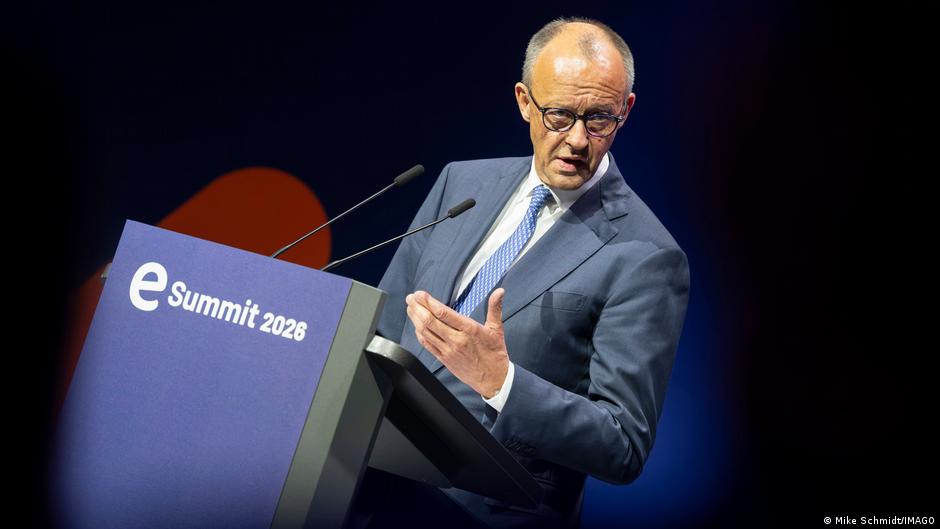
Friedrich Merz’s circle denies plans for his early replacement amid CDU rumors, highlighting risks to political stability and economic policy continuity in Germany.

The AfD party’s expulsion of Alexander Eichwald, who mimicked Hitler’s speech, exposes ideological rifts and raises concerns about far-right extremism affecting Germany’s political and economic stability.