German BSW Lawmaker Plans Belarus and Russia Visits to Reopen Local Ties
Sven Hornauf’s planned delegations highlight pressure inside Germany to preserve municipal channels despite the wider rupture with Minsk and Moscow.
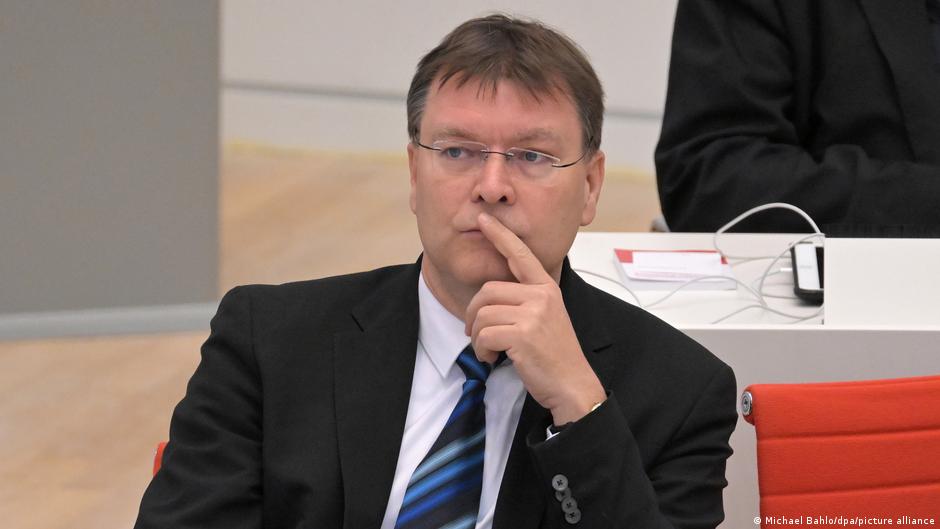
A lawmaker from Germany’s left-populist Alliance for Social Justice and Sensible Economic Policy, known as BSW, has said he is assembling a delegation of German politicians and civil society representatives for trips to Belarus and Russia aimed at reviving contacts between twin towns.
Sven Hornauf, a member of the Brandenburg state parliament from BSW, formerly known as the Sahra Wagenknecht Alliance, told the regional newspaper Märkische Oderzeitung on Saturday, October 3, that he plans to travel by bus to Vitebsk in November with a group of like-minded participants from various German parties. The plans were reported the following day by larger German media outlets, including dpa, Tagesspiegel and Die Welt.
Hornauf said the purpose of the trip is to restart cooperation between German municipalities and their sister cities in Belarus and Russia. He described the initiative as a way to “send a signal in favor of mutual understanding between peoples.” He is also planning a visit to Russia in April 2027.
It is important, Hornauf argued, to restore “normal regular contacts” directly between people and ensure that the broader political climate does not prevent them.
For senior economic decision-makers, the proposal is notable less because of its immediate scale than because of what it signals about the durability of subnational links in Europe’s fractured post-2022 landscape. Municipal partnerships do not determine sanctions policy, energy security strategy or defense procurement. Yet they can indicate where public and local institutional pressure may build for selective re-engagement if the geopolitical environment changes.
Local Diplomacy Meets Strategic Rupture
According to Hornauf, between 30 and 40 people are expected to take part in the Belarus trip, most of them not affiliated with any political party. He nevertheless named several BSW members among the participants, along with representatives of the Greens and the far-right Alternative for Germany, or AfD. The final composition of the delegation, he said, will be determined during preparatory meetings.
Hornauf said the delegation from his home city of Frankfurt an der Oder would visit Vitebsk from November 6 to 11. Other participants in the broader initiative intend to travel to Minsk and several other Belarusian twin towns. In each case, the stated reason for the visit is the restoration of sister-city relations.
Many of the municipal partnerships linking German, Belarusian and Russian towns were suspended after Russia’s full-scale invasion of Ukraine. But the underlying network was not fully dismantled. According to a 2026 survey by the Redaktionsnetzwerk Deutschland media group of about 100 German cities and municipalities, only one had fully terminated its partnership with a Russian sister city.
The same reporting found that informal contacts with Russia continued after 2022 in about 40% of surveyed municipalities, including invitations extended to representatives of Russian cities to visit Germany. In 42% of responding German municipalities, officials supported resuming partnerships with Russia in the event of a peace settlement in Ukraine.
Those figures matter for macroeconomic and policy analysis because they suggest that a future shift in the Ukraine settlement process could quickly activate pre-existing channels for local-level exchange. While such channels are not equivalent to trade normalization, they can shape the political atmosphere around reconstruction, regional business contacts, cultural exchange and long-term commercial expectations.
Policy Tensions Inside Germany
Hornauf’s initiative also sits within a broader German debate over defense policy, Russia strategy and the economic costs of prolonged confrontation. Germany’s post-2022 policy environment has been defined by higher defense spending, reduced exposure to Russian energy, and tighter alignment with NATO and European Union approaches toward Moscow and Minsk. At the same time, parties and local actors skeptical of the current course continue to test the boundaries of political and civic engagement.
Hornauf drew national media attention in spring 2026 when he was among the initiators of a visit by BSW members and supporters to the Russian embassy in Berlin. He had previously faced criticism for supporting several AfD initiatives.
He has also criticized Germany’s efforts to strengthen defense measures in response to Russia’s aggressive policy. In particular, he opposed the deployment of the U.S.-Israeli Arrow 3 missile defense system at the Bundeswehr base in Holzdorf. The missile defense system entered operational service in Germany at the end of 2025.
For business leaders and policymakers, the episode underscores a practical tension: Germany’s national strategic posture remains shaped by deterrence, sanctions and alliance commitments, but parts of the municipal landscape retain dormant links with Russian and Belarusian counterparts. If diplomacy over Ukraine eventually produces a settlement, those local ties may become early channels for symbolic and civic normalization before broader economic policy changes follow.
That does not mean a return to prewar economic relations is imminent. The article reports no new trade mechanism, sanctions change or federal policy shift. The planned delegations are political and civic in form, and their impact will depend on the composition of participants, the reception in Belarus and Russia, and the response from German federal and state-level actors.
Still, the persistence of informal municipal contacts after 2022 suggests that Germany’s long-term relationship with the east will not be shaped solely in Berlin, Brussels or NATO capitals. Local governments, party networks and civil society groups may influence the pace and tone of any future re-engagement, especially if a peace settlement in Ukraine reopens debates about transport links, investment, industrial supply chains and regional cooperation.
Hornauf’s planned travel to Vitebsk in November and Russia in April 2027 therefore functions as a small but politically revealing test case. It shows how subnational diplomacy can survive amid strategic rupture, and how questions of economic reconnection may begin well before formal policy changes are placed on the table.