Brazil Vote Heads to Runoff as Flavio Bolsonaro Leads Lula in First Round
The narrow first-round result sets up an October 25 runoff with implications for fiscal policy, institutions and investor confidence.
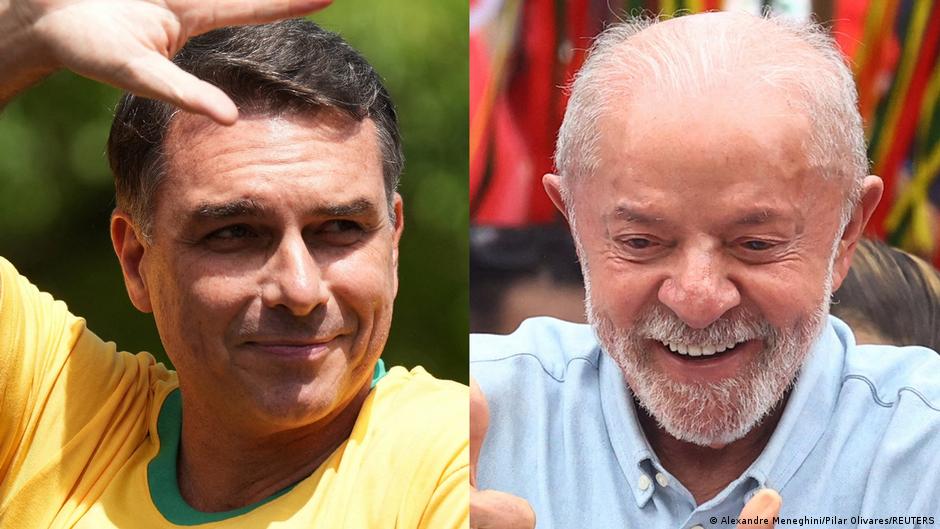
Brazil’s presidential election is heading to a second round after Flavio Bolsonaro, a senator from Rio de Janeiro state and the eldest son of former President Jair Bolsonaro, emerged as the first-round leader with 47.03% of the vote. Incumbent President Luiz Inacio Lula da Silva followed closely with 45.16%, according to data from Brazil’s electoral authority after 99.99% of ballots had been counted late Sunday and into Monday, October 5.
Turnout stood at 78.92%, underscoring the scale of political mobilization in Latin America’s largest economy. Because no candidate crossed the 50% threshold required for an outright victory, voters will return to the polls on October 25. Runoff elections have become a recurring feature of Brazilian presidential politics: since the early 2000s, every presidential contest has required a second vote.
For senior economic decision-makers, the result introduces a period of heightened policy uncertainty at a sensitive moment for Brazil’s fiscal outlook, institutional stability and global market positioning. The narrow gap between Bolsonaro and Lula points to a sharply divided electorate, with the runoff likely to become a referendum not only on leadership style but also on the direction of economic management, law-and-order policy, and the credibility of public institutions.
A Close Race With Macro Consequences
Brazil’s economy occupies a central place in global commodity supply chains, emerging-market portfolios and regional trade flows. A transition from Lula’s administration to a Bolsonaro presidency, if confirmed in the second round, would carry consequences beyond domestic politics. Investors will be watching for signals on public spending, tax policy, state-linked investment, regulatory oversight and relations with international partners.
Lula enters the runoff as the incumbent and as a political figure whose 2022 victory over Jair Bolsonaro came only after a second round. That earlier race left deep institutional scars. Jair Bolsonaro refused to recognize the result at the time, and his supporters took to the streets in protest. He was later sentenced to a long prison term for an attempted coup.
The current campaign therefore revives unresolved questions about the durability of democratic norms in Brazil. Those questions matter for economic governance. Political volatility can raise borrowing costs, delay investment decisions and complicate long-term planning for multinationals exposed to Brazilian demand, infrastructure, finance and natural resources.
With no candidate above 50%, Brazil’s October 25 runoff becomes a high-stakes test of political continuity, institutional credibility and economic direction.
Flavio Bolsonaro, 45, has campaigned in part on pledges to combat crime, an issue with direct economic relevance in a country where security concerns affect logistics, urban investment, insurance costs and the operating environment for businesses. Yet the candidate’s own past remains part of the risk assessment surrounding the race. In 2019, cases were opened against him over alleged payments to nonexistent employees listed among his subordinates and over suspicious transfers to his bank account.
Institutional Risk and Financial Oversight
The election is also unfolding against the backdrop of a continuing investigation involving Banco Master and its largest shareholder, Daniel Vorcaro. Authorities are examining allegations of fraudulent investment fundraising amounting to tens of millions of dollars from public and private funds, based on promises of high returns that could not be fulfilled. In practical terms, the case concerns the possible creation of a financial pyramid scheme.
The matter carries political sensitivity because Vorcaro is known, among other things, as one of the producers of a favorable biographical film about Jair Bolsonaro, “Dark Horse.” The film’s storyline develops the former president’s claims about “stolen elections.” Media outlets previously published correspondence between Vorcaro and Flavio Bolsonaro that may suggest the politician knew of the alleged fraudulent scheme and could have helped facilitate it, including through cover in the form of supposedly expensive film production.
For financial markets, the importance of such allegations lies not only in their legal dimension but also in what they suggest about the intersection of politics, capital raising and regulatory enforcement. If the runoff campaign intensifies scrutiny of Banco Master, public funds, private investment vehicles or political financing networks, the issue could become a broader test of Brazil’s financial supervision framework.
The legal troubles surrounding the Bolsonaro family add another layer of complexity. In June 2026, Brazil’s Supreme Court sentenced Eduardo Bolsonaro, another son of the former president and also a political figure, to four years and two months in prison. The criminal case stemmed from Eduardo’s calls for the United States to impose sanctions on Brazil over the sentence handed to his father. Eduardo lives in the United States, and the case against him was heard in absentia.
These developments mean the runoff will likely be read internationally through several overlapping lenses: macroeconomic management, judicial independence, anti-corruption enforcement and Brazil’s foreign policy posture. A Bolsonaro victory could be interpreted by supporters as a mandate for sharper law-and-order politics and a break with Lula’s governing course. For critics, it may raise concerns about institutional conflict and the political rehabilitation of a family associated with challenges to electoral legitimacy.
Lula’s position is also complicated. Although he remains within striking distance, the first-round result shows that incumbency did not deliver a commanding lead. For economic actors, that creates uncertainty over whether current policy priorities can survive the runoff or whether Brazil is entering a new cycle of ideological reversal.
The next three weeks will therefore matter well beyond campaign messaging. Cabinet signals, fiscal commitments, rhetoric toward the courts, and statements about financial-sector oversight could all move expectations before a final result is known. In a polarized Brazil, the economic stakes are not limited to who wins the presidency. They extend to whether the losing side accepts the outcome and whether the country can preserve policy continuity in the face of another tightly contested vote.