Schröder’s Globus Role in Russia Draws German Criticism Over Corporate Risk
The former chancellor’s position at Hyperglobus highlights how Western-linked assets in Russia are testing governance, sanctions-era strategy, and political trust.
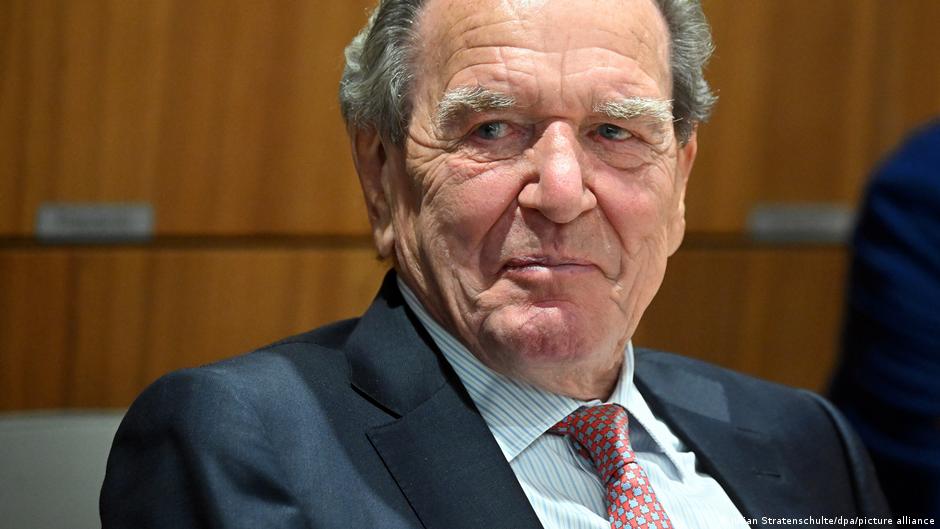
Former German Chancellor Gerhard Schröder has become a member of the supervisory board of Hyperglobus, the company operating the Russian business formerly tied to the German hypermarket chain Globus. The appointment has triggered sharp criticism from German politicians and economists, who see the move as another example of the economic and political entanglements that continue to shape European exposure to Russia.
The company confirmed to DW on October 2 that Schröder would join the supervisory board and would oversee the retailer’s “strategic development.” The announcement places a high-profile former European leader inside a corporate structure linked to one of the most sensitive issues for Western companies since Russia’s full-scale war in Ukraine: how to manage assets, ownership ties, and operational risk in Russia without deepening reputational and political liabilities at home.
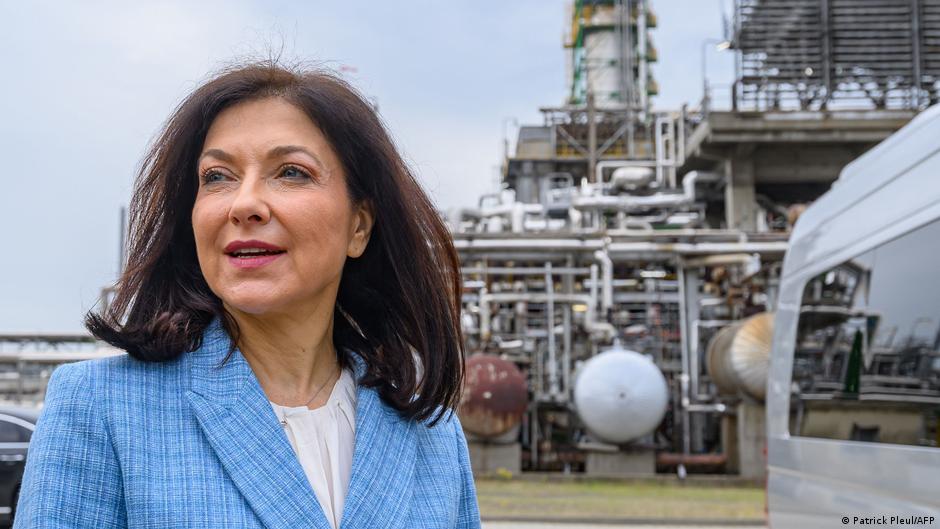
According to Globus Gruppe spokeswoman Isabel del Alcazar von Buchwald, the Russian business of the Globus chain has been “legally and organizationally independent” since January 1, 2025. At the same time, the shareholders of Russia’s Hyperglobus are the same German business figures as those behind the wider group, underscoring the continuing economic linkages behind formal separation.
German Critics See a Political and Economic Signal
Roderich Kiesewetter, a member of the Bundestag and foreign policy expert for the governing Christian Democratic Union, commented on the news on Saturday evening, October 3. He called Schröder’s new post a “betrayal of Europe and his own country.”
“Anyone who publicly and demonstratively shakes Schröder’s hand thereby wants to demonstrate their position,” Kiesewetter wrote on X.
Political scientist Thomas Jäger, a professor at the University of Cologne, also criticized the appointment. “Schröder has a new lobbying assignment. In Russia. Where else?” he wrote on X. Jäger also asked whether German President Frank-Walter Steinmeier knew about it when he had greeted Schröder days earlier.
The references to a handshake appear to point to the September 28 ceremony in Karlsruhe marking the 75th anniversary of Germany’s Federal Constitutional Court. Steinmeier attended the ceremony and, upon entering the hall, shook hands with Schröder, who was seated in the front row as an honorary guest.
The controversy therefore extends beyond a single corporate appointment. For German policymakers, Schröder’s continued role in Russia-linked business revives a broader dispute over how much political legitimacy former officeholders can lend to commercial strategies in jurisdictions now viewed as strategically hostile by many European governments.
Asset Protection in a High-Risk Market
German economist Jan Schnellenbach, a professor of microeconomics at Brandenburg University of Technology in Cottbus, accused the former chancellor of “shamelessness.” Referring to earlier claims about Schröder’s health, he wrote on X: “Wasn’t it said that he was too ill to appear before a German court? Do Russian money have healing powers?”
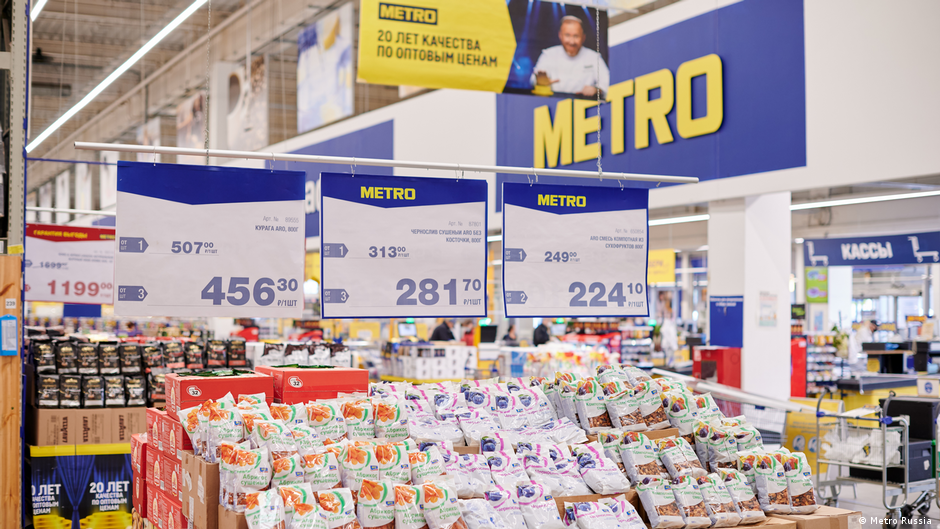
Janis Kluge, a German economist and head of a research division at the Berlin-based German Institute for International and Security Affairs, argued that bringing Schröder into Hyperglobus’s leadership amounted to the company “buying itself lifelong insurance” against suffering the fate of the German chain Metro. Metro’s Russian assets were placed under temporary management by decree of Vladimir Putin.
“Schröder is once again monetizing his access to Putin,” Kluge wrote on X.
That assessment points to the macroeconomic significance of the episode. Western-linked businesses still exposed to Russia operate in a market where legal ownership, state intervention, and political relationships can determine whether assets remain under shareholder control. The transfer of assets into temporary management has become a material risk for foreign owners, making governance choices part of a broader strategy for survival rather than a narrow personnel matter.
For senior decision-makers, the case illustrates the growing tension between formal corporate restructuring and actual economic exposure. A business may be legally and organizationally independent, yet still carry reputational, ownership, and political risks if its shareholders and strategic networks remain tied to the original Western group.
Long-Term Consequences for European Business Strategy
Many observers in Germany have long regarded Schröder as a lobbyist for Russian companies. The former chancellor previously held leadership roles at Rosneft and at the operator of Nord Stream. His new position at Hyperglobus reinforces concerns that individual political networks can remain economically valuable even after the institutional environment has deteriorated.
For European companies, the appointment highlights a structural dilemma. Exiting Russia can mean accepting losses, regulatory hurdles, or state intervention. Remaining can preserve commercial value but deepen exposure to political pressure, reputational damage, and policy scrutiny in Europe. The use of politically connected figures may be viewed by some firms as a hedge against confiscation or forced administration, but it can also intensify criticism from governments, investors, and the public.
The German reaction suggests that the tolerance for such arrangements is narrowing. As Europe continues to reassess economic dependencies exposed by the war in Ukraine, corporate governance decisions involving Russia are increasingly judged through a strategic lens. Board appointments, shareholder continuity, and advisory roles are no longer seen as internal business matters alone; they are interpreted as signals about alignment, risk appetite, and the credibility of Europe’s economic decoupling agenda.
Schröder’s role at Hyperglobus is therefore not simply a controversy about a former chancellor’s career. It is a case study in how political access, asset protection, and corporate continuity intersect in a fragmented global economy. For companies with legacy operations in Russia, the episode shows that legal separation may reduce operational exposure, but it does not eliminate the political economy of ownership, influence, and accountability.