Kolesnikova Says EU Engagement With Minsk Can Curb Russia’s Leverage
The Belarusian activist urged Europe to pair diplomacy with sanctions relief to secure prisoner releases and reshape Belarus’s strategic options.
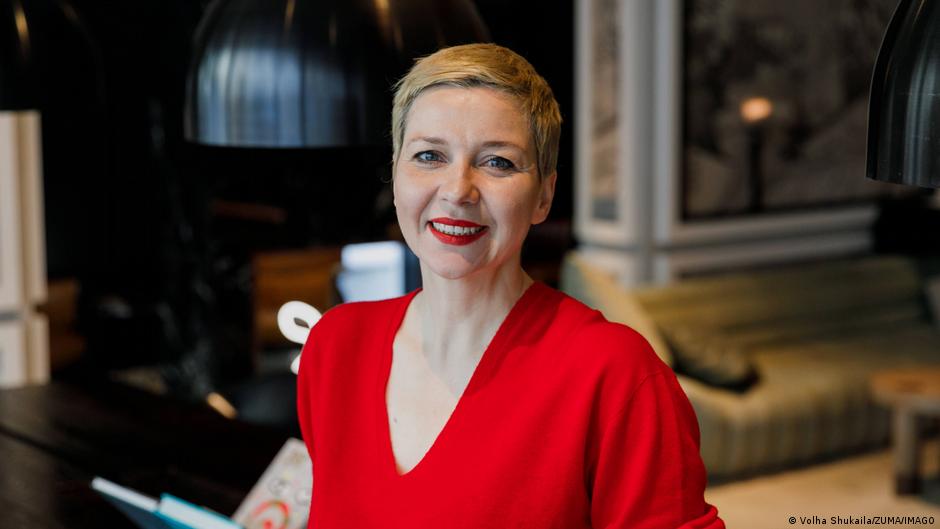
Belarusian activist and musician Maria Kolesnikova has urged European Union governments to follow the United States in using diplomacy alongside sanctions as an instrument to free political prisoners in Belarus, arguing that carefully calibrated engagement with Minsk can also narrow Russia’s sphere of influence in the country.
In an interview with DW, Kolesnikova rejected claims that she had softened her stance toward Alexander Lukashenko’s regime by speaking more often about the need for dialogue. She said her own release demonstrated that diplomacy can produce concrete results without changing the underlying character of the Belarusian political system.
“We are talking to each other now precisely because diplomacy was used as an instrument of influence, as a tool for achieving certain goals,” Kolesnikova said.
Her remarks come as Western governments reassess how to balance pressure on Minsk with limited channels of negotiation. For senior policymakers, the issue is not only humanitarian. Belarus occupies a strategic position between the European Union, Ukraine and Russia, and its political alignment carries direct implications for European security, sanctions policy and the long-term balance of power in Eastern Europe.
Diplomacy as an Economic and Security Tool
Kolesnikova said more than 800 people convicted under political articles remain imprisoned in Belarus. She pointed to what she described as the success of the American negotiation track, under which talks between Washington and Minsk led to the release of about 500 political prisoners in exchange for the easing of sanctions on Belarusian companies.
“If we already see that the American track with negotiations has worked, then it must be used,” she said, referring to the U.S.-Belarus contacts that produced the prisoner releases.
For the EU, the question is whether such a model can be adapted without weakening the credibility of sanctions as a policy instrument. Since the crackdown that followed Belarus’s 2020 opposition protests, sanctions have been central to Western leverage over Minsk. Kolesnikova’s argument does not call for abandoning that pressure. Instead, it frames sanctions as negotiable economic leverage when tied to measurable outcomes such as the release of prisoners.
That approach could carry broader macroeconomic implications. Any selective easing of restrictions on Belarusian companies would affect trade flows, financing conditions and corporate access to external markets. At the same time, preserving sanctions without diplomatic channels may limit the West’s ability to influence political outcomes inside Belarus, leaving Minsk more dependent on Moscow for financial, energy and security support.
Reducing Dependence on Moscow
Kolesnikova argued that Europe’s openness should be directed toward Belarus and Belarusians, not toward legitimizing the regime. She said such openness could reduce Russia’s influence in the country and described that objective as part of Europe’s security architecture.
“Europe’s openness to Belarus and Belarusians, not to the regime, is capable of diminishing Russia’s sphere of influence in the country,” she said.
The distinction is significant for EU decision-makers. Belarus’s isolation from European institutions and markets has increased the relative importance of Russia as an economic and political patron. Moscow’s leverage includes energy links, trade dependence, security cooperation and support for Lukashenko’s continued rule. If European diplomacy creates limited alternatives for Belarusian society and economic actors, it could gradually reduce the structural pull of Russian influence.
Kolesnikova specifically cited recent talks between Polish Foreign Minister Radoslaw Sikorski and Belarusian Foreign Minister Maxim Ryzhenkov. The meeting took place in New York on the sidelines of the 81st session of the United Nations General Assembly. Afterward, Sikorski said, among other things, that Warsaw was preparing to open a new building for its embassy in Minsk.
For Poland and the wider EU, engagement with Belarus remains politically sensitive. Warsaw has been one of the strongest advocates of pressure on Lukashenko’s government, while also facing the direct consequences of instability and repression across its eastern border. An embassy opening would not in itself mark a broad policy normalization, but it would signal that communication channels are being maintained at a time when Europe is weighing how to manage a sanctioned neighbor embedded in Russia’s strategic orbit.
A Personal Case With Policy Implications
Kolesnikova was arrested in September 2020 over opposition activities. In what was described as a fabricated criminal case against her, a Minsk court sentenced her on September 6, 2021, to 11 years in prison. She was released on December 13, 2025, together with Nobel Peace Prize laureate Ales Bialiatski and 121 other political prisoners, following negotiations between Belarusian ruler Alexander Lukashenko and a U.S. delegation led by John Cole, the special envoy for Belarus.
Her case has become a reference point in the debate over whether diplomacy with authoritarian governments risks rewarding repression or can be used to secure tangible concessions. Kolesnikova’s position is that the release of prisoners shows the practical value of negotiation, while her criticism of the Belarusian system remains unchanged.
For economic policymakers, the central issue is how to convert sanctions from a static punishment into a dynamic bargaining tool without eroding deterrence. The American precedent cited by Kolesnikova suggests that conditional sanctions relief can create incentives for Minsk. But it also raises questions about sequencing, verification and the long-term consequences of reintegrating selected Belarusian companies into international economic channels.
The broader strategic calculation is whether Europe can engage Belarusian society and preserve leverage over Minsk while limiting Russia’s ability to dominate the country’s political and economic future. Kolesnikova’s appeal places prisoner releases at the center of that agenda, but the implications extend beyond human rights. They touch the architecture of European security, the future of sanctions policy and the economic geography of influence between Brussels, Minsk and Moscow.