EU Rejects Ukraine Request to Accelerate €90 Billion Loan Disbursement
Brussels is seeking wider burden-sharing as Kyiv’s wartime budget gap exposes longer-term fiscal and policy risks for Europe.
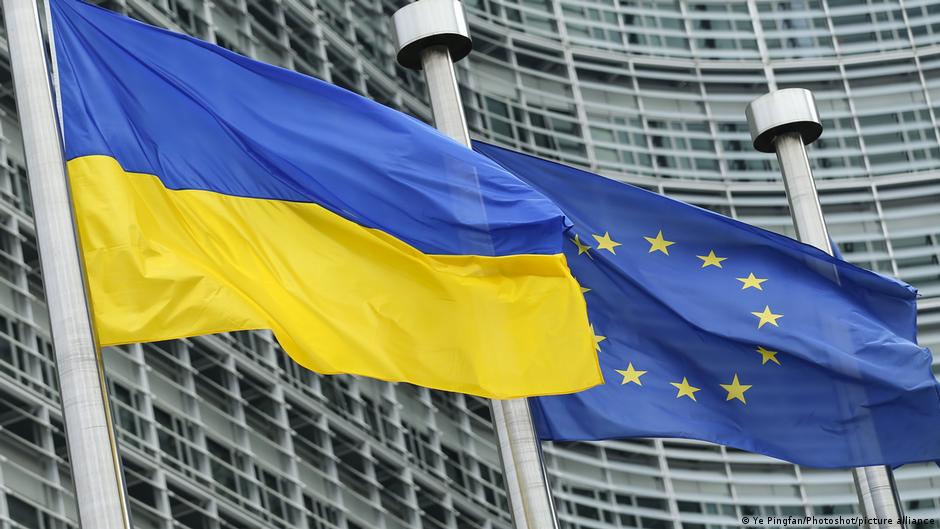
The European Union has rejected Ukraine’s request for early access to part of a €90 billion loan intended to help cover a military financing shortfall this year, according to sources familiar with the matter cited by Bloomberg on Thursday, October 1. Kyiv had sought accelerated disbursement after acknowledging over the summer that rising military expenditure had created an additional funding gap of €27 billion.
For senior policymakers and investors, the decision highlights a central tension in Europe’s wartime economic strategy: how to sustain Ukraine’s defense and budget needs without front-loading resources in a way that creates a sharper financing cliff later. Brussels concluded that bringing funds forward now could simply shift the problem into 2027 rather than resolve it.
Accelerated funding now “may only push the problem into 2027,” Bloomberg reported, citing people familiar with the discussions.
The refusal does not signal a retreat from support for Kyiv. Rather, it points to a more conditional and coordinated funding model, with the EU trying to align its own commitments with contributions from non-EU partners. European officials have approached other backers, including Canada, Norway and Japan, about covering part of Ukraine’s needs. Under the emerging framework, the EU loan would cover around two-thirds of Ukraine’s requirements, while the remainder would be provided by countries outside the bloc.
Budget Support Becomes a Test of Allied Coordination
Bloomberg reported that €45 billion from the 2027 loan package is expected to be made available quickly, but not before the start of next year. At the same time, the EU and Ukraine plan to begin work on identifying additional budgetary and defense requirements. That process will be crucial because Ukraine’s financing needs are no longer limited to near-term liquidity pressures; they are now part of a multi-year macroeconomic challenge shaped by the duration and intensity of Russia’s war.
The economic implications extend well beyond Ukraine. For Europe, the funding debate is becoming a test of fiscal capacity, political cohesion and strategic credibility. If Ukraine’s shortfalls are not covered on predictable terms, Kyiv may face pressure across military procurement, public finances and macroeconomic stabilization. If funding is advanced too aggressively, however, European governments risk creating a larger gap in 2027, when budgetary politics across the bloc may be no easier.
The EU’s position also underscores a shift from emergency financing toward conditional support tied to institutional reforms. In September, European Commission President Ursula von der Leyen told Ukrainian President Volodymyr Zelensky on the sidelines of the United Nations General Assembly in New York that the EU still had €37 billion in budget support available for 2026. But she directly linked the release of those funds to reforms by Kyiv aimed at combating corruption and the shadow economy, increasing tax revenues and bringing Ukrainian legislation closer to EU standards.
That linkage matters for the long-term economic architecture of Ukraine’s recovery and accession path. The EU is effectively combining wartime financial assistance with pre-accession economic governance: tax capacity, anti-corruption enforcement and legal convergence are becoming conditions for continued budgetary backing. For senior decision-makers, this signals that Ukraine’s financing will increasingly be assessed not only as a security imperative but also as a reform and fiscal-sustainability program.
IMF Role Points to a Multi-Year Financing Gap
The International Monetary Fund is also involved in defining the scale and credibility of Ukraine’s financing framework. IMF spokesperson Julie Kozak said the fund is discussing with Kyiv and its partners the possible size of the country’s budget deficit. The IMF is also working with Ukraine to combine the second and third reviews of an $8.1 billion financing program, equivalent to €7.23 billion, and expects to present them to the IMF Executive Board by December 2026.
According to Kozak, further financing for Ukraine depends on receiving sufficient and reliable assurances to cover the deficit. That language reflects the IMF’s standard concern over whether a country’s program is fully financed, but in Ukraine’s case it carries broader geopolitical weight. Reliable assurances from partners are necessary not only for IMF disbursements but also for anchoring confidence in Ukraine’s macroeconomic management during an open-ended war.
At the end of September, the IMF estimated Ukraine’s future financing gap at $30 billion to $35 billion in 2027, $17 billion in 2028 and $2 billion in 2029, Bloomberg noted. Those figures show a projected decline over time, but they also reveal the scale of the immediate burden facing Ukraine and its partners. Even if needs fall after 2027, the next phase will require large, coordinated commitments across governments and multilateral institutions.
For the EU, the decision to deny early loan disbursement is therefore less a narrow budgetary move than a signal about sequencing. Brussels appears determined to avoid using future commitments to solve present shortfalls unless other partners share the burden and Kyiv continues reform implementation. That approach may preserve financial discipline, but it also raises the stakes for allied coordination in the months ahead.
The broader macroeconomic consequence is that Ukraine’s war financing is becoming a structural issue for the European policy agenda. Defense spending, budget support, IMF conditionality and EU enlargement reforms are now intertwined. The risk for Europe is not simply that Ukraine will need more money; it is that delayed or fragmented commitments could weaken policy credibility at a moment when Russia’s aggression has already reshaped the continent’s fiscal and security assumptions.