Lithuania Backs Property Curbs on Russian and Belarusian Nationals
Vilnius is moving to restrict real estate purchases near strategic sites, extending a regional security shift with economic and investment consequences.
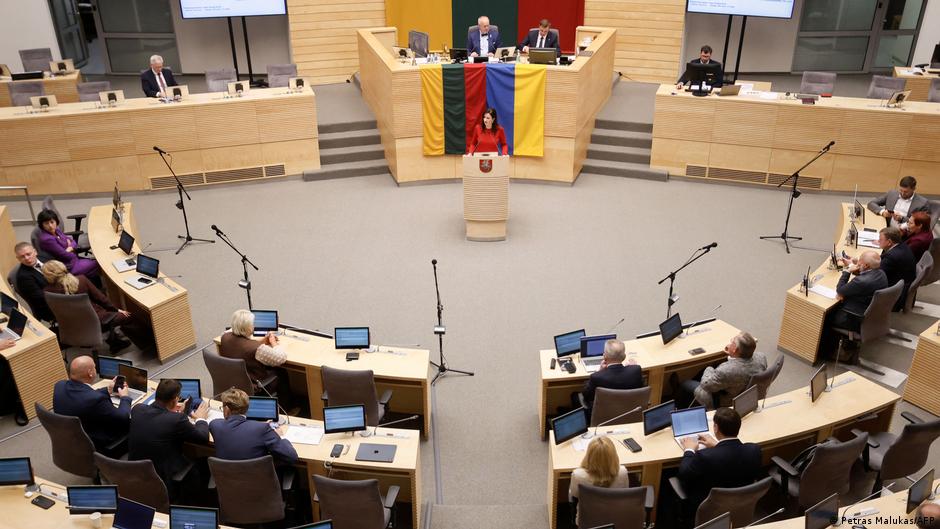
Lithuania’s government has approved draft legislation that would bar citizens of Russia and Belarus from buying real estate near strategically important facilities, including in cases where those buyers hold a valid residence permit. The measure, framed by Vilnius as part of a broader effort to counter espionage, reflects the continued fusion of national security policy with property, migration and investment rules across Europe’s eastern flank.
According to Lithuanian National Radio and Television, the government endorsed the bill on Wednesday, September 30. The proposed restrictions would apply to areas close to sites deemed strategically significant. They would not apply when ownership is acquired through inheritance.
The draft states that the prohibition should “significantly reduce” intelligence activity and “hybrid operations” in the country, including surveillance of military exercises or monitoring troop movements. If approved by Lithuania’s national parliament, the Seimas, the amendments would take effect on January 1, 2027.
For senior decision-makers, the proposal is another signal that security screening is becoming a more durable factor in cross-border capital allocation, particularly in markets bordering Russia and Belarus. While the immediate measure is targeted, it reinforces a wider trend in which real estate, residency rights and strategic infrastructure are increasingly treated as interlinked policy domains rather than separate administrative categories.
Security Policy Moves Into Property Markets
Lithuania is not acting in isolation. Similar restrictions are already in force in Latvia and Finland, while Estonia is planning to introduce a comparable ban. That regional convergence matters economically because it reduces the scope for regulatory arbitrage among Baltic and Nordic jurisdictions exposed to similar security risks.
The Lithuanian proposal would affect a clearly defined group of property owners and prospective buyers. Data from Lithuania’s Central Register for May showed that 5,104 Russian citizens and 2,781 Belarusian citizens with temporary or permanent residence permits had acquired real estate in Lithuania, including near strategically important facilities.
The numbers are not large enough to reshape the national property market on their own, but they are significant for local markets around sensitive infrastructure and for the broader regulatory message. In practice, governments are placing a security premium on geographic proximity to critical assets. That could influence valuations, transaction screening, compliance costs and the willingness of intermediaries to service buyers from higher-risk jurisdictions.
“The prohibition should significantly reduce intelligence activity and hybrid operations,” the draft says, citing risks such as monitoring military exercises and troop movements.
The move also fits into a broader tightening of Baltic policy toward Russian and Belarusian nationals since Russia’s full-scale invasion of Ukraine. In June, the Latvian parliament approved restrictions on the issuance of residence permits to Russian and Belarusian citizens. Lithuania has also maintained and extended a sanctions framework that affects visas, property purchases and residency-related privileges.
A Broader Sanctions Architecture
In late April, Lithuania’s Seimas voted by 95 to six to extend until December 31, 2027, the law on sanctions against citizens of Russia and Belarus. The law was originally adopted on May 3, 2023. Under it, Lithuania suspended the acceptance of applications from Russian and Belarusian citizens for Schengen and national visas. Russian citizens are barred from acquiring real estate in Lithuania, bringing in cash Ukrainian hryvnia and obtaining electronic resident status.
The temporary residence permit of a Russian citizen is annulled if authorities establish that the person has visited Russia or Belarus more than once in the previous three calendar months. Exceptions are allowed when the trip was caused by objective reasons or was connected with work in international transport.
These rules show how sanctions policy is shifting from headline financial restrictions toward a more comprehensive system governing mobility, ownership and administrative access. For businesses, banks, legal advisers and property market participants, the compliance environment is likely to become more complex and more persistent. The relevant policy question is no longer only whether an individual is sanctioned, but whether a transaction, location, travel pattern or residency status creates a national security concern.
The long-term economic implications may include a narrower pool of eligible foreign buyers, more due diligence in real estate transactions and greater uncertainty for Russian and Belarusian residents who had previously treated residence permits as a stable basis for investment decisions. At the same time, governments appear prepared to absorb those costs in exchange for what they describe as reduced exposure to espionage and hybrid threats.
Defense Posture and Investor Risk
The real estate bill comes alongside other signs of Lithuania’s changing defense posture. On September 22, members of the Seimas supported a proposal to remove the constitutional ban on storing weapons of mass destruction, including nuclear weapons, on Lithuanian territory. According to LRT, 99 lawmakers supported the decision, 13 opposed it and five abstained. To be adopted, the amendment must be approved through several rounds of voting, with the first scheduled for October 6 and the final vote set for January 12, 2027.
Lithuanian President Gitanas Nauseda also said on X that U.S. troops due to rotate into Lithuania after the earlier departure of American military personnel were already on their way to the country. He wrote that he had just received confirmation that a new contingent of U.S. troops was heading to Lithuania and thanked U.S. President Donald Trump for the decision.
For investors and policymakers, the combined picture is one of a small open economy embedding itself more deeply in Western defense structures while tightening access for nationals of states it regards as security threats. The direct macroeconomic effect of property restrictions may be limited, but the strategic direction is consequential. Lithuania and its neighbors are building a policy model in which security priorities increasingly shape asset ownership, migration channels and the legal treatment of foreign capital.
That model is likely to remain relevant beyond the Baltic region. As geopolitical risk becomes a structural input into economic policy, more governments may treat real estate near critical infrastructure as part of the national security perimeter. Lithuania’s legislation, if passed by the Seimas, would be another step in that shift from open-market assumptions toward more selective and security-conditioned economic governance.