German and Austrian Raids Highlight Gaps in EU Sanctions Enforcement
Investigators allege two businesspeople routed vehicles to Russia via third countries, underscoring the economic challenge of closing sanctions loopholes.
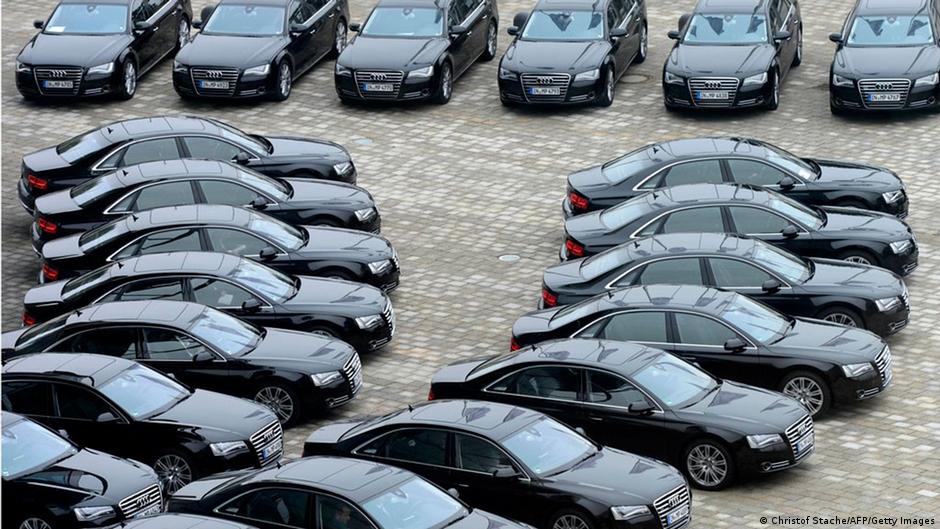
Authorities in Germany and Austria have searched properties linked to two businesspeople suspected of exporting vehicles to Russia through third countries in breach of European Union sanctions, in a case that points to the continuing difficulty of enforcing trade restrictions across complex cross-border supply chains.
The investigation, announced on Tuesday, September 29, by the prosecutor’s office in Kaiserslautern, concerns the alleged shipment of 53 passenger cars and six truck tractors to Russia between autumn 2022 and the end of 2024. Prosecutors allege that the exports violated the EU sanctions regime and were concealed through transit routes involving third countries, including Belarus, Kyrgyzstan and Georgia.
Assets worth about 7 million euros have been seized or frozen, corresponding to what prosecutors describe as the suspected proceeds from the illegal exports. The scale of the seizure, while modest in macroeconomic terms, is significant for policymakers because it illustrates how sanctions enforcement is increasingly becoming a financial, logistical and legal contest rather than simply a matter of formal trade bans.
Sanctions Evasion Becomes a Supply-Chain Problem
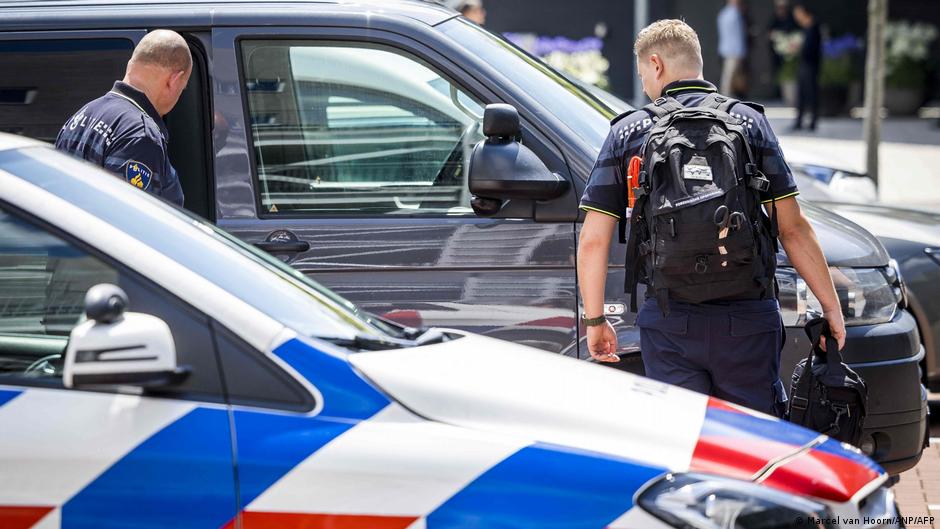
The searches took place on September 8 at residential and commercial premises associated with the suspects in Neustadt an der Weinstrasse, in the German state of Rhineland-Palatinate, and in Vienna. Law enforcement agencies from Germany, Austria and Belgium were involved in the operation. At the request of prosecutors, the local court in Kaiserslautern authorized the asset seizure.
During the searches in Germany, investigators seized two vehicles, a Porsche and a Mercedes-Benz. In Austria, they confiscated 85,000 euros in cash. A further 278,000 euros was blocked in bank accounts in Germany, Austria and Belgium. Investigators also found three hunting rifles and ammunition at the premises of the entrepreneur in Neustadt, leading to an additional investigation into a possible breach of weapons legislation.
Both suspects have so far exercised their right to remain silent, according to prosecutors, and the investigation is continuing.
For senior decision-makers, the case is less about the absolute number of vehicles than about the structure of the alleged scheme. Since the EU imposed restrictions following Russia’s full-scale invasion of Ukraine, sanctioned goods have frequently been rerouted through intermediaries and neighboring markets. The use of countries such as Belarus, Kyrgyzstan and Georgia in alleged circumvention cases reflects a broader pattern: when direct trade channels are closed, economic incentives shift toward parallel routes, reclassification of goods and weaker points in export-control networks.
The automotive sector is particularly exposed to this dynamic. Vehicles, especially luxury cars and commercial transport equipment, are high-value goods with mobile ownership structures, strong resale demand and documentation that can be manipulated across jurisdictions. Even when manufacturers and formal dealers comply with sanctions, smaller exporters, brokers and resale networks may still exploit gaps in monitoring.
Growing Legal Pressure on Auto Dealers
The latest searches follow a series of German enforcement actions targeting automotive exports to Russia. In March, a court in Wurzburg sentenced a Bavarian car dealer to six years in prison for supplying 111 luxury vehicles to Russia in violation of sanctions. According to investigators in that case, the cars ended up with employees of the FSB, the Federal Protective Service, Rosneft and the Russian presidential administration.
In July 2025, an employee of a car dealership in Hesse received a five-year prison sentence for selling 71 luxury cars to Russia, also allegedly in circumvention of sanctions. These cases suggest that German authorities are moving from administrative warnings and compliance pressure toward criminal prosecution, prison sentences and asset recovery.
Such enforcement has a broader economic purpose. EU sanctions are designed not only to restrict Russia’s access to specific goods but also to raise the cost and uncertainty of procurement. If evasion networks can reliably deliver sanctioned products through third countries, the macroeconomic effect of sanctions is diluted. Conversely, visible prosecutions can increase the perceived risk for intermediaries, banks, transport companies and dealers, making circumvention more expensive and less predictable.
Still, the record also shows the limits of enforcement. Similar cases are not isolated. In May 2025, it was reported that German prosecutors were investigating more than 40 cases related to deliveries of expensive cars to Russia. Media reports described a judicial “hunt” for dishonest German car dealers, while experts noted that only a small share of shadow deliveries was being stopped.
That gap between formal sanctions and real-world trade flows has policy implications for the EU. Sanctions regimes depend on customs checks, financial monitoring, corporate compliance, data sharing and cooperation with third countries. Each weak link can create an arbitrage opportunity. For businesses, the risk environment is therefore changing: export-control compliance is becoming a core governance issue, not a back-office formality.
China Route Adds Global Dimension
The alleged European cases sit within a wider global trade pattern. In February, Reuters reported that tens of thousands of cars, including German luxury vehicles, were being exported to Russia in circumvention of sanctions through China. Some of these cars are produced by foreign companies directly in China, while others are imported into China from abroad before being redirected.
According to that reporting, new cars have been registered as used vehicles, a classification that makes it possible to avoid obtaining manufacturers’ permission for their sale to Russia. This points to a deeper challenge for Western policymakers: sanctions enforcement cannot be confined to the original point of manufacture or the first sale. It must track how goods move, change legal status and enter resale channels across multiple jurisdictions.
For the global economy, the consequences extend beyond the automotive market. The persistence of sanctions circumvention reinforces the fragmentation of trade into compliant and non-compliant channels, raises due-diligence costs and increases pressure on banks, insurers and logistics providers to screen transactions more aggressively. It also adds friction to relations between the EU and countries used as transit hubs, where governments may face demands to tighten controls or risk reputational and regulatory consequences.
The raids in Germany and Austria therefore highlight a central tension in sanctions policy. The EU can impose restrictions quickly, but maintaining their effectiveness over years requires sustained investigative capacity, cross-border coordination and credible penalties. As Russia adapts its procurement networks, European enforcement agencies are being pushed into a longer contest over trade data, financial flows and the incentives of private intermediaries.