New York Mayor Mamdani Raises Hate-Crime Budget in Antisemitism Plan
The city’s strategy would lift annual hate-crime spending to $29 million, adding security, education and cultural funding amid political tensions.
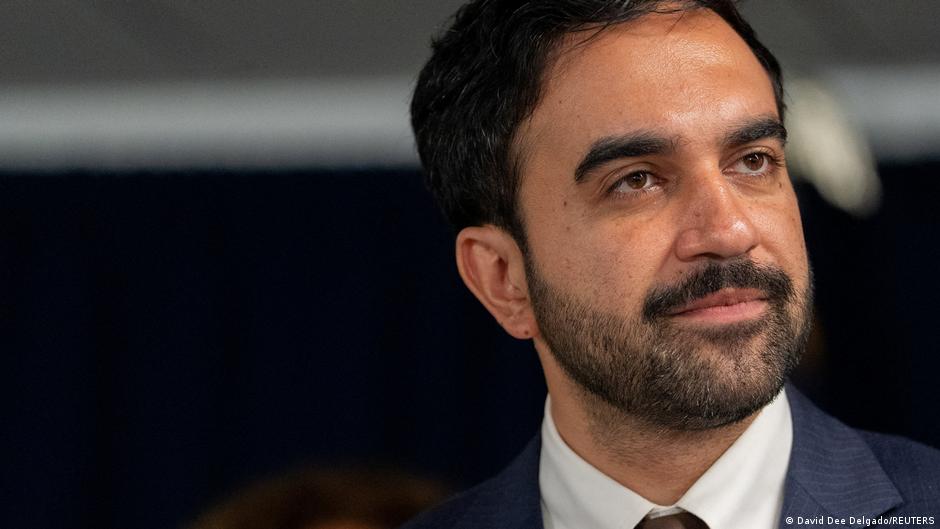
New York Mayor Zohran Mamdani on Tuesday, September 29, unveiled a broad municipal strategy to counter antisemitism and hate crimes targeting Jewish residents, setting out a significant increase in city spending and a wider role for local government in community security, education and public messaging.
The plan would raise the city’s annual budget for combating hate crimes from $3 million to $29 million. It also includes additional funding for synagogue security and the restoration of a task force focused on the safety of Jewish houses of worship. For senior policymakers and business leaders, the scale of the proposal underscores how social cohesion and public safety are becoming more visible components of urban economic governance in major global cities.
Mamdani, the first Muslim mayor of New York, is known for his pro-Palestinian stance and criticism of Israel. Those positions have drawn opposition from part of the city’s Jewish community, though he also has supporters among Jewish New Yorkers. His announcement therefore lands at the intersection of local security policy, identity politics and the broader geopolitical pressures that increasingly shape municipal decision-making.
Security Spending as Urban Economic Policy
The most immediate fiscal shift is the proposed rise in annual hate-crime funding to $29 million. While modest relative to New York’s overall budget, the increase is large in proportional terms and signals a policy choice to treat antisemitic violence and intimidation as a systemic risk rather than a set of isolated incidents.
That matters for economic leadership because public safety is an input into confidence: for households, religious institutions, nonprofit organizations and businesses operating in dense urban environments. When hate crimes become a persistent concern, the costs are not limited to policing. They can affect insurance, private security spending, philanthropic priorities, school and cultural participation, and perceptions of whether a city remains governable and inclusive.
The strategy also includes citywide public information campaigns against antisemitism and an expansion of educational programs focused on teaching about the Holocaust. Millions of dollars are planned for Jewish cultural centers and nonprofit organizations, including a Holocaust memorial being created in Queens and a new Jewish culture center in Brooklyn.
These measures point to a broader policy mix: prevention through public education, deterrence through security funding, and institutional investment through support for cultural and nonprofit infrastructure. In macro-economic terms, the plan reflects a familiar post-crisis governance pattern in which cities respond to social fractures by increasing targeted public spending while attempting to preserve confidence in civic institutions.
“Although our Jewish neighbors make up only 12% of New York’s population, police statistics show that antisemitic crimes account for more than half of all registered hate crimes,” Mamdani said in a video address posted on X.
He added that the situation was “not only unacceptable” but something the city was obligated to change, saying municipal authorities would take a leading role.
Political Risk and Global Spillovers
The announcement also carries political significance beyond New York. The city is a global financial center, a diplomatic hub and home to large Jewish and Muslim communities. Its mayoral policies are therefore watched not only as local governance but as signals about how major Western cities are managing the domestic consequences of conflicts abroad.
Israeli Prime Minister Benjamin Netanyahu, speaking at the United Nations General Assembly in New York, called Mamdani an antisemite. During the 2026 election campaign, Mamdani said that if Netanyahu visited New York he would seek his arrest on the basis of a warrant issued by the International Criminal Court in 2024. After taking office as mayor, however, he acknowledged that he did not have the authority to do so.
That sequence highlights a recurring challenge for city leaders: foreign-policy positions can generate domestic political capital, but executive office often imposes legal and administrative constraints. The antisemitism plan can therefore be read in part as an attempt to demonstrate governing responsibility in an area where Mamdani’s previous rhetoric and policy positions have been intensely scrutinized.
For investors, employers and institutional leaders, the longer-term issue is whether major cities can contain social polarization without allowing it to erode public trust or disrupt the civic infrastructure that supports economic activity. New York’s approach suggests that municipal governments may increasingly allocate funds to community protection and anti-hate initiatives as part of their broader resilience agendas.
The policy implications could extend beyond this specific case. If hate-crime prevention becomes a larger budget category, cities may face new questions about how to measure effectiveness, distribute funds among vulnerable groups, and balance security spending with education and cultural investment. Those choices will matter in an era when demographic diversity is central to the economic strength of metropolitan regions but also exposes cities to sharper political and social tensions.
Mamdani’s plan preserves the core tension around his leadership: a mayor criticized by some Jewish residents for his views on Israel is now proposing a substantial municipal response to antisemitism. Whether the strategy changes political perceptions will depend not only on the headline budget increase, but on implementation, community trust and the city’s ability to reduce the share of hate crimes targeting Jewish New Yorkers.