Zelensky Says North Korea Plans to Send 10,000 More Troops to Russia
Ukraine’s president said intelligence points to a further North Korean deployment, underscoring the war’s widening economic and security costs.
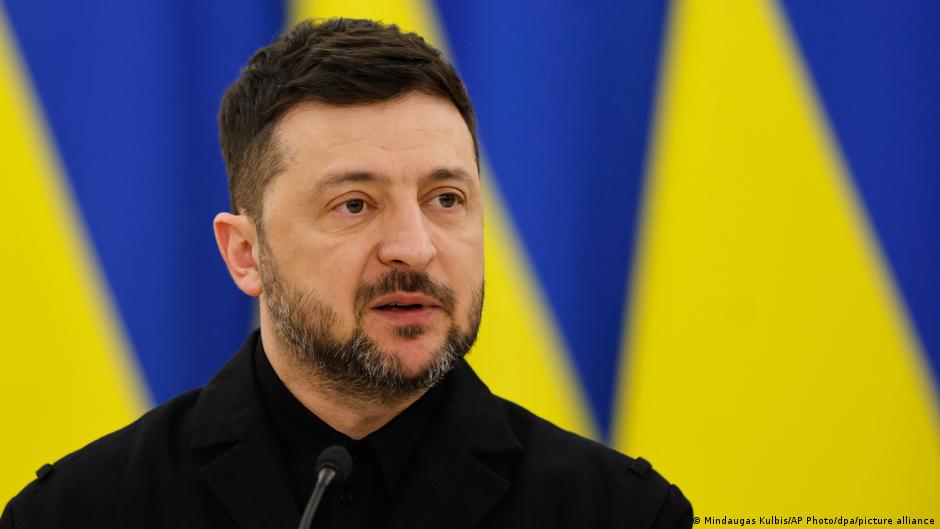
Ukrainian President Volodymyr Zelensky said North Korea is preparing to transfer about 10,000 additional military personnel to Russia, citing new intelligence from Ukraine’s Main Directorate of Intelligence at the Ministry of Defense. According to Zelensky, more than 8,000 North Korean soldiers are already on Russian territory.
The statement, made in his evening address on Monday, September 28, adds to mounting evidence that Russia is broadening its reliance on foreign manpower as the war against Ukraine continues to absorb military, fiscal and diplomatic resources. For senior policymakers and business leaders, the reported deployment is not only a battlefield development but also a signal of deeper strategic alignment between Moscow and Pyongyang, with implications for sanctions enforcement, defense supply chains and the security architecture in both Europe and Northeast Asia.
Zelensky said North Korean servicemen are currently being selected for training and subsequent transfer to Russia. He argued that Russian authorities plan to increase the recruitment of foreigners for participation in the war against Ukraine.
“It is important that the governments of countries from which Russia is attracting people into its army counteract this. We will inform every government,” Zelensky said.
The remarks suggest Kyiv is seeking to turn the issue into a broader diplomatic campaign, aimed at governments whose citizens or military personnel could be drawn into Russia’s war effort. That approach reflects a wider Ukrainian strategy: to raise the political cost for states that may enable Moscow’s military operations directly or indirectly, and to press partners to treat manpower flows as part of the same sanctions and security challenge as weapons, technology and finance.
A War With Expanding External Inputs
South Korean intelligence has estimated that North Korea has already sent about 15,000 military personnel to support Russia in the war. In return, Pyongyang is believed to receive money, military technologies and security guarantees from Moscow. Zelensky said in August that North Korea intended to deploy between 30,000 and 50,000 fighters on Russian territory.
If confirmed, the reported new movement of about 10,000 troops would reinforce a trend that matters well beyond the immediate military balance. Russia’s ability to mobilize foreign personnel could extend the duration of the conflict, complicate ceasefire assumptions and increase the long-term fiscal burden on Ukraine and its backers. It would also suggest that Moscow is continuing to trade economic and technological resources for military support, creating channels that may be harder to monitor than conventional arms transfers.
For North Korea, the arrangement appears to offer a combination of hard currency, strategic technology and political protection. Those gains could affect security calculations in East Asia, where any improvement in Pyongyang’s military capabilities may raise risks for South Korea and its allies. For global markets, the concern is not an immediate macroeconomic shock but the gradual entrenchment of linked security crises: a war in Europe that increasingly touches the Korean Peninsula, and a Northeast Asian security problem that becomes tied to Russia’s confrontation with the West.
The economic consequences are likely to be cumulative. A more internationalized Russian war effort could sustain higher defense spending across NATO, intensify pressure on European public finances and reinforce industrial policy shifts toward defense production, energy security and strategic stockpiling. It could also sharpen the debate over sanctions gaps, particularly if payments, technology transfers or logistical support move through opaque channels.
Seoul-Kyiv Tensions Add a Diplomatic Complication
Zelensky’s latest comments came against the backdrop of a dispute between Kyiv and Seoul that erupted several days earlier. South Korean President Lee Jae Myung sharply criticized Ukrainian authorities after Zelensky publicly disclosed the transfer to Seoul of two North Korean soldiers who had been captured during fighting by the Armed Forces of Ukraine in Russia’s Kursk region. Lee said Zelensky had violated an agreement on confidentiality.
Zelensky’s office responded that no non-disclosure agreement existed between the two countries regarding that information. Seoul called that assertion false. On September 28, South Korea’s Ministry of Foreign Affairs summoned Ukraine’s acting ambassador. A deputy foreign minister conveyed Seoul’s “firm position” to the Ukrainian diplomat, according to Yonhap.
The dispute illustrates the diplomatic sensitivity surrounding North Korean involvement. South Korea has a direct security interest in intelligence related to captured North Korean personnel, while Ukraine has an interest in publicly documenting foreign participation in Russia’s war. Those objectives can overlap, but they are not identical. For Seoul, premature disclosure may complicate intelligence handling, domestic politics or negotiations. For Kyiv, publicity helps frame Russia’s war as an increasingly international threat requiring a stronger response from partners.
For economic decision-makers, the episode is a reminder that geopolitical coordination can fray even among countries with broadly aligned concerns. As the Russia-North Korea relationship deepens, governments will face harder choices over information sharing, sanctions design, military aid and diplomatic signaling. The immediate claim concerns troop numbers, but the larger issue is the formation of transactional security partnerships that can outlast individual battlefield phases.
That long-term risk is that Russia’s war economy becomes more resilient through external labor, military assistance and technology-for-security exchanges, while North Korea gains resources that strengthen its own strategic position. Such a pattern would further blur the line between regional conflicts and global economic policy. It would also increase the premium on coordinated enforcement, intelligence cooperation and defense-industrial planning among Ukraine’s partners and countries exposed to North Korean security risks.