Greens Hold Hanover as AfD Falls Short in Lower Saxony Municipal Runoffs
Runoff results in Lower Saxony signaled limits to far-right local gains while confirming the Greens’ strength in key urban centers.
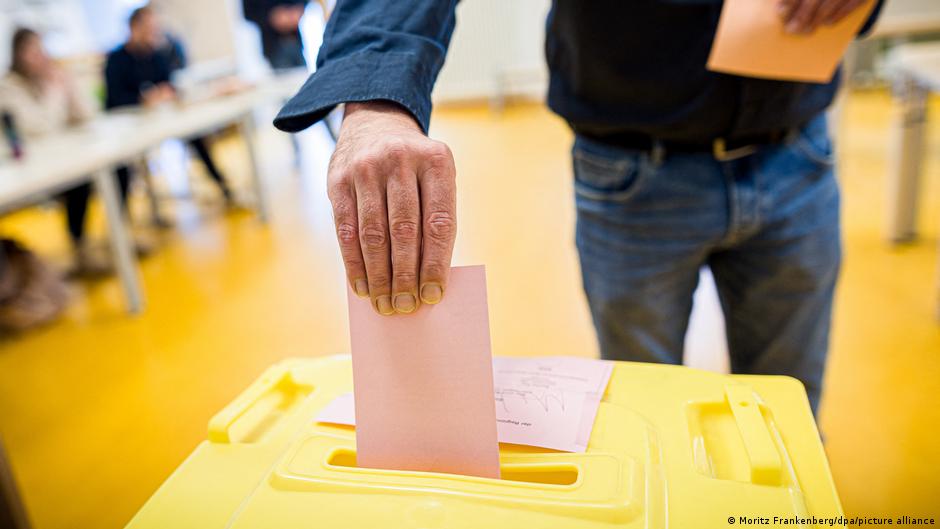
Germany’s Lower Saxony delivered a closely watched municipal signal on Sunday, September 27, as the far-right Alternative for Germany failed to win any of the three mayoral or local executive posts it contested in runoff votes, while the Greens retained Hanover and gained ground in other major urban centers.
The elections, held across 123 municipalities, were formally local contests for city and territorial leaders. Yet for senior decision-makers tracking Germany’s political economy, the results offer a useful read on the country’s fragmented party landscape at a moment when municipal governance increasingly intersects with investment planning, infrastructure policy, climate adaptation and fiscal choices.
The AfD had candidates in three executive races: Salzgitter, a city of about 100,000 people, and the smaller towns of Munster and Bockenem, with roughly 15,000 and 9,000 residents respectively. In all three, the party was decisively defeated.
In Salzgitter, Christian Democratic Union incumbent Frank Klingebiel, who has served as lord mayor since 2006, won with 74.72% of the vote. AfD candidate Patricia Mair received 25.3%. In Munster, independent candidate Anna Adamczak won 80.5%, compared with 19.5% for AfD candidate Christoph Weynand. In Bockenem, independent Jens Luer secured 69.6%, while AfD candidate Felix Mull received 30.4%.
For the AfD, the runoff results showed that first-round support did not translate into executive power in the municipalities where it reached the second round.
The outcome matters beyond local party arithmetic. Germany’s municipalities are frontline actors in housing approvals, transport planning, energy transition projects, business permitting and integration policy. A failure by the AfD to convert runoff appearances into mayoral offices reduces the immediate prospect of far-right control over local administrations in these contests, even though the party’s first-round vote share remains a measurable factor in regional politics.
Urban Results Reinforce Green and Incumbent Strength
In Hanover, the administrative capital and largest city in Lower Saxony, Green incumbent Belit Onay retained the mayoralty. Onay, who has held the post since 2019, defeated Social Democratic Party candidate Axel von der Ohe in the second round. The result gives the Greens continued leadership in a major regional capital, a position with implications for urban mobility, climate policy, housing and public-sector coordination.
The Greens also won in Oldenburg, the third-largest city in the state, where Jascha Rohr defeated Ulf Prange of the SPD. Prange had stood for the Social Democrats in place of Juergen Krogmann, who had served as lord mayor since November 2014. In Goettingen, the fifth-largest city in Lower Saxony, Green candidate Onyeka Oshionwu defeated Ehsan Kangarani of the CDU in the runoff.
Taken together, the results point to a continuing urban opening for the Greens in Lower Saxony, even though the party ranked fourth in the main phase of the municipal elections. For economic policymakers and corporate planners, this distinction matters: statewide vote shares shape political narratives, but control of larger city halls can affect procurement, land-use decisions, local energy strategies and implementation of federal or state programs.
Other major cities produced continuity rather than upheaval. In Braunschweig, the state’s second-largest city, SPD incumbent Thorsten Kornblum kept the office of lord mayor after defeating CDU candidate Maximilian Pohler. Kornblum has led the city since November 2021. In Osnabrueck, Lower Saxony’s fourth-largest city, CDU incumbent Katharina Poetter retained her post, defeating Green candidate Volker Bajus. She, too, has led the city since November 2021.
These incumbent victories suggest that voters in several large municipalities favored administrative continuity, even as party competition remains intense. For businesses and institutions operating in the region, that continuity can matter in areas such as zoning, infrastructure timetables, municipal finance and cooperation with state-level authorities.
Statewide Vote Shares Show a Fragmented Electorate
The main phase of the Lower Saxony municipal elections took place on September 13. According to figures available on September 14, the CDU received the largest share of the vote, with 27.2%. The party is led nationally by German Chancellor Friedrich Merz. The SPD followed with 24.6%, while the AfD placed third with 15.9%. The Greens received 14.1%, and the Left Party received 6%.
Turnout, according to the electoral commission on September 14, was 64.6%. That was 7.6 percentage points higher than in the 2021 state elections. The rise in participation is notable because municipal elections often serve as lower-intensity contests, yet this vote attracted stronger engagement than the previous state-level election. Higher turnout can complicate simplistic readings of protest-party momentum, particularly when second-round contests favor broader coalitions against polarizing candidates.
The AfD’s position in the election was also shaped by institutional scrutiny. Four AfD candidates were denied admission to the elections because of doubts about their commitment to Germany’s constitutional order. The Lower Saxony branch of the AfD is under observation by the domestic intelligence service as a right-wing extremist grouping. The party is challenging that decision in court.
For Germany’s macroeconomic outlook, the Lower Saxony results do not alter federal fiscal policy or national coalition arithmetic directly. But they do illuminate the operating environment in Europe’s largest economy: a strong CDU first-place finish, resilient SPD incumbency in selected cities, visible Green strength in urban centers and a far-right party that can poll significantly but still fail to win executive offices in runoff settings.
That mix has policy implications. Local governments are central to delivering Germany’s energy transition, managing demographic pressure, approving housing supply and administering public investment. Where Greens hold major city halls, climate and mobility priorities are likely to remain prominent. Where CDU and SPD incumbents retain office, the emphasis may fall more on continuity, administrative experience and negotiated implementation. Where the AfD remains electorally relevant but outside executive control, mainstream parties still face pressure to respond to voter discontent without ceding local governance.
The Lower Saxony runoffs therefore offer a measured signal rather than a sweeping realignment. The far right remains present in the electoral map, but its candidates were defeated in the executive races they contested. The Greens, despite a fourth-place statewide vote share, secured important urban victories. For decision-makers assessing Germany’s policy trajectory, the lesson is that local power remains distributed, competitive and consequential for the long-term execution of national economic priorities.