Swiss Voters Reject Sanctions Limits in Test of Neutrality Policy
The referendum result preserves Bern’s flexibility to align with sanctions regimes and signals continuity in Switzerland’s economic policy posture.
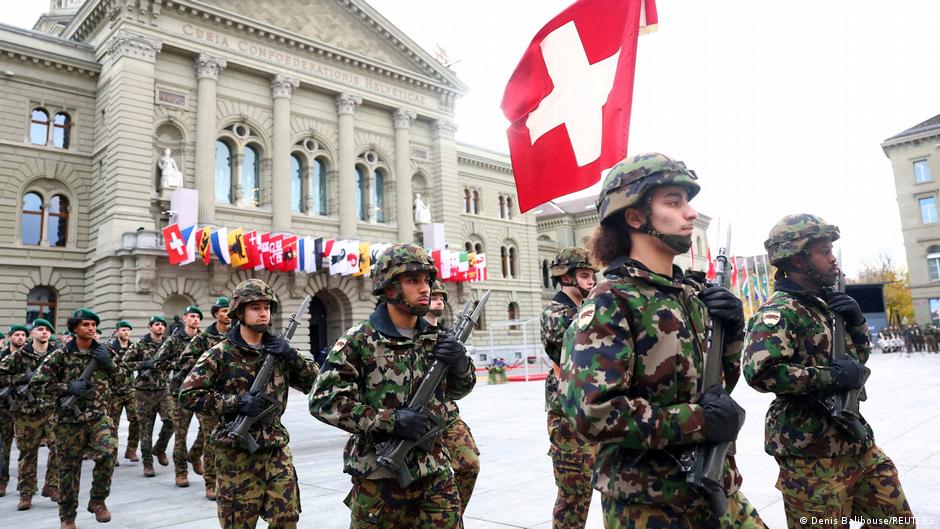
Swiss voters have rejected a proposal that would have imposed a stricter interpretation of the country’s political neutrality, including sharp limits on the government’s ability to adopt economic sanctions against states at war. The outcome preserves Switzerland’s current room for manoeuvre at a time when neutrality, sanctions policy and economic security are increasingly intertwined in Europe’s response to geopolitical conflict.
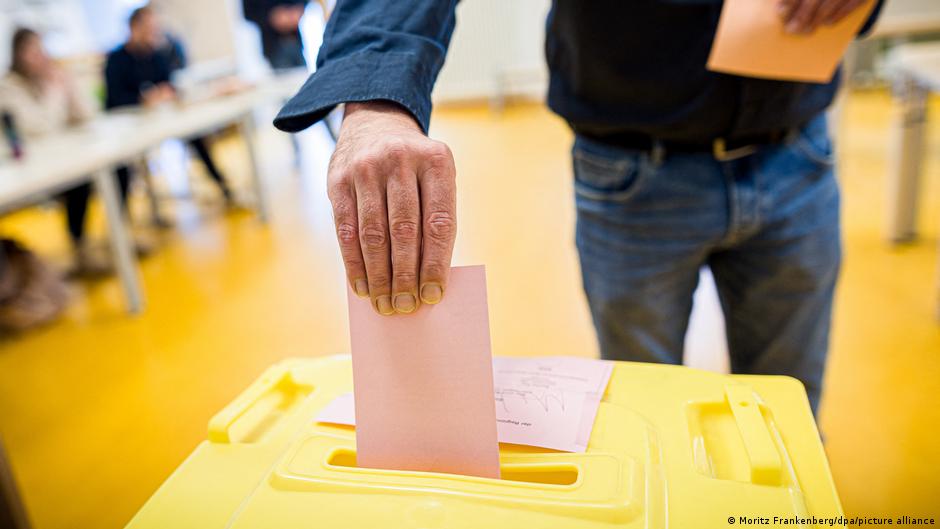
According to official results published on the Swiss government’s website on Sunday, September 27, 70.15 percent of voters opposed the initiative. The proposal, titled “Preserving Swiss Neutrality,” was advanced by the group Pro Schweiz, which is close to the right-conservative Swiss People’s Party. Its backers argued that although neutrality is enshrined in Switzerland’s constitution, the government had weakened the principle of non-intervention by joining European Union sanctions against Russia over the war in Ukraine.
The vote matters beyond Switzerland’s domestic constitutional debate. For senior decision-makers, it is a signal that one of Europe’s most important financial centres will retain the legal and political flexibility to participate in sanctions frameworks when the government deems them necessary. Had the initiative passed, Switzerland’s ability to respond to future geopolitical shocks through economic restrictions would have been narrowed substantially, with implications for banks, commodity traders, multinational firms and counterparties exposed to sanctioned jurisdictions.
Neutrality Remains Flexible Rather Than Absolute
The initiative sought to anchor in the constitution a principle of “permanent and armed” neutrality. It also aimed to prohibit Switzerland from joining military alliances, such as NATO, or cooperating with them, except in cases where Switzerland itself came under attack. The most economically significant element was a broad proposed ban on sanctions: under the amendments, the government would have been able to impose economic sanctions only after approval by the United Nations Security Council.
That threshold would have represented a major policy shift. Because the Security Council is often constrained by the veto power of permanent members, such a requirement could have prevented Switzerland from aligning with European sanctions in many future crises. In practice, it would have moved Swiss policy away from coordinated Western economic pressure and toward a much narrower sanctions regime tied to UN consensus.
Foreign Minister Ignazio Cassis argued during televised debates that Swiss neutrality has always been applied with a degree of “flexibility.”
Cassis also warned against equating neutrality with “indifference.” In his view, Switzerland should not close its eyes to violations of international law in order to protect its own interests or preserve peace. That argument proved persuasive across much of the political mainstream: with the exception of the Swiss People’s Party, all major political forces in the country opposed the initiative.
The result therefore confirms a broad centrist and institutional preference for pragmatic neutrality. Switzerland is not abandoning its neutral status, but voters declined to convert neutrality into a rigid constraint that would sharply reduce the state’s ability to act in response to international law violations or major security crises.
Economic Policy Consequences
For businesses and investors, the referendum result reduces uncertainty around Switzerland’s sanctions alignment. Since Russia’s full-scale war in Ukraine, sanctions policy has become a central economic instrument for advanced economies, affecting banking compliance, asset freezes, trade controls and cross-border transactions. Switzerland’s participation in EU measures against Russia has been particularly consequential because of the country’s role in private wealth management, commodities and international finance.
A constitutional restriction requiring UN Security Council approval would have created a separate Swiss track for sanctions policy. That could have complicated compliance architecture for companies operating across the EU and Switzerland, potentially producing divergent rules for asset handling, financing, trade and services. It may also have raised questions about Switzerland’s position in the broader European economic order, even without any formal change in its non-membership of the EU or NATO.
Instead, voters have endorsed continuity. The government remains able to use sanctions as part of its foreign economic policy toolkit, including in coordination with European partners. For firms, this means the existing compliance environment remains politically supported, even if debates over neutrality will continue. For policymakers, the result strengthens the argument that neutrality can coexist with economic measures against states that violate international norms.
The referendum also underscores a larger shift in the global economy: sanctions are no longer exceptional instruments used only in narrow cases. They have become structural tools of economic statecraft. Switzerland’s decision not to constitutionally limit them indicates that even traditionally neutral economies see value in preserving optionality as geopolitical risk becomes more persistent.
Food Security Proposal Also Defeated
Swiss voters also rejected a separate food security initiative by a margin of more than 70 percent. Its supporters had proposed increasing the share of food produced domestically to at least 70 percent of consumption, expanding production of plant-based foods, reducing the use of plant protection products and fertilizers, and strengthening protections for drinking water, soil fertility and biodiversity.
That result suggests voters were unwilling to mandate a major restructuring of domestic food production through the proposed mechanism. From a macroeconomic perspective, the rejection points to caution over policies that could have reshaped agricultural output, input use and supply chains. It also illustrates the limits of voter appetite for prescriptive self-sufficiency targets, even amid wider global concern over food security and environmental resilience.
Taken together, the two votes show Switzerland choosing policy flexibility over constitutional rigidity. On neutrality, the country preserved its capacity to act in coordination with sanctions regimes. On food security, it declined to impose a high domestic production threshold and broader production mandates. For economic policymakers and corporate decision-makers, the message is one of institutional continuity: Switzerland remains cautious, but not immobilized, in the face of geopolitical and structural economic pressures.