Flydubai Halts Israel Flights as Security Incident Tests Gulf Air Links
The suspension underscores how aviation security shocks can quickly expose diplomatic, regulatory and economic fragilities in Middle East connectivity.
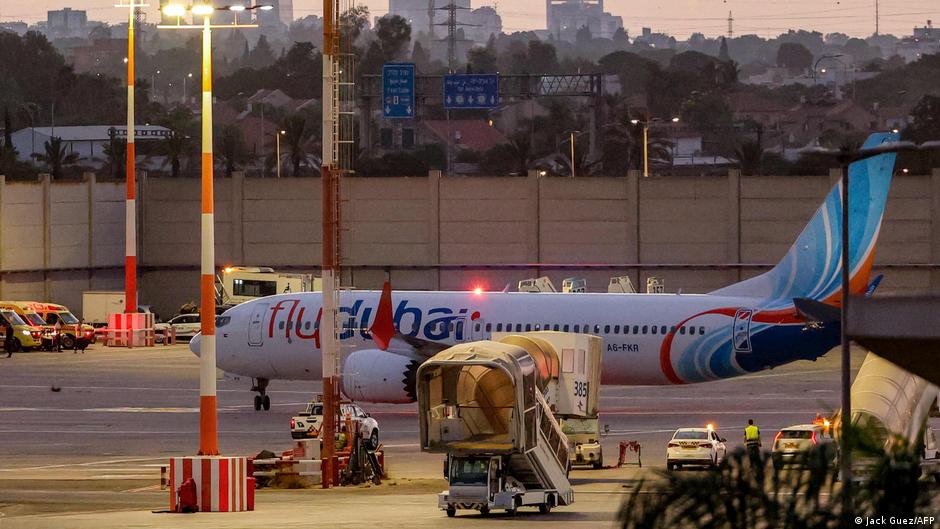
Flydubai has suspended all flights to and from Israel while authorities investigate a serious incident involving one of its aircraft traveling from Dubai to Tel Aviv, a disruption that carries implications beyond a single route and into the broader economics of Gulf-Israel connectivity.
The carrier said the temporary halt would allow the relevant authorities to continue their work and establish the full circumstances of the incident. An official Flydubai representative said late on Wednesday, October 1, that the airline was “closely coordinating” its actions with the government of the United Arab Emirates and other stakeholders. A decision on resuming flights, the representative added, would be made as more information becomes available.
The suspension followed an emergency landing by Flydubai flight FZ1073, a Boeing 737 MAX 8 operating from Dubai to Tel Aviv. The aircraft landed at the airport in Tabuk, Saudi Arabia, at about 9:00 a.m. local time after a signal indicating an attempted hijacking. The incident has prompted intense scrutiny from Israeli officials, who are now examining whether the episode involved violations of aviation agreements between Israel and the UAE.
Aviation Risk Becomes a Policy Issue
Israel’s transport minister, Miri Regev, called after the morning incident for all Flydubai flights to Israel to be cancelled. She urged the Civil Aviation Authority to investigate whether the UAE had breached its aviation agreement with Israel. According to the report, the agreement stipulates that only pilots holding passports from countries that maintain diplomatic relations with Israel may land in the country. Israel does not have such relations with Oman.
That regulatory point is economically significant. Since the normalization of ties between Israel and the UAE, air services have been one of the most visible commercial channels connecting the two economies. Any uncertainty over crew eligibility, security screening, or operational compliance can raise costs for airlines, complicate insurance assessments, and make route planning more vulnerable to political intervention.
For senior decision-makers, the episode illustrates how rapidly an operational security event can migrate into the policy sphere. Aviation corridors in the Middle East are not merely commercial assets; they are also instruments of diplomatic normalization, trade facilitation and investor confidence. A suspension, even if temporary, can signal to companies and governments that the institutional foundations supporting regional connectivity remain sensitive to security shocks.
“The temporary suspension will allow the relevant authorities to continue their work and establish all the circumstances of the incident,” Flydubai’s representative said.
According to the main version of events described in the source report, the incident was apparently triggered by a fight in the cockpit. The co-pilot allegedly attacked the captain with a knife and tried to take control of the aircraft. During the struggle, the plane reportedly descended sharply over Saudi Arabia, falling from 9,410 meters to 5,105 meters in just 29 seconds.
There were 174 people on board, including 27 children, most of them Israeli citizens. Some passengers said they first heard shouting from the cockpit. The cockpit door then opened, and they saw that one pilot was injured and that his clothing was covered in blood. First aid was provided, with one passenger reportedly being a doctor. Crew members and passengers were also able to subdue the attacker.
Regional Connectivity Under Strain
The aircraft was ultimately landed in Saudi Arabia by two other pilots who were on board as passengers. CNN reported that the plane was landed by two “reserve pilots” who had been due to operate the next flight. Israel Hayom wrote that they were Ukrainian and Russian, though there has been no official confirmation of that information. Other reports said the aircraft may have been landed by citizens of South Africa and New Zealand.
Israeli Prime Minister Benjamin Netanyahu later said Saudi authorities had arrested the pilot who stabbed his colleague. Media reports identified the suspect as an Omani citizen. Sources from Israeli intelligence cited by The Telegraph did not rule out that he intended to take control of the aircraft and direct it toward a skyscraper in Tel Aviv. One of them said it was believed to resemble a September 11-style scenario in which a co-pilot kills the pilot and crashes the aircraft in Israel with all passengers on board, most of them Israelis. Israeli Defense Minister Israel Katz described the Flydubai incident as an “attempted jihadist terrorist attack.”
The injured pilot was identified as the captain, Indian citizen Smith Machhar. Netanyahu wrote on X that despite serious injuries, Machhar resisted, opened the cockpit door and enabled passengers and crew to neutralize the attacker, preventing an airborne catastrophe. Machhar’s condition is reported to be stable.
After the emergency landing in Saudi Arabia, Flydubai sent a second aircraft to transport passengers to Israel. That aircraft landed at Ben Gurion Airport in Tel Aviv.
The immediate commercial impact of the suspension will depend on its duration, but the policy implications are already visible. Airlines serving politically sensitive routes must balance demand, crew management, security protocols and bilateral aviation rules. Governments, meanwhile, face pressure to reassure passengers without undermining the commercial links that normalization agreements were designed to support.
For Gulf carriers, Israel routes have represented both a business opportunity and a diplomatic signal. A prolonged halt could create scheduling disruptions and reputational risk, while a rapid restart would likely require a credible account of the incident and confidence that safety and legal questions have been addressed. For Israel and the UAE, the handling of the investigation may become a test of how resilient their aviation relationship is under stress.
At a macro level, the incident highlights a persistent feature of Middle East economic integration: infrastructure and market access can expand quickly, but confidence remains contingent on security governance. Air travel, tourism, logistics and business exchange all rely on trust in operational systems that are largely invisible until they fail. The Flydubai suspension is therefore not only an airline decision, but a reminder that regional economic links remain exposed to sudden geopolitical and security-driven repricing.