Putin’s Nuclear Warning Signals Rising Geopolitical Risk for Europe
The Russian president used the Valdai forum to blame the West for the war in Ukraine and frame escalation as a systemic global risk.
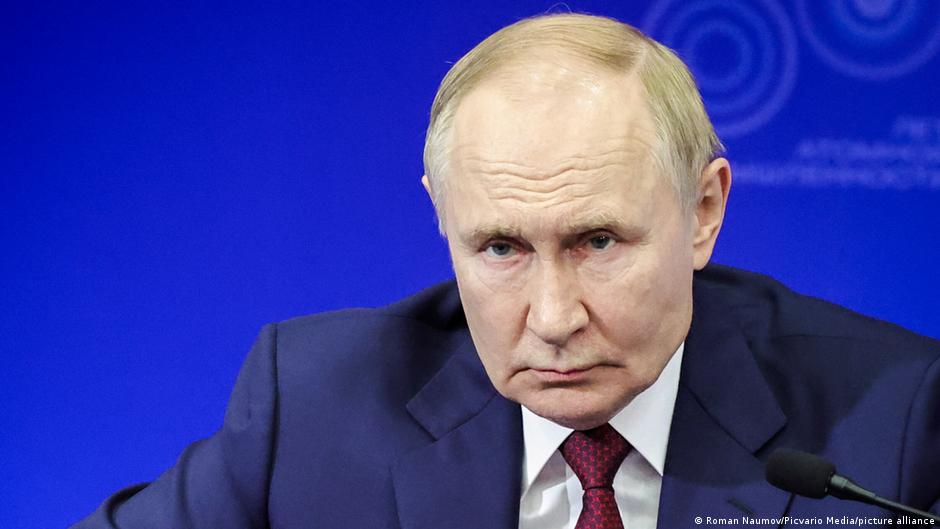
Russian President Vladimir Putin used a closely watched appearance at the Valdai Discussion Club on Thursday evening, October 1, to present the war in Ukraine as part of a wider confrontation with the West and to renew warnings about the possible use of nuclear weapons. For senior economic and policy decision-makers, the speech underscored how security risk in Europe is becoming more deeply embedded in long-term macroeconomic planning, from defense spending and energy security to investment risk and supply-chain resilience.
The forum, usually held in Sochi, was moved this year to the Moscow region because of concerns over possible Ukrainian attacks, according to the British newspaper Financial Times, which cited four sources. Two of those sources said the relocation was made at the insistence of Putin’s security service. The move itself carries economic significance: it reflects how the war has expanded the geography of perceived risk inside Russia and how military considerations are reshaping political and institutional routines.
At the plenary session, Putin described the situation in Europe and the wider world as “very dangerous” and again accused Western countries of aggression against Moscow. He said that a scenario leading to “fatal consequences” for the world remained possible, noting that several countries possess weapons “capable of destroying all living things.” Asked by himself whether he was confident such weapons would not be used, he answered in the negative.
“If we want to live — and everyone wants to live — let us live together in peace,” Putin said, while warning that further escalation could leave no school textbooks and no one left to study them.
Escalation Risk Becomes an Economic Variable
Putin compared nuclear weapons to a gun hanging on a theater stage, which, according to dramatic convention, must eventually fire. He said the laws of struggle for survival operate not only in nature but also in social communities, while stressing that Russia could be forced into extreme measures. At the same time, he said efforts should be made to ensure that “this gun” does not fire.
The remarks add to a persistent risk premium around Europe’s economic outlook. Nuclear rhetoric does not translate directly into a baseline forecast, but it affects the probability distribution facing governments, central banks and multinational companies. Higher geopolitical uncertainty can influence capital allocation, insurance costs, currency hedging, energy infrastructure decisions and defense procurement. It also complicates monetary policy, because security shocks can be simultaneously inflationary, growth-negative and fiscally demanding.
Putin again rejected responsibility for starting the war in Ukraine, claiming that Russia “did not start the war” and that Moscow’s invasion of Ukrainian territory was a response to NATO and Ukraine. “The truth is that it was not we who wanted and started fighting; they started fighting against us,” he asserted. He accused the West of encouraging “aggressive nationalism and Russophobia” in Ukraine for years, turning the country into an “instrument” against Russia. He also claimed that “radicals in Kyiv” were pushed toward a “coup” and that NATO was allegedly preparing to place bases on what he called Russia’s “historical territories.”
Those claims preserve the Kremlin’s long-standing narrative that Russia is acting defensively, even as the war is now in its fifth year. For European governments, the persistence of that framing points to a prolonged confrontation rather than a near-term diplomatic exit. The economic consequence is a structural shift: defense, sanctions enforcement, industrial security, cyber resilience and energy independence are likely to remain central budgetary and regulatory priorities for years.
Territory, Attrition and the Cost of a Prolonged War
Commenting on the course of the war, Putin claimed that Russian forces had seized 3.5 times more territory in the past month than in the preceding one. He also asserted that Russia now controls 89% of Donetsk region. According to data from the Institute for the Study of War, Russia currently controls 81% of Donbas.
Several days earlier, Kyiv said that during three seasons of its counteroffensive operation “Vivaldi,” Ukraine’s armed forces had recaptured 176 square kilometers of Ukrainian territory. Putin, however, again expressed confidence at Valdai that Russia would seize all of these areas and said Ukraine had no reason to hold on to them.
For markets and policymakers, the contested figures matter less than the strategic message: both sides are signaling continued commitment, and Russia is publicly presenting territorial conquest as an achievable objective. That suggests the war’s economic drag will continue to extend beyond direct military spending. It affects grain flows, Black Sea security, sanctions compliance, reconstruction planning, migration pressures and the investment climate across Central and Eastern Europe.
Putin also called for a new convention governing the conduct of warfare, pointing to the rapid development of artificial intelligence technologies. He cited the case of Soviet officer Stanislav Petrov, who in 1983 did not give the order to launch a nuclear strike, even though protocol required him to do so. In Putin’s view, artificial intelligence would have acted differently.
The reference highlights an emerging policy challenge with direct economic implications: the governance of autonomous and AI-enabled military systems. As defense ministries increase spending on AI, drones, targeting systems and command infrastructure, the absence of shared rules could intensify arms-race dynamics. That would place further pressure on public finances while accelerating the integration of advanced technology sectors with national security policy.
Asked about the possibility of strikes on military enterprises in Europe, Putin said Russia would “not necessarily” take such action but would “monitor threats.” He said Moscow regards Western participation in strikes on Russian territory as a direct threat. The statement leaves ambiguity around thresholds for escalation, particularly as European states deepen defense-industrial support for Ukraine.
The broader macroeconomic signal from Valdai is that the war is no longer a contained regional shock for Europe. It is a durable strategic condition influencing fiscal frameworks, industrial policy, energy systems and corporate risk models. Putin’s rhetoric indicates that Moscow intends to keep nuclear risk, territorial claims and technological warfare in the foreground of its confrontation with the West. For decision-makers, that means geopolitical risk is not an external variable to be monitored episodically; it is becoming a core assumption in long-term economic strategy.