Foreign Retailers in Russia Face Asset Controls and Political Risk
Temporary management orders affecting Auchan, Leroy Merlin, Metro and others signal a deeper shift in Russia’s treatment of foreign capital.
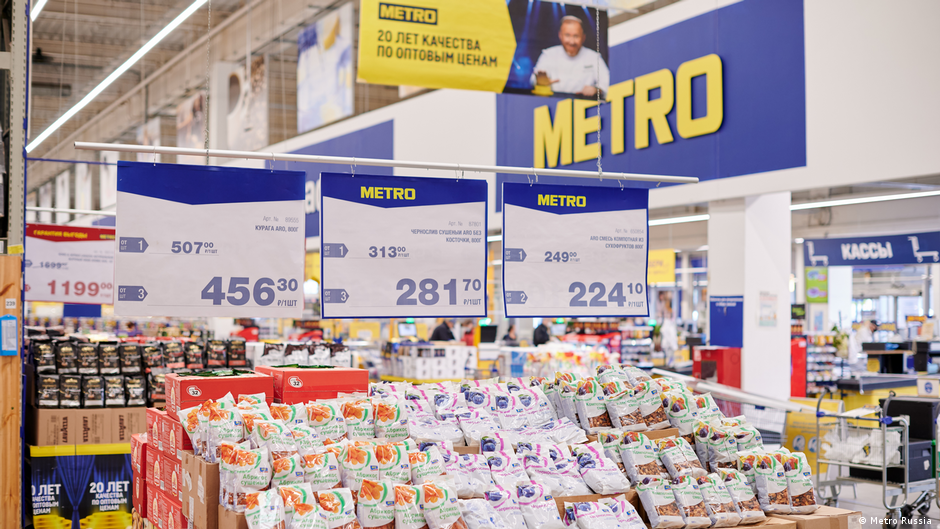
Foreign retail groups operating in Russia are facing an increasingly uncertain business environment as authorities move to limit owners’ control over local assets. The Russian businesses of several foreign retailers have already been placed under temporary management, depriving their owners of access to those assets, according to the source article.
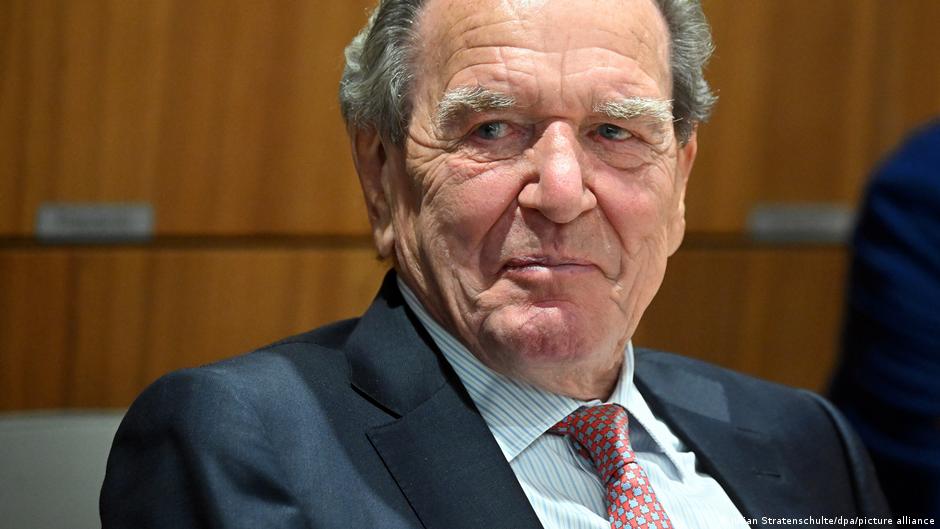
The cases cited include assets linked to France’s Auchan and Leroy Merlin, Germany’s Metro and other companies. Separately, former German chancellor Gerhard Schroeder has joined the supervisory board of the former Russian subsidiary of Germany’s Globus holding company. Taken together, these developments point to a broader question for global investors and policymakers: whether foreign-owned retail assets in Russia are moving from commercial exposure into a zone of quasi-sovereign risk.
One foreign retail chain after another is losing the ability to manage its assets in Russia.
For senior decision-makers, the significance extends beyond the individual companies involved. Retail is a consumer-facing sector with deep local supply chains, logistics networks, property exposure and employment footprints. When such businesses are placed under temporary management, the consequences can ripple across suppliers, landlords, distributors, banks and regional labor markets.
Temporary Management as an Economic Signal
The source article frames the central issue as the possible nationalization of Russian businesses owned by foreign retailers. While it does not state that nationalization has occurred across the sector, it notes that some assets have already been transferred into temporary management and that owners have lost access to them. That distinction matters for economic interpretation.
Temporary management can be presented as an administrative or transitional measure. In practice, however, it may sharply reduce the economic rights of the foreign owner. Control over decisions, cash flows, operational strategy and asset disposition can shift away from the shareholder. For companies assessing country risk, the difference between temporary control and outright nationalization may be legally important, but the commercial effect can still be severe.
The inclusion of Auchan, Leroy Merlin, Metro and other companies in the discussion is notable because these are not marginal investors. Large international retailers entered Russia over many years with long-term capital commitments, brand strategies and supply networks. If such assets become vulnerable to state-directed control mechanisms, the signal to other multinational companies is clear: legal ownership may not be sufficient protection when geopolitical conditions deteriorate.
Policy Risk and the Cost of Capital
The policy implications are substantial. Russia’s handling of foreign retail assets may deepen the divide between domestic control objectives and international investment norms. For foreign companies still exposed to Russia, the risk is no longer limited to sanctions compliance, reputational pressure or consumer demand. It now includes the possibility that operational control could be curtailed or removed through administrative action.
This can raise the long-term cost of capital for any company considering exposure to jurisdictions where political conflict can override shareholder rights. Even where companies have no immediate Russia exposure, boards and investors may reassess the value of assets in markets where exit routes could close quickly or where local authorities can intervene directly in corporate governance.
The appointment of Gerhard Schroeder to the supervisory board of the former Russian subsidiary of Globus adds a political dimension to the corporate picture. The source article does not describe his role beyond membership on the supervisory board, but the involvement of a former German chancellor in the governance structure of a former Russian unit underscores the degree to which these assets sit at the intersection of business, diplomacy and domestic Russian policy.
For European policymakers, such developments complicate the broader economic relationship with Russia. Companies that built businesses under earlier assumptions of market integration now face a landscape shaped by confrontation, asset restrictions and questions over enforceability. The result is a more fragmented global investment environment in which geopolitical alignment increasingly determines operational security.
Retail Assets and Strategic Control
Retail may appear less strategically sensitive than energy, defense or technology. Yet in macroeconomic terms, large retailers occupy an important position in the real economy. They influence food and household goods distribution, regional employment, consumer pricing and supply chain standards. Control over such businesses can therefore have domestic policy value, especially in periods of economic stress.
For Russia, bringing foreign retail assets under temporary management may help ensure continuity of operations while reducing dependence on foreign corporate decision-making. For foreign owners, the same move can mean a loss of effective control and a weaker position in any future negotiation over sale, exit or compensation.
The long-term consequence may be a further localization of Russia’s consumer economy. If foreign owners are unable to manage, sell or recover value from their assets on predictable terms, future foreign participation in the sector will be limited. Domestic or politically aligned operators may gain a larger role, while international brands and governance standards recede.
For global business leaders, the lesson is not confined to Russia. The cases described in the source article illustrate how quickly foreign direct investment can become trapped when political conditions change. Assets that once looked like stable long-term platforms can become bargaining chips, administrative targets or governance experiments.
The immediate issue is the fate of Metro, Globus, Auchan, Leroy Merlin and other foreign retailers in Russia. The larger macroeconomic issue is the erosion of assumptions that underpinned decades of cross-border investment: that property rights, corporate control and exit options would remain broadly predictable even during political strain. As the Russian retail cases show, that assumption is becoming harder to defend.