Germany’s CDU/CSU Support Falls to 2021 Levels Amid Rising Far-Right Influence
Conservative bloc in Germany drops to 20% support as far-right AfD leads polls, signaling shifting voter dynamics ahead of federal state elections.
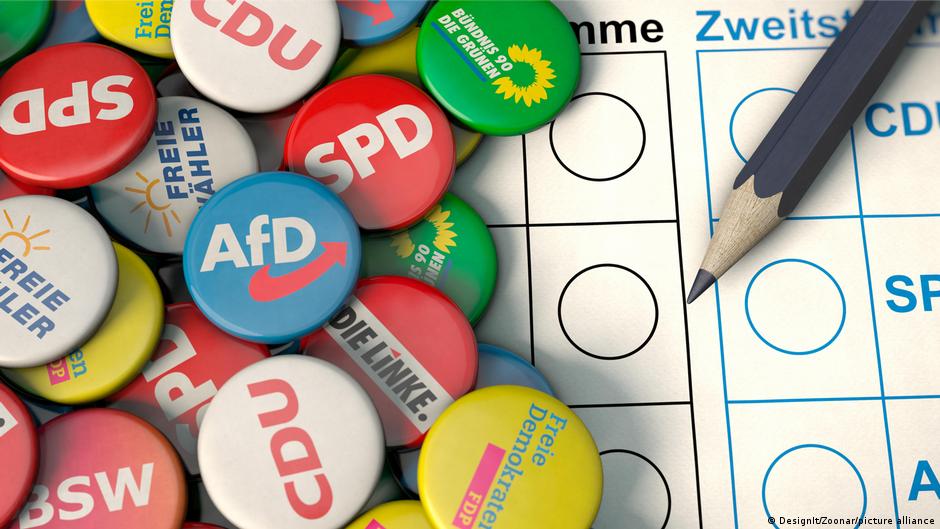
The conservative Christian Democratic Union/Christian Social Union (CDU/CSU) bloc in Germany has seen its support decline to 20%, the lowest point in five years, according to recent polling data. This decline coincides with the far-right Alternative for Germany (AfD) party maintaining its position as the leading force in voter preferences, highlighting a significant shift in the country’s political landscape.
Changing Political Landscape and Voter Behavior
Data from the INSA institute's Sonntagstrend poll indicates that CDU/CSU’s support has slipped by one percentage point since early August, underscoring a continued erosion of the traditional conservative base. Meanwhile, the AfD holds a commanding 28% share in the polls, signaling a growing appeal of far-right platforms amid Germany’s evolving political discourse.
"The weakening of traditional party loyalties and voters’ tendency to decide closer to election day complicate predictive accuracy," experts note, reflecting broader uncertainty in Germany’s electoral dynamics.
The Green Party remains steady at 13%, while the Social Democratic Party (SPD), also part of the current governing coalition, and The Left party each garner 12%. The Free Democratic Party (FDP) is projected to surpass the parliamentary threshold with 5%, while the left-populist "Sarah Wagenknecht Union" trails at 3%, failing to secure representation.
Implications for Upcoming Federal State Elections and National Policy
Germany is set to hold elections in three federal states in September: Saxony-Anhalt, Mecklenburg-Western Pomerania, and Berlin. The AfD is poised to make significant gains, especially in Saxony-Anhalt, where it could potentially form a regional government for the first time. These developments may herald broader shifts in policy orientation, particularly on issues such as immigration, EU relations, and economic governance.
The volatility captured in these polls reflects a broader trend of political fragmentation and voter realignment. Analysts highlight that traditional party loyalties are diminishing, complicating long-term forecasting and policymaking. Voters increasingly make decisions late in the electoral cycle, injecting uncertainty into the political process and challenging the established parties' ability to maintain influence.
For senior policymakers and international observers, these trends signal a need to reassess Germany’s political stability and its implications for European economic and security integration. The rise of far-right influence could affect Germany’s approach to EU fiscal coordination, migration policy, and transatlantic relations, with potential knock-on effects for global markets and geopolitical alignments.
As Germany navigates these internal shifts, decision-makers worldwide should monitor the evolving electorate preferences closely, as the outcomes will likely shape the country’s economic policy trajectory and its role within the European Union and beyond.