Latvian Nationals Detained at UK Air Base as Security Risks Widen
The incident at RAF Molesworth adds to concerns over military-site security and the economic costs of protecting strategic infrastructure.
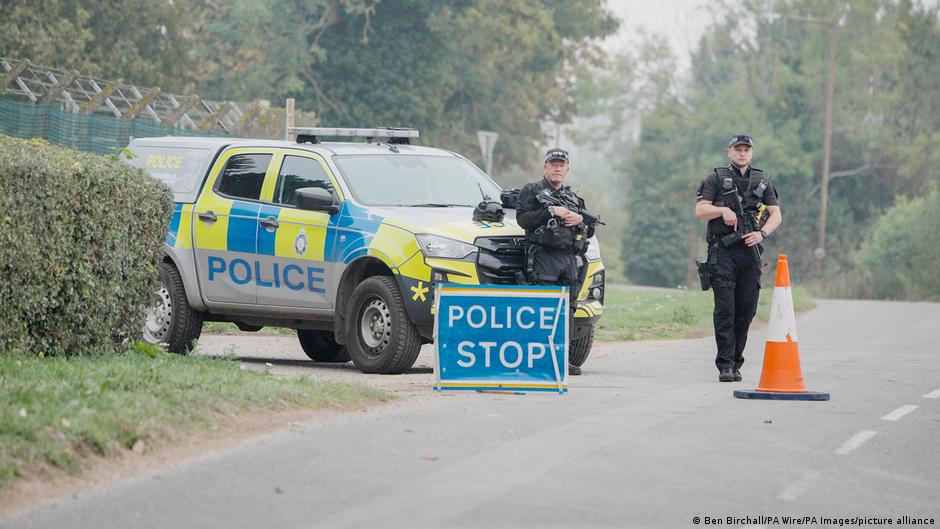
British counterterrorism police have detained two Latvian citizens after they entered RAF Molesworth, an air base in southeast England that hosts NATO and U.S. intelligence facilities. The arrests add another security concern for the United Kingdom at a time when military installations and strategic infrastructure are facing heightened scrutiny.
The two men, aged 32 and 36, damaged fencing around the site before being detained, according to police information cited by AFP on Thursday, October 8. The intrusion took place overnight into October 8. Law enforcement officials said the men intended to “cause damage to the United Kingdom.” An investigation is under way.
For senior economic and policy decision-makers, the immediate facts of the case are narrow, but the broader implications are larger. RAF Molesworth is not a routine domestic facility: it is linked to intelligence operations involving NATO and the United States. Any breach at such a site raises questions about the cost, resilience and governance of security around allied military assets located on British territory.
Police said the apparent objective of the two men was to “cause damage to the United Kingdom.”
Strategic Infrastructure and Economic Exposure
Security incidents at military and intelligence sites can carry economic consequences beyond the direct physical damage involved. Governments may face pressure to raise spending on perimeter security, surveillance, emergency response and interagency coordination. For allied facilities, those costs can involve not only domestic budgets but also coordination with foreign partners and NATO structures.
The United Kingdom has already been navigating a demanding fiscal and security environment, with defense obligations, infrastructure resilience and counterterrorism capabilities competing for public resources. A breach at a base associated with NATO and U.S. intelligence activity reinforces the policy argument that national security spending is increasingly tied to the protection of critical assets rather than only to conventional military capability.
The case also matters because uncertainty itself has economic value. Investors, defense contractors, logistics providers and local authorities all depend on predictable security conditions around strategic sites. Even when incidents are contained, they can lead to changes in access rules, transport restrictions, contractor screening, insurance assumptions and local emergency planning. These effects are often incremental, but they can accumulate across a national security system.
The police statement that the suspected aim was to harm the United Kingdom places the incident in a counterterrorism frame, although the investigation remains ongoing. The available information does not establish a wider network, motive or foreign state connection. It does, however, show how relatively small actions, such as damaging fencing and entering a protected site, can trigger a national-level response when the location is strategically sensitive.
A Separate RAF Fairford Case
Police have said that, for now, “nothing indicates” a connection between the RAF Molesworth incident and an earlier episode at RAF Fairford in late September. That earlier case involved a report from a local resident of “suspicious” activity near the Royal Air Force base. Police later found three vans containing “some quantity” of gasoline.
The area around RAF Fairford was cordoned off, and residents of a nearby village were evacuated. Seven suspects were detained, but they were later released under certain conditions, according to dpa. The United States subsequently decided to withdraw American B-1 bombers that had been based at RAF Fairford. U.S. President Donald Trump explained that decision by citing “threats” from people he said were “connected to Iran.”
The absence of an indicated link between Molesworth and Fairford is important. From a policy perspective, officials will need to avoid treating separate incidents as a single pattern without evidence. At the same time, the recurrence of security alerts around major air bases is likely to influence risk assessments, particularly where U.S. military assets or NATO-linked infrastructure are involved.
For the UK, the economic dimension is not limited to defense expenditure. Military bases often sit inside wider regional economies, supporting local employment, procurement and services. Security lockdowns, evacuations and operational changes can impose localized disruption. If repeated, they may also affect planning assumptions for communities located near sensitive installations.
For NATO and the United States, the incidents underline the importance of host-country security and operational continuity. Bases in allied countries are part of a distributed strategic network. Their value depends not only on aircraft, intelligence systems or personnel, but also on the reliability of the surrounding security environment. Any perception that facilities are vulnerable can lead to additional investment, redeployment decisions or revised operating procedures.
Policy Questions Ahead
The Molesworth arrests will now move through an investigative process, and officials have not disclosed further evidence beyond the reported breach, damaged fencing and stated intent to harm the UK. That leaves key questions unanswered, including motive, planning, whether others were involved and whether the suspects had any support network.
For decision-makers, the prudent reading is that strategic-site security is becoming a more visible policy and budget issue. The UK’s role as a host for allied military and intelligence assets brings strategic advantages, but it also creates exposure. Protecting those sites requires coordination across local police, counterterrorism units, national defense authorities and international partners.
The longer-term economic consequence may be a further shift toward resilience spending: stronger physical security, better monitoring of sensitive perimeters, more robust emergency protocols and closer intelligence sharing. Such measures can be costly, but the political and economic costs of disruption at a NATO- or U.S.-linked facility could be far higher.
For now, British police are treating the Molesworth case as an active investigation, while emphasizing that no link has been identified with the RAF Fairford incident. The two cases nevertheless point to a strategic reality for the UK and its allies: the protection of military infrastructure is no longer a narrow security matter. It is part of the economic architecture of defense, alliance credibility and long-term national resilience.