Ukraine Delegation to Discuss Trump-Linked Peace Plan in U.S. Talks
The proposed talks come as Kyiv presses Washington for tougher economic pressure on Russia and wider operational use of Starlink.
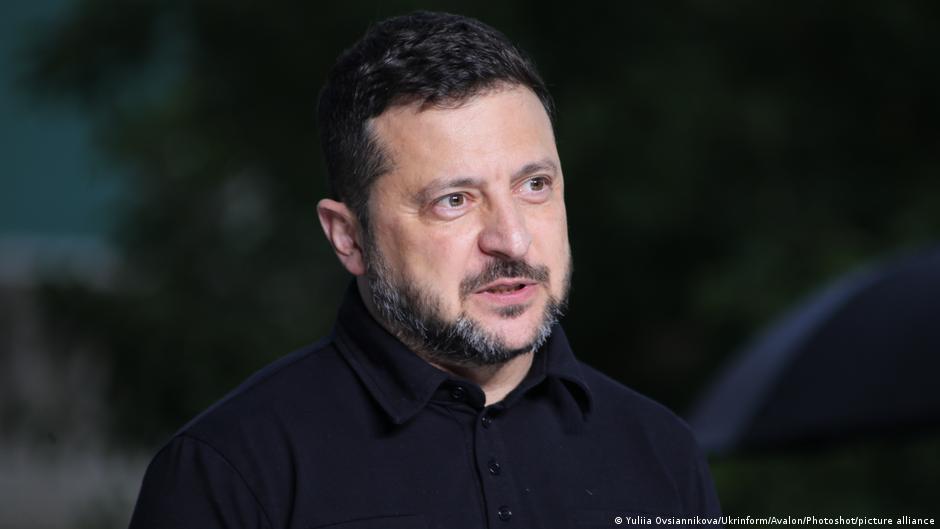
A Ukrainian delegation is expected to hold talks in the United States on October 9 and 10 with special representatives of U.S. President Donald Trump over a new plan to end Russia’s war against Ukraine, according to Ukrainian President Volodymyr Zelensky.
Zelensky told journalists on Thursday, October 8, that the delegation would meet Jared Kushner and Steve Witkoff, who are serving as Trump’s special representatives. The talks, reported by UNIAN, come at a moment when Kyiv is trying to keep military, diplomatic and economic pressure aligned, while also warning that any settlement process cannot be separated from the sanctions architecture and the future of economic engagement with Moscow.
The Ukrainian side will be represented by Kyrylo Budanov, head of the President’s Office; Serhii Kyslytsia, deputy head of the President’s Office of Ukraine; Davyd Arakhamia, head of the Servant of the People faction in parliament; and Rustem Umerov, head of Ukraine’s Foreign Intelligence Service. Zelensky also said that a European side may join the negotiations.
According to the Ukrainian service of Voice of America, citing a senior U.S. official, the meeting will focus on a new proposal that “covers all aspects of the conflict” and is aimed at ending the war.
Economic Pressure Moves to the Center of Diplomacy
For senior policymakers and corporate decision-makers, the talks underscore a broader shift in the diplomatic terrain: any future peace initiative is increasingly tied to sanctions enforcement, technology access, energy revenues, and the willingness of Western governments to restrict Russia’s economic capacity over the long term.
Zelensky’s comments on October 8 were also a direct response to U.S. Secretary of State Marco Rubio, who said in an interview with the Greek newspaper Kathimerini that the war in Ukraine had reached a deadlock and that, in his view, there were no prospects for resolving the conflict through negotiations.
The Ukrainian president rejected that assessment, arguing that the problem was not a lack of diplomatic options but an insufficiently comprehensive squeeze on Russia’s economy. His remarks framed the conflict less as a frozen political stalemate than as a test of whether Western governments are prepared to deny Moscow the commercial and technological inputs that support its war effort.
“We are not in a diplomatic deadlock. Shut down his entire economy. Sew Russia’s mouth shut. Do not feed them with your sales. Just impose sanctions on their weapons,” Zelensky said, according to Ukrinform.
Zelensky also criticized the idea that Western actors could simultaneously discuss future economic projects with Russia while describing the war as diplomatically blocked. That argument is likely to resonate across European capitals, where governments have spent years balancing energy security, sanctions policy, industrial exposure and defense commitments.
For markets, the message is clear: Kyiv will continue pushing for a settlement framework that embeds economic containment of Russia into the negotiating process. That could affect long-term assumptions about sanctions durability, Russian access to dual-use technologies, and the scope for future commercial normalization even if talks gain momentum.
Technology Access and the Military-Economic Balance
Zelensky also called on the United States to allow Ukraine to use Starlink over Russian territory. He said such access would help Ukraine “dominate” the skies and ultimately force Russian President Vladimir Putin to sit at the negotiating table.
The request highlights the increasingly central role of commercial technology infrastructure in modern war and in the economic calculations surrounding it. Satellite connectivity, data centers, drone systems and digital networks are not only battlefield tools; they are also strategic assets with implications for private companies, governments and regulators. Decisions about access can carry military consequences while also raising questions about corporate exposure, export controls and the boundary between civilian and defense infrastructure.
Ukraine’s position is that stronger operational capabilities can produce diplomatic leverage. In economic terms, that means Kyiv sees technology access and sanctions policy as complements: one can increase battlefield pressure, while the other can reduce Russia’s capacity to sustain the conflict.
Zelensky also said Ukraine is responding symmetrically to Russian strikes, including attacks on data centers. “Data centers, you all know, they struck and are striking our data centers. We responded to them. I cannot give all the details,” he said, according to RBC-Ukraine.
Ukraine’s armed forces struck the Yandex data center in the town of Sasovo in Russia’s Ryazan region with drones during the night of October 8. A fire broke out, and the data center completely stopped operating. No one was injured.
The attack points to a widening operational focus on digital infrastructure. For governments and companies, that raises the stakes around resilience planning, cloud continuity, telecommunications redundancy and the protection of critical technology assets. The war has already shown that infrastructure once treated as commercially important can quickly become strategically exposed.
A Peace Plan With Wider Economic Consequences
The reported proposal to be discussed in the United States is described as covering all aspects of the conflict. While no further details were provided in the source account, that formulation suggests a framework that could range beyond ceasefire mechanics and battlefield lines to include sanctions, security guarantees, reconstruction, technology controls and the role of European states.
The possible participation of a European side is significant. Europe would face the direct fiscal, security and reconstruction consequences of any settlement, while also carrying much of the long-term burden of sanctions enforcement and economic adjustment. A peace process that excludes European economic interests would be difficult to sustain; one that incorporates them could reshape budget planning, defense industrial policy and cross-border investment priorities for years.
For Ukraine, the key challenge is to ensure that any initiative aimed at ending the war does not ease pressure on Russia without securing a durable outcome. Zelensky’s response to Rubio indicates that Kyiv will resist a narrative of diplomatic exhaustion if it believes that more effective sanctions and technology policy could still alter Moscow’s incentives.
The October 9-10 talks therefore matter beyond the immediate diplomatic calendar. They may signal whether Washington’s renewed initiative treats the war as a negotiable security crisis alone, or as a structural economic confrontation in which sanctions, technology platforms and infrastructure vulnerability are central to the endgame.