AfD Victory in Saxony-Anhalt Raises Economic and Policy Risks for Europe
Poland, France and the Czech Republic reacted sharply as Germany’s far right scored a decisive regional election win.
Political leaders in countries neighboring Germany reacted swiftly after the far-right Alternative for Germany, or AfD, achieved a major success in the election to the state parliament of Saxony-Anhalt. For senior economic decision-makers, the result is not only a regional political shock. It signals a deeper shift in Europe’s political risk landscape, with potential implications for fiscal priorities, cross-border cooperation, investment confidence and the long-term cohesion of the European Union.
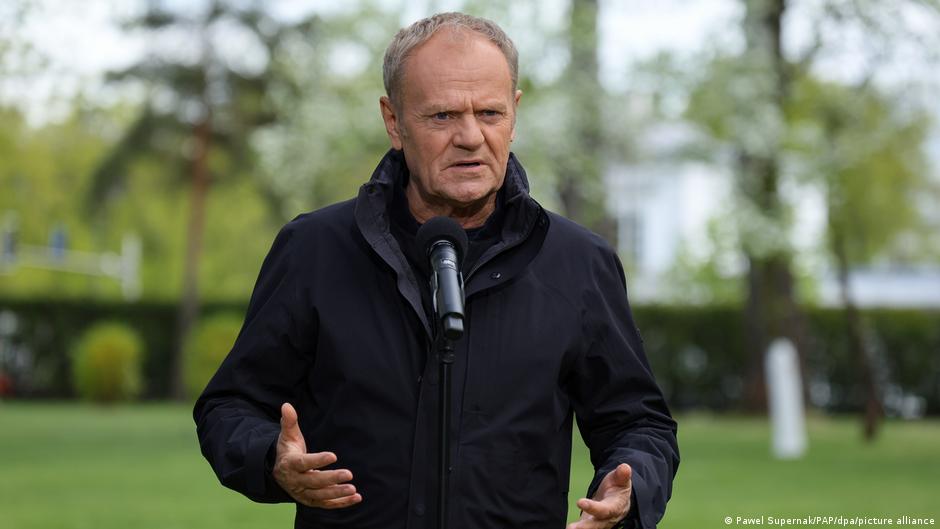
Polish Prime Minister Donald Tusk said he was stunned by the AfD’s performance in the eastern German state. Writing on X on Sunday evening, September 6, Tusk said that in Poland only “idiots or traitors” could celebrate the triumph of the AfD in Germany. He added that a number of such people had accumulated in Poland’s opposition parties, naming Confederation and Law and Justice, or PiS.
“In Poland only idiots or traitors can rejoice at the triumph of the AfD party in Germany,” Tusk wrote on X.
The remarks underline how closely governments in Central and Western Europe are watching Germany’s internal politics. Germany remains the EU’s largest economy and an anchor for regional supply chains, industrial investment and policy coordination. A sharp rise in support for a nationalist party in one of its federal states therefore carries consequences beyond domestic electoral arithmetic.
A Regional Vote With European Reach
According to preliminary results in Saxony-Anhalt, Alternative for Germany was on course for a confident victory with 44 percent of the vote. The party’s candidate for state premier is Ulrich Siegmund. The Christian Democratic Union, whose member Sven Schulze is the incumbent state premier, was preliminarily polling at 17.4 percent.
Other parties were far behind. The Left Party had 8.6 percent, Alliance 90/The Greens had 8.9 percent, the Social Democratic Party of Germany had 9.2 percent, and the Sahra Wagenknecht Alliance had 5.1 percent. The Free Democratic Party and other parties failed to cross the five percent threshold, according to the preliminary results.
On the basis of these figures, the 83 seats in the Saxony-Anhalt state parliament could be distributed as follows: AfD would receive 39 mandates, the CDU 15, the Left Party, Alliance 90/The Greens and the SPD eight seats each, and the Sahra Wagenknecht Alliance five seats. Preliminary final results were expected during the night leading into September 7.
For business and policy leaders, the scale of the AfD’s support matters because it could complicate coalition formation and deepen uncertainty around Germany’s policy direction at the state level. Even where far-right parties do not enter government, strong results can shift the political center of gravity, influence rhetoric on migration, energy, fiscal policy and EU coordination, and increase the cost of forming stable governing coalitions.
Neighbors Split Between Alarm and Approval
The response in neighboring countries illustrated the broader European stakes. In the Czech Republic, Tomio Okamura, speaker of the Chamber of Deputies of the Czech parliament, congratulated the German far-right party during a broadcast on public television channel CT. Okamura, a politician of Japanese-Korean origin and founder of the Czech right-wing party Freedom and Direct Democracy, said he hoped above all that AfD would enter a new governing coalition in Saxony-Anhalt.
The Czech political context adds another layer to the regional reading of the result. Since the end of 2025, the Czech Republic has been governed by a coalition made up of billionaire Andrej Babis’s right-populist ANO party, Okamura’s SPD and the Motorists’ Party. That alignment reflects the growing institutional foothold of right-populist forces in parts of Central Europe, where skepticism toward EU-level policy, migration rules and aspects of climate policy has become an increasingly influential force.
France took a markedly different tone. Benjamin Haddad, France’s minister for European affairs, wrote on X that the result represented a “difficult moment for Europe.” He said political leaders must listen to anger, anxieties and fears and respond to them, but stressed that nationalism and xenophobia would never be the solution. Haddad also urged Europeans not to forget their history, saying that this was the significance of the decisions taken by France and Germany.
His comments point to the strategic importance of the Franco-German relationship. For decades, cooperation between Paris and Berlin has shaped major European policy decisions, from institutional integration to fiscal coordination and crisis management. A stronger nationalist current in Germany may not immediately change federal policy, but it can narrow room for compromise and make long-range EU initiatives more politically contested.
Economic Implications Beyond Saxony-Anhalt
The election result comes at a time when Europe faces overlapping economic pressures: industrial competitiveness concerns, energy transition costs, demographic strain, defense spending demands and debates over migration and labor supply. In that setting, the advance of nationalist and far-right parties can affect economic expectations even before formal policy changes occur.
Investors and executives will be watching whether mainstream parties maintain clear governing boundaries around the AfD, whether coalition negotiations in Saxony-Anhalt produce prolonged uncertainty, and whether the result emboldens similar parties elsewhere. Regional governments in Germany influence education, infrastructure, administration and implementation of federal programs. They also help shape the business environment in states competing for industrial and logistics investment.
The numbers also show fragmentation among Germany’s traditional parties. The CDU’s preliminary 17.4 percent placed it far behind the AfD, while the SPD, Greens and Left each remained below 10 percent. The FDP’s failure to cross the threshold further weakens the liberal pro-business voice in the state parliament. Such fragmentation can increase the difficulty of producing durable policy coalitions, a concern for companies seeking predictable regulation and public investment priorities.
The broader European question is whether economic frustration and social anxiety continue to translate into support for parties that challenge established assumptions about openness, EU solidarity and cross-border policy alignment. Tusk’s warning, Okamura’s endorsement and Haddad’s appeal to history all reflect different readings of the same development: a regional German election has become a signal event for Europe’s political economy.
For senior decision-makers, the immediate data point is Saxony-Anhalt. The larger issue is whether the result marks another step in the normalization of far-right influence across the EU’s core economic geography. If that trend continues, Europe could face a more fragmented policy environment just as it needs coordinated decisions on competitiveness, energy, defense and fiscal strategy.