US Gas Proposal Tests Europe’s Postwar Economic Strategy
A reported US peace initiative would revive Russian pipeline gas flows, challenging Europe’s energy policy and sanctions trajectory.
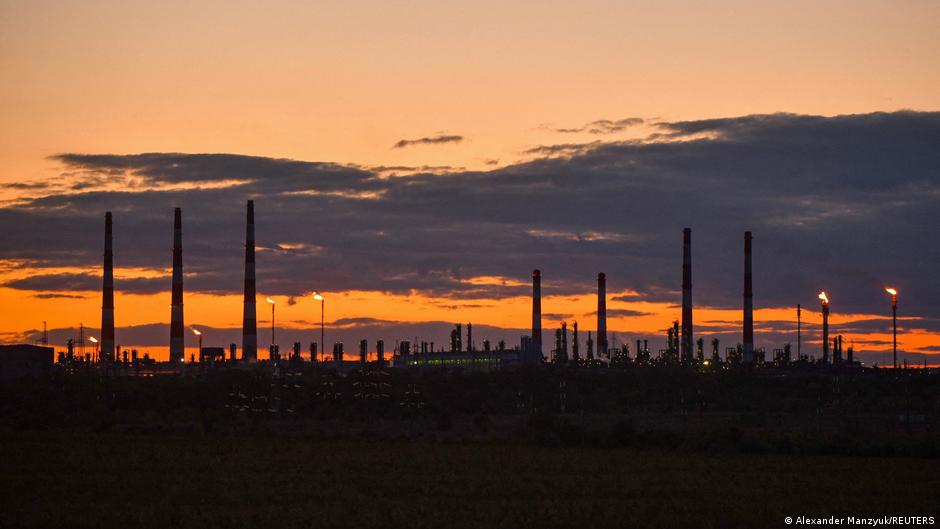
A reported US proposal to make renewed European purchases of Russian pipeline gas a central element of a peace agreement for Ukraine would force European governments to confront a far-reaching economic choice: whether lower-cost energy and incentives for Moscow can be reconciled with the bloc’s long-term strategy of ending dependence on Russian supplies.
The New York Times reported on Saturday, October 17, citing unnamed sources, that US presidential envoys Steve Witkoff and Jared Kushner raised the idea during negotiations with representatives of Ukraine and the European Union. The proposal was also discussed with Ukrainian President Volodymyr Zelensky during a meeting in Kyiv in September.
Under Washington’s reported approach, Europe would resume buying large volumes of Russian pipeline gas, providing Russia with an economic incentive to end the war. Such a move could reshape European energy markets, Russia’s export revenues and Ukraine’s postwar financial position, while potentially reversing years of policy designed to diversify the EU’s gas supply.
Energy security collides with peace diplomacy
The proposal was met with skepticism by the EU delegation. Günter Sautter, German Chancellor Friedrich Merz’s closest security adviser, was among its sharpest critics, according to the report. Some European and Ukrainian officials also expect the United States to seek a share of Russian gas exports, adding a commercial dimension to an initiative presented as part of peace diplomacy.
The central economic question is whether renewed Russian pipeline supplies would offer Europe a durable reduction in energy costs or recreate the strategic exposure that EU policy has sought to eliminate since Russia’s full-scale invasion of Ukraine in February 2022. Greater pipeline availability could alter regional gas pricing and the competitive environment for energy-intensive industries. It could also weaken incentives for further diversification if Russian volumes again became a substantial part of the market.
The debate comes after a steep decline in Russia’s share of EU gas imports. Russian gas accounted for 45% of the bloc’s imports in 2021, falling to about 19% in 2024 and 13% in 2025. That shift has changed infrastructure priorities, contracting strategies and the balance between pipeline gas and liquefied natural gas.
Any return to large-scale Russian gas purchases would amount to more than an energy-market adjustment; it would represent a major change in Europe’s economic and security policy.
The reported US initiative also conflicts with legislation agreed by the EU in January 2026. The measure provides for a complete phaseout of Russian pipeline gas and liquefied natural gas by November 1, 2027, and prohibits new gas contracts with Russia. Reversing or modifying that framework would therefore require a substantial political and legal shift, not merely a commercial agreement among suppliers and buyers.
Nord Stream and the economics of reconstruction
US officials also discussed with Russian counterparts the possible restart of Nord Stream, the major gas pipeline between Russia and Germany under the Baltic Sea, according to the newspaper’s sources. The pipeline has been out of operation since August 2022 following an explosion. Reuters had reported similar discussions in early October, citing five sources.
One New York Times source said the Trump administration viewed restarting Nord Stream as an “easy task” if a peace agreement were reached. The White House, however, denied to journalists that discussions concerning the pipeline had taken place.
“Any agreement concerning this issue would require close coordination with our European partners as part of a comprehensive peace agreement,” the administration added.
Restoring Nord Stream would still carry significant economic and policy implications. Beyond questions surrounding damaged infrastructure, a restart would reconnect Russia directly with Europe’s largest economy and could change bargaining power across the continent’s gas market. It would also test Germany’s commitment to the energy-security policies adopted after 2022 and expose divisions between governments prioritizing strategic autonomy and those focused on industrial costs.
Ukraine faces a separate fiscal calculation. Kyiv stopped the transit of Russian pipeline gas to Europe on January 1, 2025, after declining to extend its expired contract with Gazprom. The decision costs Ukraine about €900 million a year in transit fees, according to the New York Times. A future settlement that restores Russian exports would therefore raise questions about whether Ukraine would again serve as a transit country, receive alternative compensation or remain outside the principal gas routes.
For senior policymakers, the proposal illustrates how any peace settlement could reorder economic relationships well beyond the battlefield. Russian export income, European energy prices, US commercial ambitions and Ukraine’s fiscal resources may all become linked within the negotiations. The long-term consequence would depend on whether restored gas trade is treated as a temporary peace incentive or as the foundation of a renewed energy relationship between Russia and Europe.