Russia Labels Young Street Musicians as Foreign Agents in Policy Shift
The designation of two StopTime members highlights the widening economic and social reach of Russia’s foreign-agent framework.
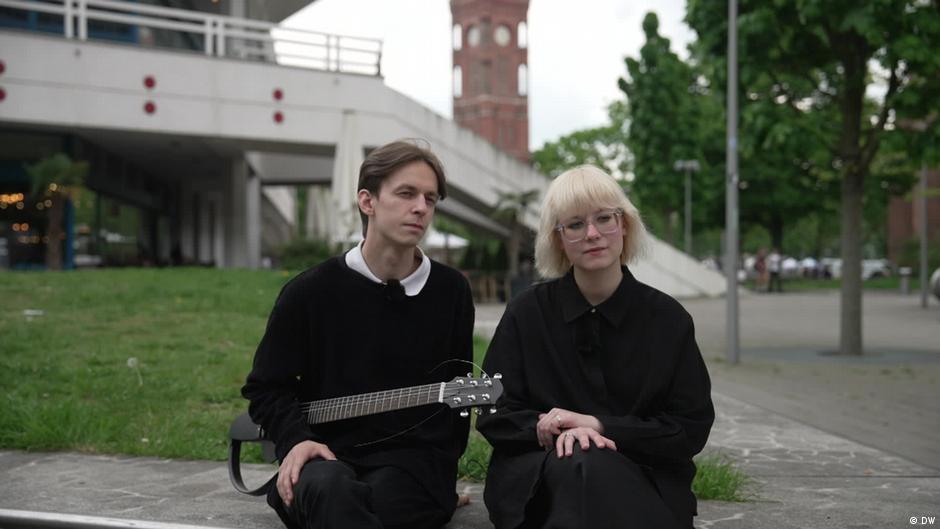
Russia’s Justice Ministry has added 19-year-old singer Diana Loginova, known professionally as Naoko, and her husband, 23-year-old guitarist Alexander Orlov, to its register of “foreign agents,” extending a regulatory system whose effects increasingly reach beyond formal politics into culture, employment and the broader business environment.
The two musicians are members of StopTime, a street band that began performing in St Petersburg in spring 2025. The ministry published the designation on Friday, October 16, exactly one year after the musicians received their first administrative detention orders.
According to the ministry’s stated justification, Loginova opposed the war in Ukraine, distributed what authorities described as false information about the decisions and policies of the Russian government, and interacted with people already designated as foreign agents. The ministry alleged that Orlov had, among other activities, taken an active role in distributing material with an anti-Russian orientation.
The designation imposes no new macroeconomic statistic by itself, but it illustrates the continuing expansion of a compliance framework that can affect how individuals, media organizations, cultural venues and commercial partners assess legal and reputational risk. For senior decision-makers, the longer-term significance lies in the cumulative impact of such rules on labor mobility, the creative economy and perceptions of institutional predictability.
From street performance to regulatory exposure
StopTime’s performances featured songs by Noize MC, Monetochka, Zemfira and the band Pornofilmy, all of whom have also been designated as foreign agents by the Russian Justice Ministry. At one performance in October 2025, the group played Noize MC’s song “Kooperativ Lebedinoye Ozero.” A St Petersburg court had classified the song as information prohibited in Russia in May.
The band’s case demonstrates how regulatory exposure can spread through cultural supply chains. Performing a work associated with a listed artist, promoting a concert on social media or collaborating with designated individuals may create additional uncertainty for performers and organizations deciding whether to host, employ or finance them. Even without direct restrictions on every counterparty, heightened compliance concerns can encourage risk avoidance.
For businesses and institutions, the relevant economic issue is the accumulation of legal uncertainty around ordinary cultural and professional activity.
Loginova and Orlov were first detained after a concert near the Ploshchad Vosstaniya metro station. Police said 70 people attended. The musicians were found guilty of organizing a mass event that led to a disruption of public order.
After the first detention period expired, authorities drew up new administrative reports against the band members. These successive cases, commonly described as “carousel” proceedings, kept them in custody almost until mid-November. Loginova and Orlov left Russia after their third consecutive detention.
Drummer Vladislav Leontyev, who remained a member of StopTime until January 2026, stayed in Russia and consequently left the group. The different choices made by the three musicians offer a small-scale example of a wider economic trade-off: individuals facing regulatory pressure may leave the country, while those who remain may withdraw from professional activities that increase their exposure.
Implications for human capital and investment
For Russia’s economy, the principal long-term concern is not the commercial weight of a single street band. It is the potential for repeated enforcement actions to influence the decisions of younger workers, artists and entrepreneurs about where to build careers. When politically sensitive rules extend into cultural production, the resulting uncertainty can accelerate outward migration among people whose skills and networks are transferable internationally.
That process can weaken parts of the creative sector, including live entertainment, digital media and related services. It may also reduce domestic demand for venues, production work and promotional services if organizers become more cautious. International companies assessing Russian exposure may view the broadening use of administrative and foreign-agent measures as another factor in compliance planning, workforce management and reputational risk.
The Justice Ministry also added the movement Malinovy Klin — Independent Kuban to the foreign-agent register on October 16. Authorities alleged that the movement had, among other things, called for a violation of Russia’s territorial integrity. Its simultaneous inclusion underscores that the register continues to encompass both political organizations and individual cultural figures.
For policymakers, the approach reflects a preference for tighter control over public messaging and association. The economic cost is harder to quantify, but the likely transmission channels are clear: greater compliance burdens, more conservative institutional behavior, reduced cultural activity and further incentives for mobile talent to relocate.
The StopTime case therefore carries significance beyond the musicians themselves. It shows how political and administrative policy can shape economic expectations at the individual level, altering decisions about work, mobility and collaboration. Over time, those choices can accumulate into broader consequences for human capital, private-sector confidence and Russia’s capacity to retain internationally connected professionals.