Poland Starlink Fire Raises Risks for Europe’s Digital Infrastructure
The suspected sabotage highlights how hybrid threats could raise security costs for strategic communications networks across Europe.
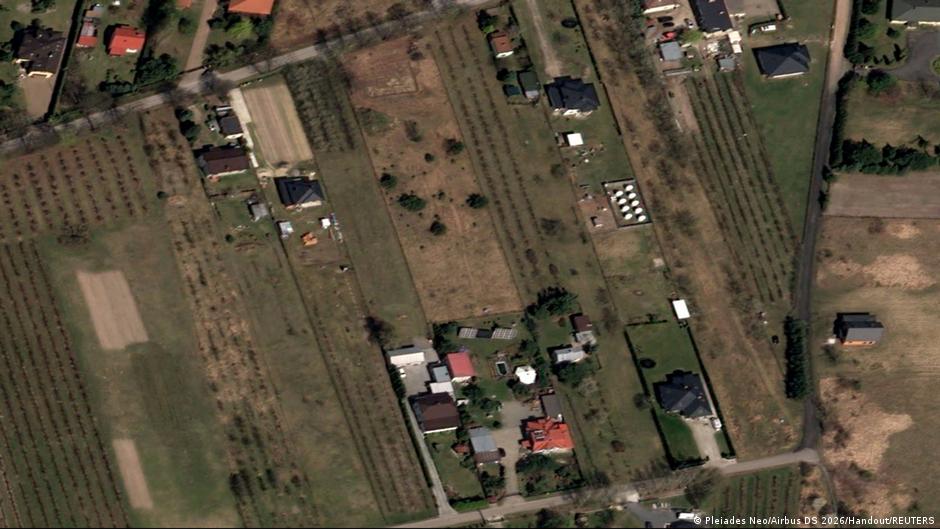
A suspected arson attack on a Starlink ground station near Warsaw is drawing attention to the economic vulnerability of Europe’s strategic communications infrastructure, as investigators examine possible links between a Turkish criminal group and Russian intelligence services.
German magazine Der Spiegel reported, citing sources in several countries, that the Turkish organized crime group Daltons may have been involved in the fire. The group has for years engaged in extortion, arms trafficking and contract killings, including in Germany, according to the report.
Two Turkish citizens detained in Nürtingen, Germany, on October 12 as part of the investigation were identified as 38-year-old Ümit E. and 34-year-old Müslüm T. Representatives of several law-enforcement agencies told Der Spiegel that the men either belong to the Daltons or carried out assignments for its members. Stuttgart’s Higher Regional Court is expected to decide whether they should be extradited to Poland.
The case remains an investigation into alleged activity, and direct evidence connecting Russia to the fire has not been established. Nevertheless, the possibility that a state actor used an organized crime network as an intermediary has broader implications for European economic and security policy.
Infrastructure Risk Extends Beyond Physical Damage
The Starlink facility in Wola Krobowska, about 50 kilometers from Warsaw, was damaged in an arson attack on September 23. The fire affected an electrical substation and a generator. German tabloid Bild reported that the station briefly stopped operating before returning to service. No one was injured.
The limited interruption suggests that redundancy and repair capacity prevented a prolonged outage. Yet the incident exposes a wider challenge for governments and companies: strategically important digital infrastructure can be disrupted through relatively conventional attacks on power supplies, generators and other supporting assets.
For senior decision-makers, the economic significance lies less in the immediate physical damage than in the potential cumulative cost of protecting dispersed communications systems. If attacks or attempted attacks become more frequent, operators and governments may need to increase spending on surveillance, backup power, physical security, personnel screening and cross-border intelligence cooperation.
Those measures could strengthen resilience, but they may also raise the cost of operating critical networks. The burden could eventually affect public procurement, defense budgets, insurance pricing and investment decisions involving telecommunications and satellite infrastructure.
“Many signs indicate that what happened corresponds to the new Russian doctrine of conducting attacks,” Polish Deputy Prime Minister Krzysztof Gawkowski said on September 23.
Polish authorities characterized the fire as an attempted act of sabotage immediately after the incident. Gawkowski’s statement reflected Warsaw’s assessment of the attack pattern, although investigators have not produced direct proof of Russian involvement.
Alleged Proxy Networks Complicate Policy Responses
Der Spiegel reported that the Daltons may have acted on instructions from Russian intelligence services. The magazine noted that Beratcan Gökdemir, the group’s alleged leader, was detained in Russia in 2024. Turkey requested his extradition, but Russian authorities did not hand him over to Ankara.
According to Der Spiegel, German intelligence services believe Moscow may have protected Gökdemir in anticipation of reciprocal services. His current location is unknown.
If substantiated, the suspected arrangement would illustrate how governments can potentially use criminal organizations to create distance between state sponsors and disruptive operations. Such structures complicate attribution, slow legal responses and create uncertainty over whether an incident should be treated primarily as organized crime, terrorism, espionage or state-directed sabotage.
That ambiguity has economic consequences. Governments facing uncertain attribution may struggle to determine when to impose sanctions, increase infrastructure regulation or commit additional public funds. Companies, meanwhile, may have to assess geopolitical exposure alongside conventional operational and criminal risks.
The investigation has already required cooperation across multiple jurisdictions. Two additional people, including a woman, were detained on October 13. Polish radio station RMF FM reported that an anti-terrorism operation was conducted in Berlin to apprehend her. Investigators initially suspected that she may have provided logistical assistance to the Turkish citizens and acted as their driver.
The arrests in Germany, the damaged facility in Poland, the Turkish suspects and the alleged Russian connection underscore the cross-border character of the case. European authorities may consequently face pressure to integrate criminal intelligence, counterintelligence and infrastructure protection more closely.
For Europe’s economy, the longer-term issue is whether strategic connectivity can remain dependable as hybrid threats expand from cyberattacks into physical disruption carried out through intermediaries. The Starlink station resumed operations, but the episode suggests that resilience will increasingly depend on protecting the energy systems, transport links and personnel surrounding digital networks—not only the networks themselves.