Kyiv Power and Water Disruptions Expose Ukraine’s Economic Vulnerability
Damage to energy infrastructure in Kyiv and Volyn underscores the growing economic risks posed by sustained attacks on Ukraine’s utilities.
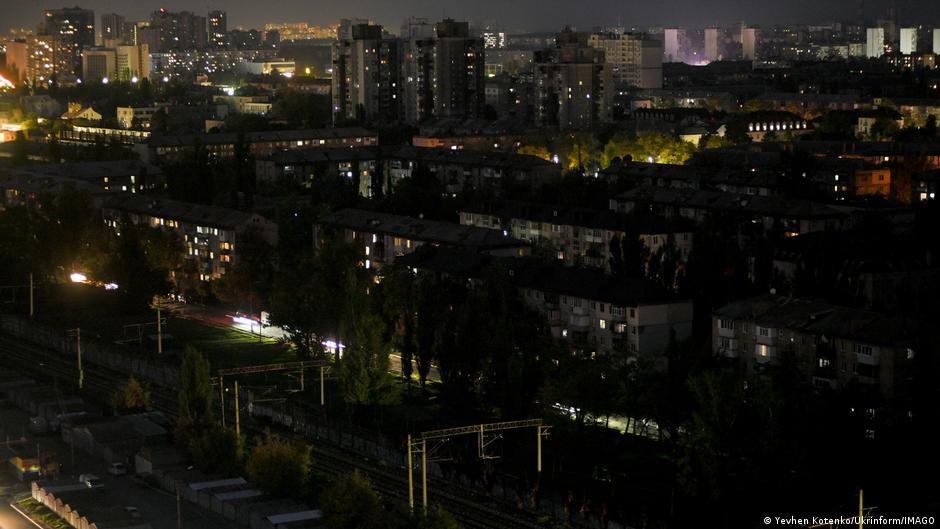
Electricity was cut in parts of Kyiv and the surrounding region after Russian forces struck an energy infrastructure facility, Ukrainian officials said, renewing concerns about the economic consequences of sustained pressure on the country’s power, water and heating systems.
Ukraine’s Energy Ministry and Kyiv Mayor Vitali Klitschko reported the outages on the evening of Thursday, October 15. The ministry said repair teams would begin restoring electricity as soon as security conditions permitted.
“As soon as security conditions allow, crews will promptly begin restoring the electricity supply. Energy workers are doing everything possible to restore power as quickly as possible,” the ministry said.
Klitschko said damage to energy facilities in the Kyiv region also caused water pressure to fall in some districts of the capital. The simultaneous impact on electricity and water illustrates the close operational links between utility networks: disruptions to power generation and transmission can quickly affect pumping, treatment and distribution systems.
Infrastructure damage spreads beyond the capital
Volyn region in western Ukraine was also attacked on the evening of October 15. Debris from intercepted drones damaged power lines, leading to interruptions in electricity and water supplies in the regional capital, Lutsk, according to Roman Romaniuk, head of the regional military administration.
Romaniuk said three jet-powered drones entered Volyn’s airspace during the evening air alerts and were shot down by air-defense forces. Although the drones were intercepted, falling debris still damaged infrastructure, highlighting the economic cost that attacks can impose even when air defenses successfully engage incoming weapons.
For businesses and public institutions, recurring utility interruptions raise operating costs and complicate planning. Power outages can halt production, disrupt logistics and telecommunications, and force companies to rely on backup generation. Reduced water pressure can affect households, hospitals, commercial facilities and industrial users. Repeated damage also requires scarce labor, equipment and public funds to be redirected toward emergency repairs rather than longer-term investment.
Threat of a broader campaign
The disruptions come amid reports that Russia has prepared a plan to attack Ukraine’s energy system and sever Kyiv, Kharkiv and Odesa from electricity, water and heating supplies. The New York Times reported the existence of the plan, citing an intercepted Russian attack blueprint that Ukraine presented to European officials at the beginning of autumn.
According to the newspaper’s assessment, implementing the plan would require about 70 ballistic missiles, 720 long-range drones and 150 guided bombs. The reported scale points to a campaign designed not merely to damage individual facilities but to place systemic pressure on generation, transmission and essential municipal services.
If such a campaign succeeded, Kyiv, Kharkiv and Odesa would lose about 90% of their electricity capacity, while heating supplies would decline by 90%, the newspaper reported. Water and sewerage systems would also experience serious disruption. Those estimates have not been presented as the outcome of the October 15 attacks, but as the potential consequences of the reported broader plan.
Sources cited by the newspaper said Russia could seek to exploit shortages in Ukraine’s air-defense capabilities, particularly a lack of interceptor missiles for the Patriot air-defense system. The availability of interceptors therefore carries implications beyond military protection: it affects the resilience of major cities, the continuity of economic activity and the scale of future reconstruction costs.
Macroeconomic implications
Ukraine’s energy infrastructure is a critical constraint on the country’s economic capacity. Large, prolonged losses in electricity and heating would weaken industrial output, retail activity and municipal services, while increasing demand for imported equipment, emergency energy supplies and external financial assistance. Disruptions in Kyiv, Kharkiv and Odesa would be especially consequential because of their importance as population, commercial and logistical centers.
The threat also has implications for Ukraine’s European partners. Extensive infrastructure damage could increase the financing required for repairs, grid stabilization and humanitarian support. It could also accelerate investment in decentralized generation, network redundancy and physical protection for energy assets, shifting public spending toward resilience measures with long implementation horizons.
For policymakers, the latest outages demonstrate how localized strikes can generate wider economic spillovers through interconnected utility systems. The immediate priority is restoring service where security conditions permit. The longer-term challenge is maintaining enough generation, transmission capacity, repair capability and air-defense coverage to prevent recurring disruptions from becoming a persistent drag on output and public finances.