ECB Clears UniCredit Path to Gradual Takeover of Commerzbank
The approval advances a cross-border banking deal that could deepen eurozone integration while testing Germany’s industrial policy priorities.
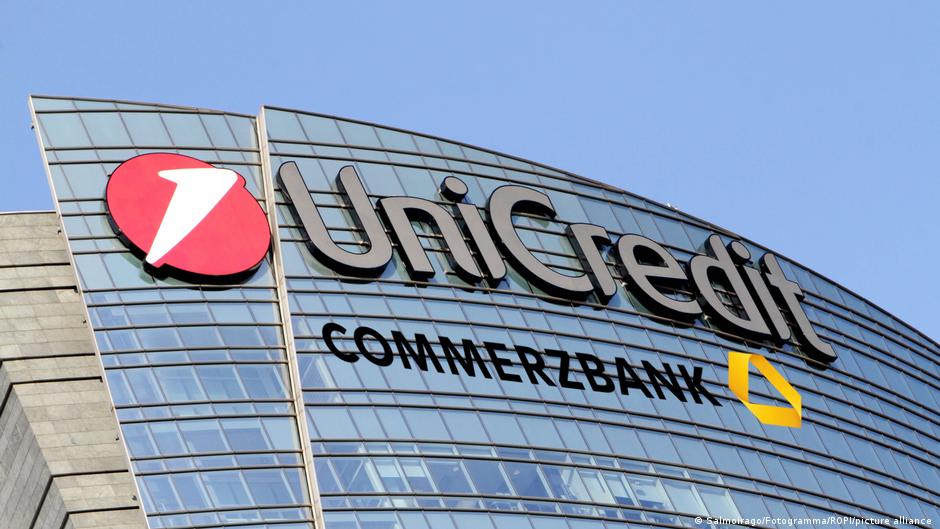
The European Central Bank has approved UniCredit’s acquisition of stakes in Germany’s Commerzbank, giving the Italian lender a regulatory pathway toward control of Germany’s second most important commercial bank. UniCredit representatives announced the decision on Thursday, October 15.
According to the German news agency dpa, the ECB’s authorization allows UniCredit to cross the threshold of 30% ownership in Commerzbank and subsequently increase its stake without further restrictions. In practical terms, the ruling enables UniCredit to pursue a gradual takeover of one of Germany’s two largest private-sector banks.
UniCredit said the decision reflected confidence in what it described as the bank’s strong position within the European banking sector. More broadly, the approval underscores the ECB’s willingness to facilitate consolidation across national borders, a policy direction intended to strengthen the eurozone’s fragmented financial system and reinforce the European Union’s single market.
A Test of European Banking Integration
The transaction is expected to complete the remaining supervisory procedures by the end of the current year. By that point, UniCredit is expected to hold half of the voting rights at Commerzbank’s shareholder council, allowing it to establish control over the German lender, dpa reported.
UniCredit made its formal offer to Commerzbank shareholders in May, proposing an exchange of 0.485 UniCredit shares for every Commerzbank share held. Through that offer, the Italian bank secured access to almost half of the German company’s shares. Completion of the share exchange, however, required authorization from the ECB, making the central bank’s review the decisive regulatory stage of the deal.
The ECB’s decision effectively shifts the proposed transaction from a contested strategic initiative toward an executable cross-border consolidation.
The approval was not unexpected. The ECB has repeatedly indicated support for bank mergers within the eurozone, arguing that consolidation can help develop a more integrated internal market. For senior policymakers and corporate decision-makers, the transaction therefore carries implications beyond the ownership of a single institution. It may become an important test of whether European banking integration can advance despite national concerns over employment, corporate lending and the location of strategic decision-making.
Europe’s banking sector remains divided largely along national lines, even though monetary policy and much of banking supervision are centralized. A successful takeover would demonstrate that a major lender can build scale across borders under the ECB’s supervisory framework. It could also encourage other banks to consider transactions designed to expand their geographic reach, customer base and operating efficiency within the currency union.
Germany Seeks Safeguards for Jobs and Business Lending
The deal continues to face political and institutional opposition in Germany. Commerzbank’s management and employees, as well as German authorities, have previously opposed UniCredit’s takeover plans. Their concerns center on the possibility that post-acquisition optimization measures could lead to job cuts and weaken the bank’s established role in the domestic economy.
The German government owns slightly more than 13% of Commerzbank and wants to prevent employment reductions resulting from restructuring after a takeover. Berlin is also seeking assurances that Commerzbank will remain a publicly listed company headquartered in Frankfurt am Main.
Another central priority for the German authorities is the continued development of banking services for the country’s small and medium-sized enterprises. Commerzbank’s relationship with these companies gives the takeover wider economic significance: changes in its lending strategy, risk policies or branch structure could affect financing conditions for a business segment that is important to Germany’s industrial base.
The competing priorities reveal a broader policy tension inside the eurozone. European regulators favor larger and more integrated banks capable of operating across the single market, while national governments remain attentive to employment, headquarters, tax bases and access to credit for domestic companies. The UniCredit-Commerzbank transaction brings those interests into direct contact.
For Germany, the challenge is to preserve Commerzbank’s economic functions and institutional presence while operating within a supervisory system that supports cross-border consolidation. For the ECB, the transaction offers an opportunity to demonstrate that banking union can produce tangible structural change rather than merely common oversight.
UniCredit’s ability to obtain half of Commerzbank’s voting rights would provide the means to establish control, but the long-term economic consequences will depend on how that control is exercised. Decisions on staffing, the Frankfurt headquarters and services for German small and medium-sized companies will determine whether consolidation delivers greater efficiency without eroding politically sensitive domestic capabilities.
The ECB’s approval removes the central regulatory obstacle and gives UniCredit substantial room to expand its ownership. It does not, however, resolve the political debate. The outcome will be watched as a measure of Europe’s capacity to reconcile deeper financial integration with national economic priorities—and as a possible precedent for the next phase of eurozone banking consolidation.