US Senators Urge Trump to Reverse Russian Diesel Deal With Putin
A bipartisan group says easing diesel sanctions would do little for fuel prices while giving Moscow more resources for the war in Ukraine.
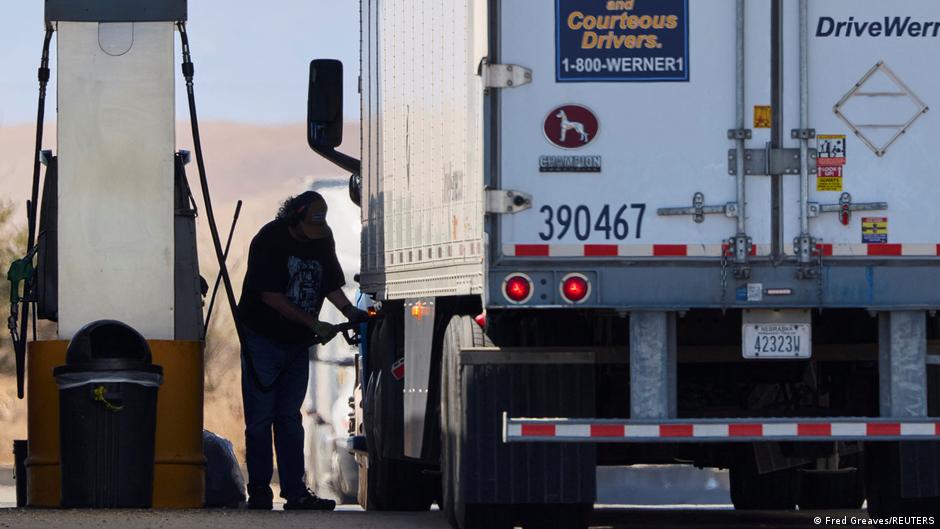
A bipartisan group of 12 US senators is pressing President Donald Trump to abandon a proposed diesel agreement with Russian President Vladimir Putin, arguing that the move would weaken sanctions without delivering meaningful relief to American households facing high fuel costs.
In a letter sent Tuesday, October 13, the senators, led by Democrat Richard Blumenthal, warned that allowing Russian diesel supplies back into global markets would provide the Kremlin with additional revenue while Russia continues its war in Ukraine. The appeal reflects a broader policy dispute over whether energy-market stabilization should take precedence over the economic pressure campaign that Washington has used against Moscow.
The senators said Congress and the American people support ending the war in Ukraine, which has cost hundreds of thousands of lives over four and a half years, but insisted that any peace must be reached on just terms. Blumenthal posted a copy of the letter on his X microblog.
“This deal is a gift to our adversary and a betrayal of our allies; it must be cancelled,” the senators said.
The core economic argument in the letter is that the suspension of US sanctions on Russian diesel exports would not substantially improve the position of American families, despite the burden of elevated fuel prices. Instead, the lawmakers contend, it would primarily channel money to Moscow and reduce the leverage that sanctions have created.
Energy Relief Versus Strategic Leverage
The dispute comes after Trump said on October 9, in a post on Truth Social, that he had held an “extremely successful” phone call with Putin. According to Trump, the two leaders agreed on supplies of Russian diesel fuel to the American and global markets. He said Russian companies would “immediately” ship more than 300,000 tons, followed by another 500,000 tons in November and 1 million tons “immediately after that,” apparently in December. He also referred to a further 3 million tons, depending on the condition of refineries, though the period for that volume was not specified.
The US Treasury then issued a general license suspending the application of American sanctions against Russian diesel fuel until April 2027. Russian state television program Vesti reported on October 12 that the first shipment of Russian diesel had departed St. Petersburg for the east coast of the United States and was expected to arrive within 48 to 72 hours.
For senior economic policymakers and corporate decision-makers, the episode highlights a familiar tension in sanctions policy: the trade-off between short-term supply relief and long-term coercive pressure. Diesel is central to freight, agriculture, industry and military logistics, and changes in available supply can affect prices across broad segments of the economy. But the senators argue that in this case the likely price effect for US consumers would be limited, while the strategic cost would be significant.
The letter states that lifting sanctions on Russian diesel exports would “only provide Putin with additional funds to finance his war machine and allow Russia to continue brutal attacks on Ukrainian civilians.” The senators frame the issue not simply as an energy transaction but as a test of whether Washington will maintain a coherent economic strategy toward Russia and its partners.
Pressure on Russia and China
Rather than easing restrictions, the senators urged Trump to intensify economic pressure on “Russia and those who play the main role in enabling its war, in particular China.” They called on him to use powers provided under legislation associated with Senator Lindsey Graham on sanctions against Russia and Iran.
That recommendation points to a broader shift in the debate from direct sanctions on Russian exports to secondary pressure on countries and firms that sustain Moscow’s wartime economy. The senators’ reference to China underscores how energy, trade and security policy are increasingly linked. If Washington chooses to target actors that facilitate Russia’s war effort, the consequences could extend beyond diesel markets into wider US-China commercial and financial relations.
The letter was copied to Secretary of State Marco Rubio and Treasury Secretary Scott Bessent, underscoring that the issue sits at the intersection of diplomacy, sanctions enforcement and energy policy. Treasury’s general license gives the proposed diesel arrangement a formal regulatory basis through April 2027, but the senators are seeking a reversal before the waiver becomes embedded in market expectations.
The signatories include six Democrats: Richard Blumenthal, Jeanne Shaheen, Richard Durbin, Sheldon Whitehouse, Jack Reed and Christopher Coons. They were joined by six Republicans: Mitch McConnell, Thom Tillis, Susan Collins, Alan Stuart Armstrong, Lisa Murkowski and John Cornyn.
The bipartisan composition of the appeal matters. It suggests that resistance to the diesel deal is not confined to one party’s foreign-policy camp, but reflects concern across the Senate that sanctions relief could erode US credibility with allies and weaken bargaining power over the war in Ukraine. For markets, that creates policy uncertainty: companies involved in shipping, refining, insurance and trade finance may face a regulatory environment that is formally relaxed but politically contested.
For the global economy, the stakes reach beyond one fuel category. If Russian diesel is allowed back into US and world markets under a sanctions suspension, it could marginally expand supply and reshape trade flows. But if Congress pushes back successfully, Washington may instead move toward tighter enforcement and broader secondary sanctions. That path could increase compliance costs, complicate energy procurement and deepen the fragmentation of global commodity markets along geopolitical lines.
The senators’ message is therefore both immediate and structural: they argue that any diesel-price benefit would be too small to justify weakening the sanctions architecture built around Russia’s war. The administration’s response will signal how it weighs consumer fuel costs against the long-term economic pressure strategy that has become a central instrument of US policy toward Moscow.