Drone Wave Toward Moscow Disrupts Airports and Signals Rising Economic Risk
Russian officials reported more than 100 drones destroyed near Moscow as airport restrictions and regional damage underscored widening pressure on infrastructure.
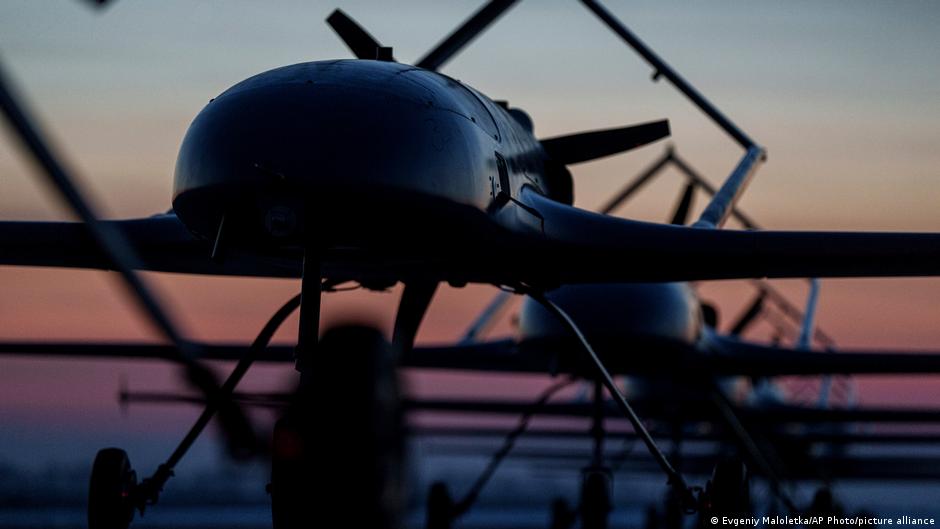
Russian air defenses destroyed more than 100 unmanned aerial vehicles that were heading toward Moscow overnight into Wednesday, October 14, according to messages posted on Telegram by Moscow Mayor Sergei Sobyanin. The reported scale of the attack, and the disruption that followed across several major airports, points to a growing economic dimension in the war: the ability of drone operations to impose costs well beyond the immediate battlefield.
Sobyanin did not specify in which districts of the Moscow region the drones were destroyed, nor did he identify their potential targets. Yet the operational response was broad. Temporary restrictions on the arrival and departure of aircraft were introduced on the evening of October 13 at Moscow’s Vnukovo, Domodedovo, Sheremetyevo and Zhukovsky airports, according to notices published by the Telegram channel “Govorit Rosaviatsiya.”
For senior economic decision-makers, the significance lies not only in the number of drones reported, but in the cascading effects on transport networks, passenger flows, airline schedules and regional logistics. Moscow’s aviation hub is central to domestic and international connectivity. Even temporary restrictions can create knock-on costs for airlines, airports, business travel, cargo movements and regional economies linked to air transport.
Airport Disruptions Spread Beyond Moscow
According to the TASS news agency, more than 30 aircraft bound for Moscow were diverted to other cities. The agency reported that 19 aircraft scheduled to land at Vnukovo instead landed in Nizhny Novgorod, St. Petersburg, Minsk, Pskov and Istanbul.
The Telegram channel “Ostorozhno, Novosti,” associated with journalist Ksenia Sobchak, wrote that, according to data from St. Petersburg’s Pulkovo airport, 20 aircraft flying to Moscow were diverted there because of the restrictions. The figures, reported by different outlets and channels, illustrate the uncertainty and complexity facing aviation operators during large-scale drone alerts.
Restrictions were not limited to the Moscow aviation hub. According to “Govorit Rosaviatsiya,” temporary limits were also introduced overnight into October 14 at airports in Volgograd, Nizhny Novgorod, Samara, Penza, Saratov and Yaroslavl. The airline Pobeda also reported schedule adjustments due to prolonged restrictions at airports serving Moscow and the Volga region, according to “Ostorozhno, Novosti.”
Temporary airspace and airport restrictions have become an economic signal as well as a security response, creating uncertainty for carriers, passengers and regional supply chains.
The operational picture highlights a widening policy challenge for Russia. Air defense activity around the capital and restrictions across multiple regions suggest that authorities are managing drone risk as a systemic infrastructure issue. For businesses, that means greater uncertainty around travel reliability, delivery timing and regional contingency planning.
Regional Damage Adds to Infrastructure Concerns
Beyond the aviation disruption, Russian regional officials reported direct damage and casualties. Saratov Region Governor Roman Busargin said at least one person was killed as a result of a drone attack. He reported damage to several residential buildings in the city of Balakovo and said emergency services were working at the scene.
“As a result of the UAV attack, several residential buildings in the city of Balakovo were damaged. Preliminary information: one person was killed. All emergency services are working at the site,” Busargin wrote on Telegram.
The head of Stavropol Region, Vladimir Vladimirov, also reported that air defense forces had repelled a drone raid aimed toward the industrial zone of the city of Nevinnomyssk. He did not specify which industrial facilities may have been the target.
Those regional reports are economically important because they show that drone incidents are not confined to symbolic targets near the capital. Residential damage in Balakovo and an attempted strike toward an industrial zone in Nevinnomyssk point to a broader geography of risk. Even when air defenses intercept drones, alerts, debris, emergency responses and precautionary shutdowns can disrupt normal activity.
The possible targeting of industrial areas, even without official confirmation of specific facilities, is particularly relevant for policymakers and corporate planners. Industrial zones concentrate production, utilities, transport links and labor. Repeated threats can force companies and regional governments to increase spending on protection, redundancy and operational resilience.
Macro Implications for Policy and Business
The immediate facts reported by Russian officials and media outlets concern destroyed drones, airport restrictions, aircraft diversions, one reported death in Saratov Region and a repelled raid toward an industrial zone in Stavropol Region. The broader economic implication is that drone warfare is increasingly capable of creating intermittent but costly disruption across civilian infrastructure networks.
For the aviation sector, the costs include aircraft diversions, crew scheduling complications, passenger delays, fuel use, ground handling requirements and possible compensation or rebooking burdens. For regional airports receiving diverted flights, the pressure can shift quickly from security management to capacity management. For airlines, repeated disruptions can complicate route planning and reduce schedule reliability.
For the Russian state, the events underscore the long-term fiscal and policy burden of defending large urban, transport and industrial systems against relatively low-cost drone threats. Expanding air defense coverage, hardening infrastructure and maintaining rapid-response capacity all carry budgetary implications. These pressures arrive alongside other wartime demands on public finances and industrial capacity.
For international businesses and governments monitoring Russia-related exposure, the episode reinforces the need to treat infrastructure disruption as a recurring macro risk rather than an isolated security incident. Aviation reliability, regional industrial continuity and urban risk management can affect insurance pricing, logistics planning, sanctions analysis and assessments of Russia’s medium-term economic resilience.
The reported attack toward Moscow and the simultaneous disruptions across airports in several regions therefore carry significance beyond the immediate security narrative. They show how the conflict continues to migrate into the economic infrastructure of daily life, raising the cost of normal operations and increasing the premium on resilience for both public authorities and private firms.