Moldova Reports Five Drone Incursions in One Day as Security Risks Mount
Repeated spillovers from Russia’s war against Ukraine are increasing security pressure on Moldova and testing its policy resilience.
Moldova’s airspace was violated by drones five times on October 16, with one aircraft crashing and exploding inside the country, according to the Moldovan Defense Ministry. The incidents add to a rapidly rising number of incursions linked by Moldovan authorities to Russia’s attacks on neighboring Ukraine.
The Moldovan Foreign Ministry strongly condemned the repeated violations, saying they endangered the safety of citizens. It called on Russia to immediately stop its attacks on Ukraine and comply with international law, including respect for Moldova’s sovereignty and territorial integrity.
The drone that crashed came down near the village of Novye Kodryany, approximately 50 kilometers from the Ukrainian border, during the afternoon of October 16. The Defense Ministry said the unmanned aircraft entered Moldovan airspace illegally at 4:22 p.m. local time. At 5:06 p.m., authorities announced that it had fallen and exploded.
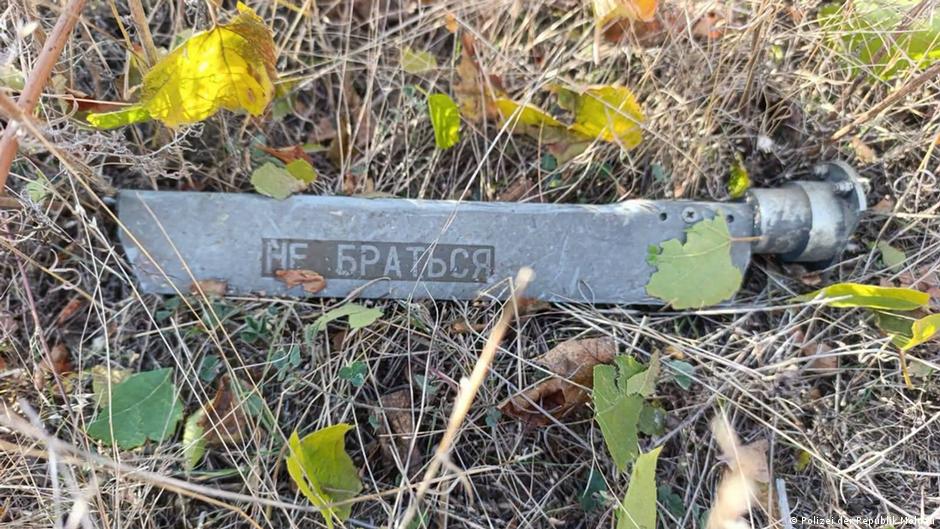
Moldovan police subsequently published a photograph of wreckage from the drone on Facebook. The available official statements did not report casualties from the incident.
Incursions accelerate in October
Several hours before announcing the crash, the Defense Ministry said Moldova’s airspace had been breached seven times since October 10 against the backdrop of Russian attacks on Ukraine. Six of those incidents involved drone flights: two occurred on October 15 and another four during the night of October 16.
The seventh incident involved a drone carrying explosives that fell on October 10 in Geamana, a locality also situated about 50 kilometers from the Ukrainian border.
Such incidents “put the safety of citizens at risk,” Moldova’s Foreign Ministry said in condemning the repeated incursions.
The October incidents represent a significant concentration within the annual total reported by the military. Since the start of the year, Moldova has recorded 64 airspace violations, including 16 during October. Since 2022, when Russia began its full-scale war against Ukraine, the cumulative number of violations has reached 101.
Earlier in the month, on the morning of October 3, three missiles and two drones entered Moldovan airspace. All five fell inside the country, but no deaths or injuries were reported. Moldova’s Defense Ministry said that episode resulted from Russia’s large-scale strikes against Ukraine.
Economic exposure extends beyond the immediate security threat
For senior economic decision-makers, the repeated incursions underscore how the war’s effects can spread across borders even when a neighboring state is not a direct participant in the conflict. Moldova’s official account points to a sustained air-security challenge rather than a single accidental crossing, with incidents now recurring over short intervals.
The immediate policy response is diplomatic, centered on condemnation and demands for compliance with international law. The longer-term implications, however, extend to public spending and institutional priorities. A persistent pattern of missiles and drones entering Moldovan territory may increase pressure on the government to devote greater attention and resources to airspace monitoring, civil protection and emergency preparedness. Any such shift would have to be managed alongside Moldova’s other public-policy and economic needs.
The incidents also expose a broader regional risk for governments and businesses operating near Ukraine. Repeated aerial spillovers can add uncertainty to transport planning, border-area activity and investment assessments, even when individual events cause no reported casualties. The October 16 crash and explosion demonstrate that the risk is not limited to aircraft merely passing through Moldovan airspace; debris or intact systems can reach populated national territory.
The frequency of the violations is especially relevant. Sixteen of the 64 incidents recorded since the beginning of the year occurred in October, while five violations were reported on October 16 alone. That clustering may sharpen scrutiny of Moldova’s defensive capacity and its ability to protect communities near the Ukrainian border.
Moldova’s appeal to Russia also reinforces the connection between national economic stability and adherence to international borders. For a small economy exposed to a major war in a neighboring country, security events can influence government priorities and perceptions of country risk even without direct physical damage to critical infrastructure.
No economic losses were quantified by Moldovan authorities in the statements described, and no casualties were reported in connection with the October 3 episode. Still, the expanding tally of airspace violations indicates a continuing source of uncertainty. With 101 incidents registered since the start of the full-scale war in 2022, Moldova faces a long-term policy challenge whose consequences reach beyond defense into fiscal planning, institutional resilience and confidence in the country’s operating environment.