St Petersburg Drone Attack Hits Oil Terminal and VK Data Centre
The overnight assault disrupted energy, transport and digital infrastructure, highlighting rising economic risks far beyond the immediate damage.
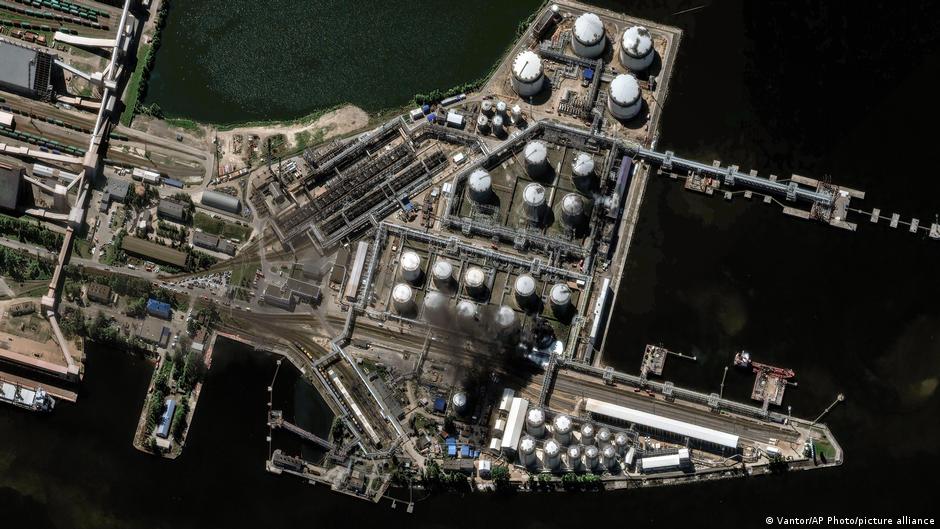
St Petersburg and the surrounding Leningrad region came under a large-scale drone attack overnight into Sunday, October 18, damaging infrastructure across one of Russia’s most economically important metropolitan areas. A fire broke out at the St Petersburg Oil Terminal, a VK data centre was hit, and residents reported localized electricity outages.
The incident brought simultaneous pressure to bear on energy logistics, digital services, aviation and urban power supplies. Although the authorities reported no casualties, the breadth of the disruption underscored the economic vulnerability of major cities when attacks affect several interconnected systems at once.
St Petersburg Governor Alexander Beglov said emergency crews were extinguishing fires at civilian infrastructure sites in the city’s Nevsky, Krasnoselsky, Krasnogvardeysky and Moskovsky districts, as well as at the oil terminal. Operations at Pulkovo Airport were restricted as a security measure.
“There are no casualties. Mobile internet disruptions are possible,” Beglov wrote on Telegram.
For businesses operating in the region, the temporary airport restrictions and possible telecommunications interruptions represent immediate operational risks. The attack on the oil terminal also raises questions about the resilience of fuel storage and distribution infrastructure, although officials provided no assessment of damage, lost capacity or the likely duration of the fire’s effects.
Energy and logistics exposed to overlapping risks
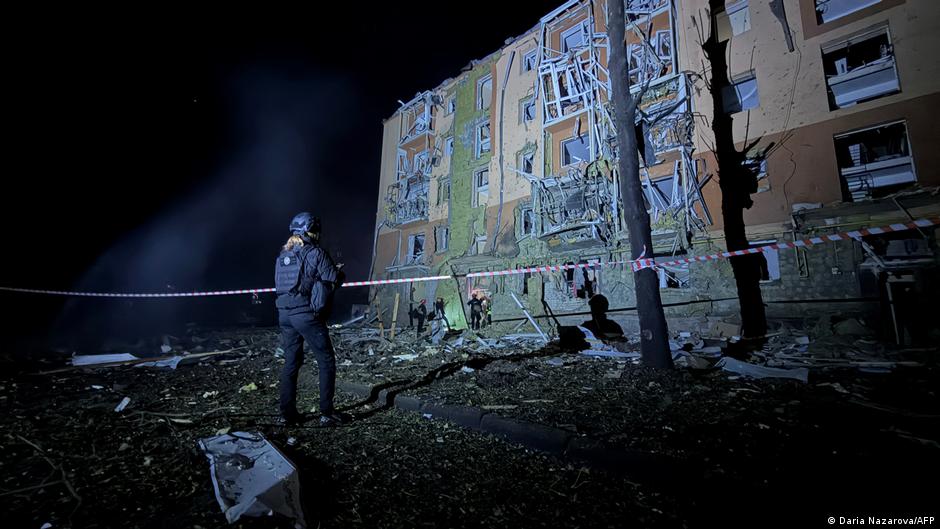
Leningrad region Governor Alexander Drozdenko said 126 drones had been shot down over the region. According to him, falling debris struck an apartment building in Vsevolozhsk, a private house near Kirovsk and four vehicles in the village of Nizino.
Drozdenko also reported brief electricity interruptions caused by debris falling on power lines. Residents cited by the St Petersburg online publication Fontanka described power problems in several parts of the city, including the Kalininsky and Krasnogvardeysky districts and the Ruchyi area.
Even short outages can have economic consequences when they coincide with transport restrictions and communications instability. St Petersburg is a major industrial, commercial and logistics centre, and disruption to power, fuel infrastructure or access routes can affect supply chains beyond the city itself. The available reports did not quantify production losses or indicate whether the outages materially affected industrial facilities.
The St Petersburg Oil Terminal fire is particularly significant because attacks on energy infrastructure can create costs extending beyond physical repairs. Operators may face tighter security requirements, higher insurance and logistics expenses, and a need for additional redundancy. Repeated incidents could also require public authorities and companies to divert capital from productive investment toward infrastructure protection and emergency preparedness.
Data infrastructure becomes part of the economic risk map
VK representatives confirmed that a drone attack had affected the company’s data centre in the Leningrad region. VK owns, among other services, the VKontakte social network and the Max messenger. The company said its services remained available to users under normal operating conditions.
However, the monitoring websites Sboy.rf and Detector404.ru recorded a surge in complaints about VKontakte. The difference between the company’s statement and user reports may reflect localized or temporary problems, but no detailed technical assessment was provided.
The incident illustrates how data centres have become economically critical infrastructure. Digital platforms support communications, advertising, commerce and business operations, meaning that even limited interruptions can spread rapidly across sectors. For senior decision-makers, physical security, backup power, geographic redundancy and continuity planning are therefore increasingly central to technology investment decisions.
Reports of a strike on a strategic road link
Telegram channels Dnipro Osint, Astra and Varlamov News reported that one of the drones struck the cable-stayed bridge over the Korabelny Fairway. The bridge forms part of the Western High-Speed Diameter, a toll motorway that serves as an important transport artery in St Petersburg.
The authorities had not confirmed a strike on the bridge. Fontanka nevertheless reported that the Western High-Speed Diameter had been closed between the Ekateringofka River and the Shkipersky Channel. The Korabelny Fairway bridge is located on that section of the motorway.
No verified estimate of damage to the bridge or timetable for reopening was given. If prolonged, a closure on the route could increase travel times and freight costs, while adding congestion elsewhere in the city. At the time of the reports, however, there was insufficient information to determine whether the disruption would have a lasting economic impact.
More broadly, the attack demonstrates the growing need to assess infrastructure risks as a connected system rather than as isolated assets. Energy terminals, data centres, electricity networks, airports and urban motorways support one another. Disruption across several of them during a single night can amplify uncertainty even when casualties are avoided and individual services continue operating.