Friedrich Merz’s Leadership Stability Amid CDU Replacement Rumors and Economic Implications
Friedrich Merz’s circle denies plans for his premature replacement as German Chancellor amid political uncertainty impacting economic outlook.
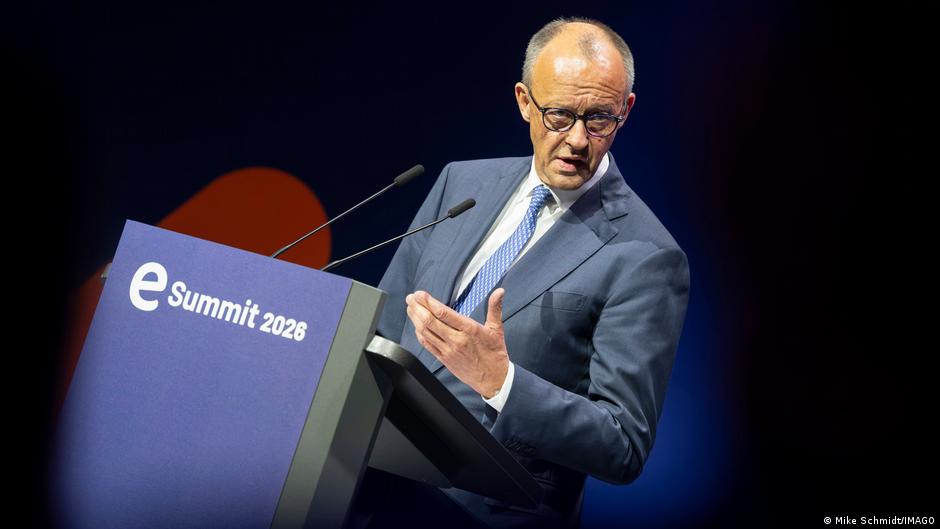
Sources close to German Chancellor Friedrich Merz have firmly denied recent reports suggesting that the Christian Democratic Union (CDU) is preparing for his early replacement. The rumors, initially published by Stern and Bild, claimed internal discussions within the CDU about a leadership change before the end of Merz’s term.
According to Merz’s associates, these claims are “absurd speculations” and reflect a “dangerous tendency towards incitement” coupled with a “startling ignorance of constitutional law and political reality.” Such distractions, they warn, risk empowering the far-right Alternative for Germany party (AfD) and undermining the political center’s credibility during ongoing domestic and global crises.
Political Context and Constitutional Complexity
The prospect of replacing a sitting chancellor before the Bundestag’s term ends is a highly complex political maneuver. It would require either Merz to voluntarily trigger early elections or to step down under pressure from influential CDU members. Subsequently, CDU/CSU and Social Democratic Party (SPD) deputies would need to collaboratively elect a successor — a process fraught with challenges given inter-party dynamics and SPD’s possible reluctance.
The rumored candidates for a potential new CDU chancellor include Hendrik Wüst, Minister-President of North Rhine-Westphalia; Markus Söder, Minister-President of Bavaria; and Jens Spahn, parliamentary leader of the CDU/CSU faction. However, insiders caution that such a replacement would not only disrupt established governance but might also destabilize ongoing economic policies.
“These rumors play into the hands of the far-right and erode the center’s authority amid political and global economic crises,” Merz’s circle stated.
Economic and Policy Implications of Political Instability
The political uncertainty surrounding Chancellor Merz coincides with declining public support for his government. According to a May Deutschlandtrend survey, 86% of Germans expressed dissatisfaction with the federal cabinet’s performance — the lowest approval since the current coalition took office. Merz’s personal approval rating plummeted to 16%, marking a record low during his chancellorship.
Economic observers emphasize that such political instability could have profound macroeconomic consequences. Germany, as Europe’s largest economy and a pivotal player in global trade, relies on steady governance to navigate inflationary pressures, energy market volatility, and supply chain disruptions. A leadership crisis within the ruling CDU could delay crucial policy decisions and weaken investor confidence, with ripple effects extending across the European Union and global markets.
Moreover, uncertainty in Germany’s political landscape complicates the government’s ability to commit firmly to long-term structural reforms, such as energy transition strategies, industrial competitiveness enhancements, and fiscal policy adjustments aimed at stabilizing growth amid global economic headwinds.
Outlook for Senior Decision-Makers
For global economic stakeholders, the situation in Germany underscores the critical linkage between political stability and sustained economic performance. Senior policy-makers and business leaders should monitor developments within the CDU closely, considering potential shifts in Germany’s economic policies and coalition dynamics.
Maintaining a stable political center is essential not only for Germany’s domestic agenda but also for preserving confidence in Europe’s broader economic framework. As Chancellor Merz’s administration confronts both internal challenges and external economic pressures, the ability to manage political discourse responsibly will be pivotal in shaping Germany’s—and by extension, the EU’s—economic trajectory in the coming years.