AfD Victory in Saxony-Anhalt Signals New Economic Fault Lines in Germany
The far-right party’s landslide in an eastern German state leaves coalition arithmetic unsettled and raises questions over energy, sanctions and federal policy direction.
The state election in Saxony-Anhalt has delivered a decisive first-place finish for the far-right Alternative for Germany, but not a clear route to government. The result exposes a deeper political fragmentation in one of eastern Germany’s federal states and points to policy tensions with implications beyond regional administration, including energy costs, sanctions on Russia, migration policy and the durability of Germany’s traditional party system.
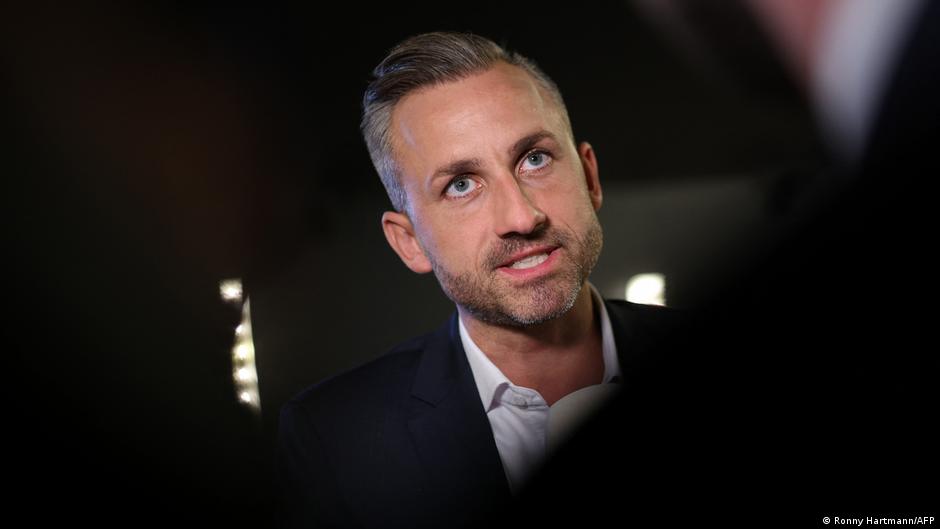
According to preliminary official results from the September 6 election to the Landtag, Saxony-Anhalt’s state parliament, the AfD won 43.8 percent of the vote after ballots were counted at all polling stations. The figures were released overnight into Sunday, September 7. The party’s candidate for state premier is 35-year-old Ulrich Siegmund, and AfD chairman Tino Chrupalla has already said Siegmund will put himself forward for the post.
The Christian Democratic Union, the party of incumbent state premier Sven Schulze, received 17.2 percent, almost half its result at the previous election. The Social Democratic Party won 9.3 percent, the Greens 8.9 percent and the Left Party 8.6 percent. The Sahra Wagenknecht Alliance, known as BSW in German and SSV in the source text, entered the Landtag with 5.3 percent. The Free Democratic Party and other parties failed to clear the five percent threshold. Turnout was 77.8 percent.
On the basis of these results, the 83 seats in the Saxony-Anhalt Landtag are distributed as follows: AfD 39, CDU 15, the Left Party 8, the Greens 8, SPD 8 and the Sahra Wagenknecht Alliance 5. That arithmetic gives AfD a commanding bloc, but still short of an outright majority.
A Regional Vote With National Economic Consequences
For senior economic decision-makers, the vote matters because Saxony-Anhalt is not only a regional political contest. It is a signal about the pressure building inside Germany’s postwar party architecture at a time when the country is already managing weak industrial momentum, elevated energy sensitivity and public fatigue over the costs of geopolitical confrontation.
The strongest economic message from the election is the convergence between AfD and the Sahra Wagenknecht Alliance on Russia policy and energy. Thomas Schulze, the lead candidate for the Wagenknecht alliance, said after the vote that his party was open to talks with the far right.
“We said that we would hold talks with all parties. That includes the AfD,” Schulze said, adding that his party was not interested in a “firewall.”
Asked about possible common ground, Schulze pointed above all to Russia, saying his party opposed sanctions that, in his words, are “literally destroying our economy.” Both parties also support what they call “affordable energy,” including the resumption of oil and gas supplies from Russia. That stance directly challenges the current strategic consensus in Berlin and across much of the European Union, where sanctions and energy diversification have been central responses to Russia’s war and the broader security environment.
If these positions gain practical influence at state level, they would not by themselves rewrite federal or EU sanctions policy. But they could reshape the political economy of the debate. A strong regional mandate for parties campaigning against sanctions and for renewed Russian energy flows would increase pressure on federal leaders, particularly if similar results recur elsewhere. For corporate boards, investors and policy planners, the issue is not only whether sanctions change immediately, but whether Germany’s medium-term policy trajectory becomes less predictable.
Coalition Gridlock and the Cost of Fragmentation
The incumbent coalition of the CDU, SPD and FDP suffered a crushing defeat. The CDU’s losses were especially severe. Sven Schulze, 47, lost not only statewide but also in his own Magdeburg constituency, where he received 31.7 percent against 35.2 percent for AfD candidate Christian Mertens. Schulze became state premier in early 2025; before that he served as economy minister and as a member of the European Parliament.
CDU candidates failed to win a single direct mandate. They lost in all 41 constituencies. AfD candidates won 38 of them, including Ulrich Siegmund in Genthin. Only in the larger cities of Magdeburg and Halle did AfD fail to secure a convincing victory. The reversal is stark: in the 2021 state election, the CDU won direct mandates in 40 of 41 constituencies, while AfD won one.
The collapse of the former governing parties creates a difficult question for policy continuity. Apart from the Sahra Wagenknecht Alliance, none of the political forces entering the new Landtag has indicated a willingness to form a coalition with AfD. A possible minority government made up of CDU, SPD and Greens, with full support from the Left Party, would have 40 seats, narrowly ahead of AfD’s 39. Under that scenario, the Wagenknecht alliance’s five deputies could become decisive.
Yet that arrangement would carry its own political costs. Before the election, CDU leader Sven Schulze repeatedly said he did not want to depend “either on the right or on the left.” Resistance also exists inside the CDU to any cooperation with the Left Party. If Schulze were nominated again for state premier, defectors could emerge within his own ranks. CDU state parliament member Eva Feussner has already warned Stern magazine that if attempts were made to cooperate with the left, “entire local party branches” would unanimously leave the party.
The Wagenknecht alliance has floated the idea of a nonpartisan state premier who would govern with shifting majorities involving AfD. Siegmund has rejected that proposal. He said AfD would not abandon its “values” and objectives “for some political games,” according to Reuters, and ruled out coalitions requiring major compromises. “We want voters finally to get again after elections what they voted for,” he said.
Siegmund said cooperation would be possible only with those who support AfD’s demand for a clear change of political course within the federal state, whether through a parliamentary group or individual deputies. Chrupalla, meanwhile, told ARD that AfD was ready to compromise in talks with other parties, including on migration and economic policy, provided they accepted a “change of course.”
For Germany’s economic outlook, the immediate risk is not administrative paralysis alone. It is the normalization of policy volatility in a major European economy that relies on predictability for investment, industrial planning and energy transition commitments. Saxony-Anhalt may be a state-level case, but its election result shows how economic grievance, energy politics and geopolitical fatigue can converge into a durable challenge to the governing center.