German Public Divided on Banning Alternative for Germany Amid Party’s Rising Popularity
A recent poll reveals 45% of Germans oppose banning the far-right AfD, which leads the CDU/CSU bloc by 8 percentage points.
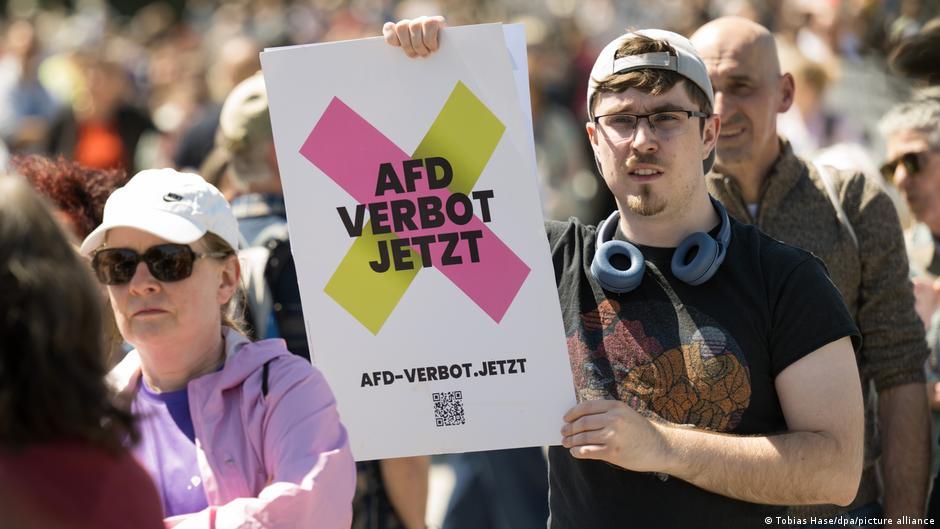
Germany is currently witnessing a significant political debate surrounding the far-right party Alternative for Germany (AfD), as public opinion is notably split on whether the party should be banned. According to a recent survey conducted by the INSA Institute, commissioned by Bild am Sonntag, 45% of Germans oppose banning AfD, while 40% support such a measure, and 15% remain undecided.
AfD’s Growing Influence and Public Opinion on Political Isolation
The AfD remains Germany's most popular party, maintaining a steady 29% support rate, which surpasses the conservative CDU/CSU bloc by eight percentage points. This gap was first recorded in early June 2026 and persisted through the latest polling period. Meanwhile, support for the CDU/CSU has declined slightly to 21%, marking a one percentage point drop from the previous week.
The Social Democratic Party (SPD) and the Green Party each hold 13% support, with the Greens recently surpassing the SPD in some polls. The Left Party has garnered support from 10% of respondents.
Regarding strategies for handling the AfD, 42% of Germans back a policy known as the Brandmauer—a complete political isolation and refusal to cooperate with the AfD at any level. However, 39% disagree with this approach, and 19% are uncertain.
“We are the new people's party in Germany,” proclaimed Alice Weidel, AfD’s co-chair, emphasizing the party’s ambitions for political leadership during the recent party congress in Erfurt.
Security Concerns and Broader Political Implications
Since February 2021, the Federal Office for the Protection of the Constitution (BfV) has placed the AfD under surveillance for suspected right-wing extremist activities. Despite this scrutiny, the party's popularity has not waned, posing challenges for Germany’s mainstream parties both politically and in terms of national security policy.
Public dissatisfaction extends to the federal government and Chancellor Friedrich Merz, whose approval rating has dropped to a record low of 13%. This decline reflects broader challenges for Germany’s governing elites amid shifting political dynamics.
AfD’s current public standing and its declared ambitions signal a potential reconfiguration of Germany’s political landscape, with implications for European Union policymaking and the continent’s approach to right-wing populism. The debate on whether to ban AfD highlights tensions between democratic inclusivity and safeguarding constitutional norms against extremist influences.
Long-Term Economic and Policy Consequences
The rise of AfD and its growing acceptance among voters could influence Germany’s economic policies, particularly in areas such as immigration, EU integration, and trade. Policymakers must consider how political fragmentation and increased support for fringe parties might affect Germany’s economic stability and leadership role in the EU.
Furthermore, the party’s stance on economic nationalism and skepticism toward multilateral institutions poses risks for Germany’s global economic partnerships. For senior decision-makers, understanding these political currents is essential for anticipating policy shifts and preparing strategic responses both domestically and internationally.