Russian Missile and Drone Strike Hits Kyiv as Talks Format Remains Unsettled
The overnight attack on Ukraine’s capital and nearby districts underscores the economic risks of infrastructure damage amid tentative diplomacy.
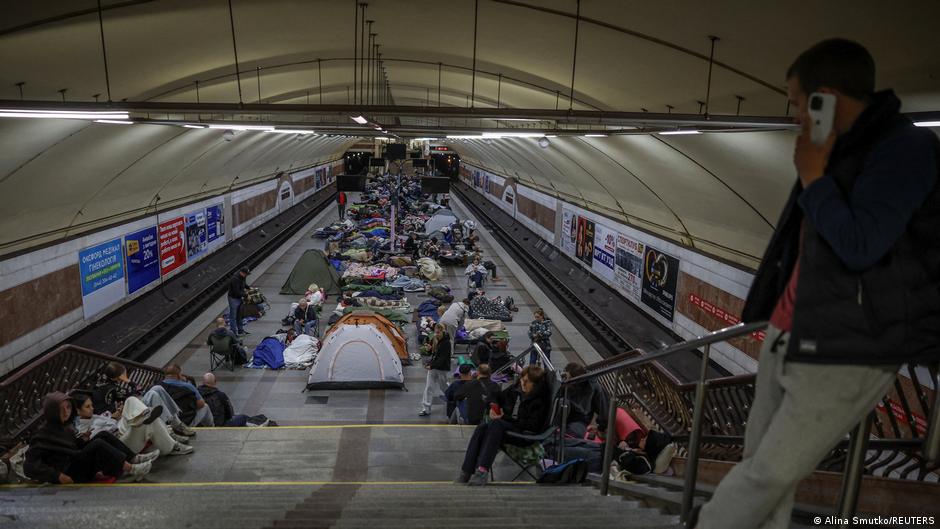
Russia’s armed forces launched overnight strikes on Kyiv using drones and ballistic missiles on September 8, according to the Kyiv City Military Administration, adding another layer of uncertainty to a conflict whose economic consequences continue to extend beyond the battlefield.
The attack affected several districts of the Ukrainian capital. In the Solomianskyi district, debris fell on a five-story residential building, officials said. A separate three-story residential building was also damaged, and a fire broke out in a warehouse facility. Kyiv Mayor Vitali Klitschko said medical teams were dispatched to the Solomianskyi district. Preliminary information indicated that six people were injured as a result of the shelling.
In the Darnytskyi district, falling debris damaged a car, the Kyiv City Military Administration reported. Klitschko said fires broke out in non-residential areas of the Podilskyi and Darnytskyi districts. The city military administration said garages and vehicles were burning.
In the Holosiivskyi district, Klitschko reported a fire on the grounds of an educational institution. He also said that, according to preliminary information, people were trapped inside a residential building.
Infrastructure Damage and Economic Risk
The reported damage in Kyiv and nearby districts points to a recurring economic pattern in the war: attacks that combine immediate human harm with disruption to urban infrastructure, logistics, industrial assets and public services. Even when strikes do not directly target national-scale energy or transport systems, fires at warehouses, damage to residential buildings, burning vehicles and disruption around educational facilities can impose costs on municipal services, emergency response capacity and local business activity.
Late on September 7, Russian forces also carried out drone strikes on the Boryspil and Fastiv districts of the Kyiv region, according to Ukraine’s State Emergency Service. In the Boryspil district, fires broke out at industrial enterprises. At one site, the fire destroyed seven trucks. The agency also said a building at one logistics complex was attacked twice. Emergency responders arrived quickly and extinguished the fires.
For senior decision-makers tracking the macroeconomic trajectory of the war, the reference to logistics and industrial facilities is significant. Ukraine’s ability to maintain supply chains, move goods, support military and civilian transport, and sustain export-adjacent activity depends not only on headline infrastructure such as ports and power plants, but also on dispersed logistics hubs, vehicle fleets, warehouses and regional industrial sites. Damage to trucks and logistics buildings may appear limited in isolation, but repeated attacks can accumulate into higher insurance costs, reduced operating reliability and additional public expenditure.
The strikes also come as Kyiv continues to manage the budgetary burden of civil defense, reconstruction and wartime social support. Damage to housing creates immediate needs for rescue operations and shelter, while fires in non-residential zones require emergency resources that could otherwise be allocated to prevention, repair or economic stabilization. These pressures matter for Ukraine’s fiscal position because the country remains dependent on sustained external financing and policy coordination with partners.
Preliminary information indicated that six people were injured as a result of the shelling, according to statements cited by Kyiv officials.
Diplomacy Remains Tentative
The overnight attack took place shortly after U.S. President Donald Trump’s special representatives, Steve Witkoff and Jared Kushner, left Kyiv during the night of September 7. Following the meeting, Ukrainian President Volodymyr Zelensky said Ukraine was ready for trilateral talks in a Ukraine-U.S.-Russia format.
Moscow also did not rule out the possibility of resuming a trilateral negotiation format. Kremlin spokesman Dmitry Peskov said, however, that it was still premature to discuss the venue and timing.
The juxtaposition of military escalation and cautious diplomatic signaling illustrates the policy dilemma facing governments and investors. On one hand, the mention of a possible Ukraine-U.S.-Russia framework suggests that channels for negotiation may be under consideration. On the other, continued strikes on the capital and the Kyiv region show that any diplomatic process would begin against a backdrop of active military pressure and continuing physical destruction.
For global economic policy, that combination complicates planning. A credible path toward talks could influence assumptions about sanctions, reconstruction financing, defense spending and commodity flows. Yet attacks on Kyiv and its surrounding industrial and logistics assets reinforce the likelihood that Ukraine will require ongoing emergency support even as political actors explore negotiation formats.
The war has already shaped European fiscal policy, defense procurement, energy security planning and trade routes. Further urban and industrial disruption in Ukraine may strengthen arguments for longer-term support packages rather than short-cycle crisis funding. It may also affect how governments assess reconstruction risk: rebuilding cannot be treated as a purely postwar exercise if assets continue to be damaged while diplomacy remains unresolved.
For businesses, the latest reported strikes are another reminder that operational risk in Ukraine remains highly localized but economically broad. Damage to one logistics complex, a cluster of vehicles or a warehouse can affect delivery schedules, inventories and regional employment. For policymakers, the question is how to sustain Ukraine’s economic capacity while preparing for negotiations whose structure, timing and location remain uncertain.
The immediate picture from Kyiv is one of fires, damaged residential buildings, emergency medical response and reports of people blocked inside a home. The wider economic picture is one of continued attrition: each strike adds to reconstruction liabilities, strains municipal budgets and tests the durability of supply chains that are essential to both Ukraine’s domestic economy and its strategic resilience.