Finland Completes 200-Kilometer Border Fence With Russia
The project underscores how European security policy is shifting toward permanent infrastructure as geopolitical risk reshapes public spending priorities.
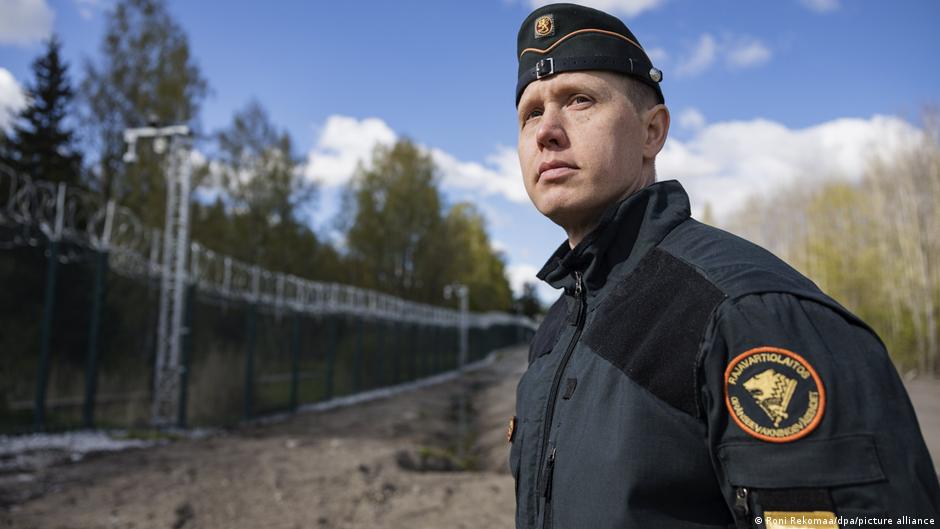
Finland has completed construction of a 200-kilometer barrier along its border with Russia, marking a significant investment in border security at a time when European governments are reassessing the economic and strategic costs of long-term instability on the continent’s eastern flank.
The Finnish Border Guard, part of a NATO member state’s security apparatus, announced on Monday, September 7, that the project had been completed. The barrier was built against the backdrop of Russia’s war against Ukraine and amid concerns in Helsinki that Moscow could use migrants as a tool of pressure against Finland.
“The main task of the state is to ensure the security of its citizens. The barrier wall on the eastern border is an integral part of an effective border security system in these unpredictable times,” Finnish Interior Minister Mari Rantanen said.
Rantanen added that Finland, as a member of the Schengen area, bears its share of responsibility for security at the bloc’s external borders. That point gives the project significance beyond Finland’s national security debate: the Finnish-Russian frontier is also part of the European Union’s wider external boundary, and the investment reflects a broader policy shift in Europe toward hardening border infrastructure as part of economic and institutional resilience.
A Security Project With Economic Consequences
The border barrier consists of a 4.5-meter-high fence, a technical surveillance system, a road network and a 25-meter-wide cleared strip. Finnish border authorities described it as one of the largest infrastructure projects in the country. Hundreds of companies were involved, with as many as 600 people and 150 pieces of equipment working on construction sites each day.
For senior decision-makers, the project illustrates how defense, migration policy and infrastructure spending are increasingly converging. What might once have been treated as a narrow border-management issue has become part of a larger economic response to geopolitical uncertainty. The resources committed to the barrier show how governments are reallocating capacity toward security-related capital projects, even in areas traditionally associated with open movement and cross-border integration.
Finland began construction work in March 2023, after Russia’s invasion of Ukraine had already transformed security assumptions across Europe. Helsinki’s concern was that Russia could use migrants to exert pressure on the country, a risk that has become more prominent in European policy discussions as governments consider hybrid tactics that fall below the threshold of conventional military conflict.
The project also reflects Finland’s altered geopolitical position. As a NATO member and a Schengen state, Finland sits at the intersection of military alliance commitments and European internal-mobility rules. In practical terms, that places the country under pressure to maintain a border regime that satisfies both national security needs and the expectations of a wider European system built around shared external controls.
From Open Border Assumptions to Permanent Preparedness
The fence’s completion carries a symbolic weight that goes beyond its physical scale. Finland shares a long historical and economic relationship with Russia, and the move toward a substantial barrier marks a visible departure from earlier assumptions about cross-border stability. The government’s message is that uncertainty is no longer temporary enough to manage solely through short-term administrative measures.
That transition has economic implications. Large border projects draw labor, equipment and corporate participation into state-backed security infrastructure. They also indicate that public investment strategies are being shaped not only by growth, productivity or climate transition objectives, but by perceived exposure to geopolitical pressure. In Europe, where fiscal space is contested and governments face competing demands, such projects highlight the rising cost of strategic risk.
Local reaction has been more resigned than enthusiastic. In Imatra, near the area where construction took place, Mayor Matias Hilden said in an interview with DW that residents were not enthusiastic about the project but had accepted it. “It is a little sad that we need this,” he said.
That local sentiment captures the broader trade-off facing European policymakers. Border hardening can be presented as a necessary adaptation to security threats, but it also represents a deterioration in the operating environment for regions that once benefited from proximity, movement and exchange. The long-term economic consequence is not only the direct cost of construction and maintenance, but the normalization of security barriers as part of Europe’s economic geography.
The Finnish decision also sits within a wider migration and labor-market context. In September 2022, a large number of Russians fled to Finland after Russian President Vladimir Putin announced partial mobilization in Russia. That episode underscored how quickly military and political decisions in Russia could affect neighboring labor markets, border systems and public administration capacity.
For the European Union and NATO, Finland’s completed fence is therefore more than a national infrastructure milestone. It is a signal that member states are planning for a prolonged period in which migration flows, military pressure and political coercion may overlap. The economic logic of border management is changing accordingly: resilience is being priced not only in defense budgets, but also in roads, surveillance systems, cleared corridors and physical barriers.
As Europe continues to absorb the consequences of Russia’s war against Ukraine, Finland’s project points to a durable policy direction. Governments are likely to treat border security as a standing component of macroeconomic stability, particularly where external borders are exposed to hostile-state pressure. The completion of the 200-kilometer barrier suggests that, for Finland, the cost of preparedness has become a permanent feature of public investment planning.