Macron Seeks EU-Wide Social Media Ban for Children Under 15
France’s push for a European law signals a broader policy shift as governments weigh youth protection against digital-market freedoms.
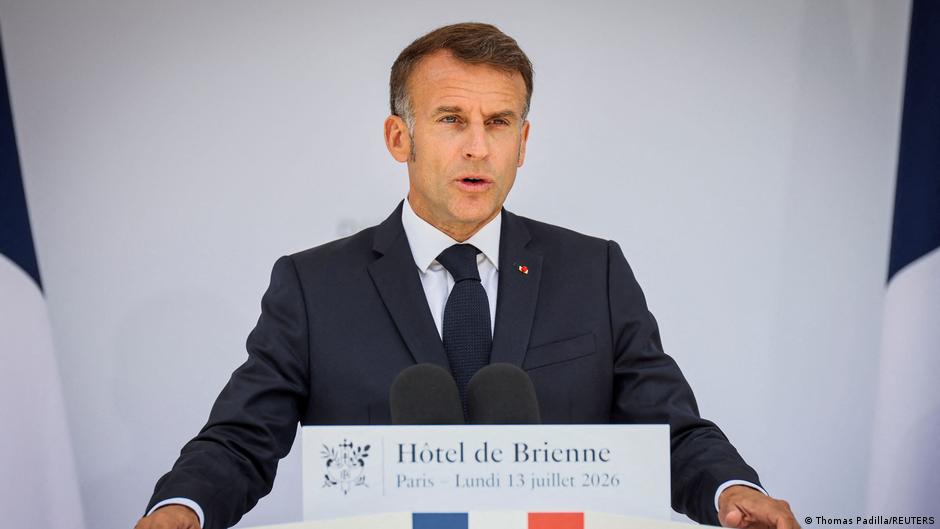
French President Emmanuel Macron has asked European Commission President Ursula von der Leyen to prepare a “European legislative act” that would ban children under 15 from using social media, according to AFP. The request marks a significant escalation in France’s effort to regulate minors’ access to major digital platforms and shifts the debate from national lawmaking to EU-wide harmonization.
The appeal was made in a letter dated August 29, which AFP reviewed on Monday, September 7. In it, Macron argued that it is now “essential to go further and harmonize this provision through a new European document.” The move follows a setback in France, where the Constitutional Council blocked a national measure on August 14, saying the provision violated freedom of expression.
For European policymakers and business leaders, the French initiative is not only a child-protection proposal. It is also part of a widening reassessment of the economic and regulatory power of social media platforms, the costs of youth mental-health risks, and the ability of national governments to act inside a single digital market.
A National Setback Becomes a European Proposal
Macron, who is due to leave office after elections in April 2027, has said he hopes to “find a way forward” in the coming months through a “revised legislative act” at national level that would comply with both EU law and the French Constitution. Reuters described the Constitutional Council’s decision as a blow to the French president. Macron has instructed Prime Minister Sébastien Lecornu to prepare a new draft law that is “legally impeccable.”
The European route could offer France a way to avoid the fragmentation that often limits national digital regulation. If Brussels were to advance a harmonized measure, platform operators such as TikTok, Instagram and Snapchat would face a more uniform compliance environment across the bloc rather than a patchwork of national rules. For companies, that could reduce regulatory ambiguity in one sense while raising the scale and cost of compliance in another.
Macron told von der Leyen that it was essential to go further and harmonize the measure through a new European document.
The economic implications would extend beyond content moderation. An EU-level restriction on under-15 access would likely require stronger age-verification systems, new data-handling procedures and tighter platform governance. Those requirements could impose additional costs on technology companies, advertisers and third-party service providers, while also creating demand for compliance infrastructure and identity-verification technologies.
Health Costs, Platform Risk and Policy Momentum
The French bill emerged after France’s health oversight body warned in a December 2025 report about the harmful effects on children of platforms including TikTok, Instagram and Snapchat. The report identified potential risks such as reduced self-esteem and possible increases in self-harm, suicide and drug use. It also cited statistics showing that one in two teenagers spends between two and five hours a day on a smartphone, while 58% use phones to access social networks.
Those figures help explain why the proposal has moved from a cultural debate into a macro-policy question. Governments increasingly view digital exposure among children as a long-term economic issue because mental-health outcomes affect education, productivity, healthcare spending and labor-market participation. The argument behind stricter rules is that the costs of inaction may be distributed across households, schools and public health systems rather than borne directly by platforms.
At the same time, restrictions on access raise complex trade-offs. The French Constitutional Council’s ruling shows that any policy must reconcile child protection with freedom of expression. At EU level, lawmakers would also need to consider competition policy, data protection, internal-market rules and enforcement capacity. The challenge is not simply whether governments can impose an age threshold, but whether they can design one that is legally durable, technically workable and proportionate.
The initiative gained momentum after Macron made the ban a central element of his domestic agenda in the final year of his presidency. That timing matters. A European proposal would allow the French government to frame youth digital protection as a continental policy priority rather than a purely national campaign. It could also put pressure on the European Commission to clarify how far the EU is willing to go beyond existing platform regulation.
Australia Sets a Precedent
France is not acting in isolation. In December 2025, Australia blocked people under 16 from accessing most social networks. That precedent has become an important reference point for governments considering whether age-based bans are politically feasible and administratively enforceable.
For senior decision-makers, the broader signal is that social media regulation is moving into a new phase. The first wave of policy focused heavily on privacy, competition and illegal content. The next wave is increasingly concerned with social outcomes, public health and the economic costs associated with digital behavior. If the EU adopts a harmonized restriction, it could become a benchmark for other jurisdictions and a major compliance standard for global platforms.
The near-term impact will depend on whether the European Commission chooses to act on Macron’s request and how any proposal is structured. But the direction of travel is clear: governments are becoming less willing to treat youth engagement with social platforms as a matter for families and companies alone. The policy debate is shifting toward systemic risk, and Europe may become the next major arena for defining how much access children should have to the digital economy.