Russia's Nighttime Missile Strikes on Ukraine Signal Escalation with Potential Global Economic Impact
New Russian missile and drone attacks hit Kyiv and Kharkiv, raising concerns over regional stability and economic consequences.
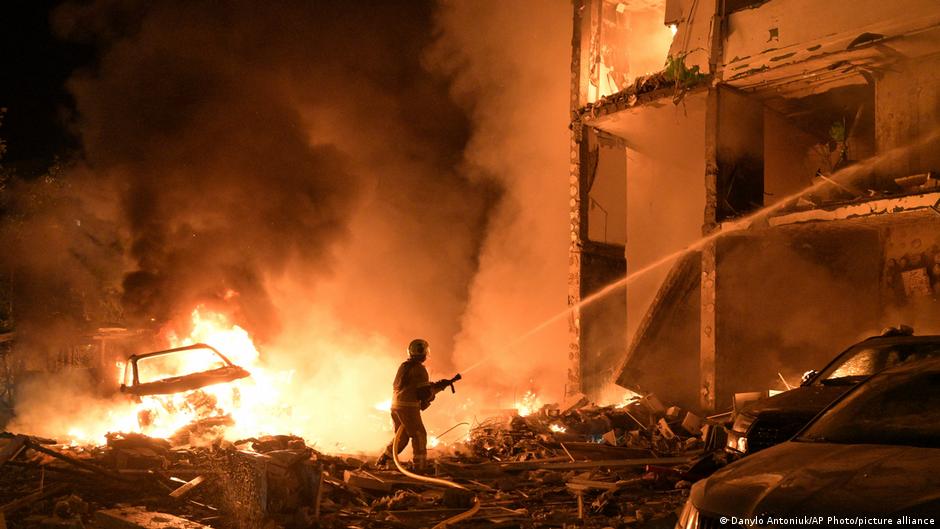
In the early hours of July 8, Russian forces launched a coordinated missile and drone assault across multiple regions of Ukraine, including significant strikes on the capital Kyiv and the eastern city of Kharkiv. These attacks caused explosions, fires, and casualties, with both cities reporting injuries and material damage.
Combined Strikes and Their Immediate Effects
The Kyiv city administration confirmed two injured individuals, one of whom was hospitalized following missile impacts in the Desniansky and Sviatoshyn districts. Several warehouses caught fire, alongside damage to non-residential buildings and private homes. Early reports also indicated damage to infrastructure such as street lighting and vehicles.
In Kharkiv, the mayor reported missile impacts in the Nemishlyansky district, with over 20 private homes damaged and several vehicles affected. The situation reflects a renewed intensity in Russian strikes targeting urban centers.
The Ukrainian Air Forces verified the launch of multiple ballistic missiles targeting Kyiv from the north, alongside active defense against hostile unmanned aerial vehicles (UAVs) approaching the capital. The ongoing offensive also extended to central and eastern Ukrainian regions, signaling a broad escalation in military operations.
"The nighttime attacks on Kyiv and Kharkiv indicate a strategic shift by Russian forces to intensify pressure on key urban areas," noted regional security analysts.
Broader Economic and Policy Implications
This escalation holds significant implications for regional stability and the global economic landscape. Prolonged conflict and intensified military activity disrupt Ukraine’s economic infrastructure, particularly in urban hubs crucial for industrial output and supply chains.
Energy supplies, transportation networks, and manufacturing bases are vulnerable to these disruptions, which may lead to increased commodity price volatility and supply chain instability extending into European and global markets. Additionally, heightened uncertainty may impact foreign investment and economic policy decisions both within Ukraine and among international stakeholders supporting reconstruction and humanitarian aid.
From a policy perspective, the attacks underscore the urgency for enhanced defense coordination and economic resilience planning. Governments and multinational organizations will need to reassess risk exposure and strategic resource allocation to mitigate long-term economic fallout from the conflict.
As tensions rise, vigilant monitoring of the conflict’s progression and adaptive macroeconomic strategies will be critical to navigating the complex global ramifications.