Germany Approves 2027 Budget with Increased Defense Spending and Borrowing Amid Security Concerns
Germany’s 2027 federal budget signals a significant rise in defense outlays and borrowing, reflecting strategic shifts in response to Russia’s threat.
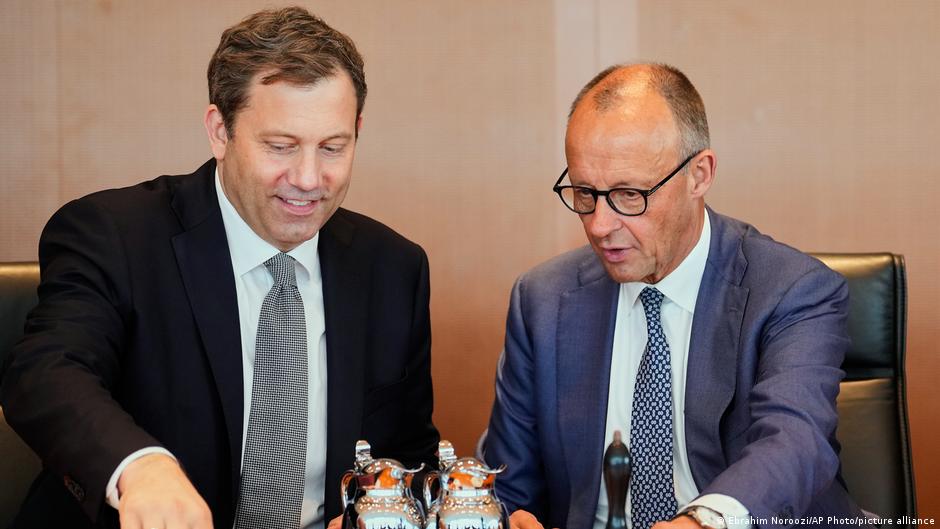
On July 6, the German government approved the federal budget draft for 2027, drafted by Finance Minister Lars Klingbeil. The budget projects a notable increase in both planned expenditures and new borrowing, sparking criticism over the scale of defense spending and the reallocation of climate funds.
Key Features and Strategic Rationale
The proposed total expenditure for 2027 stands at €555.4 billion, nearly 6% higher than the current year's spending. Net new borrowing is set to rise to €118.7 billion, up from €98 billion this year. This expansion is largely driven by Germany’s perceived need to strengthen its defense capabilities amid heightened security risks linked to Russia.
The largest share of the budget remains allocated to the Federal Ministry of Labour and Social Affairs at €201.4 billion, primarily for pension payments. However, the most significant relative increase is seen in the Ministry of Defense’s budget, which is set to grow by 32.7% from €82.69 billion to €109.75 billion.
The Ministry of Transport follows with planned funding of €26.43 billion. Notably, funds are being redirected from the Climate and Transformation Fund into the main budget, a move that has raised concerns among environmental advocates and economic observers.
"We must make up for three decades of underfunding that weakened our armed forces—and do so within a very tight timeframe," said Lars Klingbeil, co-chair of Germany’s Social Democratic Party (SPD). "We cannot protect ourselves from Putin with a no-deficit budget."
Economic and Policy Implications
This budget signals a strategic pivot in Germany’s fiscal policy, prioritizing defense amidst geopolitical uncertainty. The sharp increase in borrowing to finance higher expenditures marks a departure from previous fiscal restraint, reflecting Berlin’s assessment of increased threats from Russia.
However, Germany’s leading business organizations have expressed unease about the expansionary budget stance. Tanja Gönner, CEO of the Federation of German Industries (BDI), criticized the increase in spending and borrowing, emphasizing the need for policies that stimulate economic growth and improve government spending efficiency.
Similarly, Helena Melnikov, head of the Association of German Chambers of Commerce and Industry (DIHK), warned that by 2030, social spending, defense, and debt interest payments will consume 80% of the federal budget. This crowding out effect limits fiscal space for investments essential to economic expansion.
The shift may have broader macroeconomic consequences for Germany and the EU. Increased borrowing could push up interest rates or crowd out private investment, while diverting funds from climate initiatives could slow Germany's energy transition goals. Conversely, defense investment could strengthen European security but also complicate fiscal coordination within the EU’s economic governance framework.
In summary, Germany’s 2027 budget represents a recalibration of priorities in response to evolving geopolitical risks. Senior policymakers and international economic observers will watch closely how this budget influences Germany’s fiscal trajectory, economic growth potential, and its role in broader European economic stability.