Kyiv Strike Kills Two as Russian Attacks Put Urban Infrastructure at Risk
The latest strikes on Kyiv and Odesa underscore the economic vulnerability of Ukrainian cities as energy, health and housing assets remain exposed.
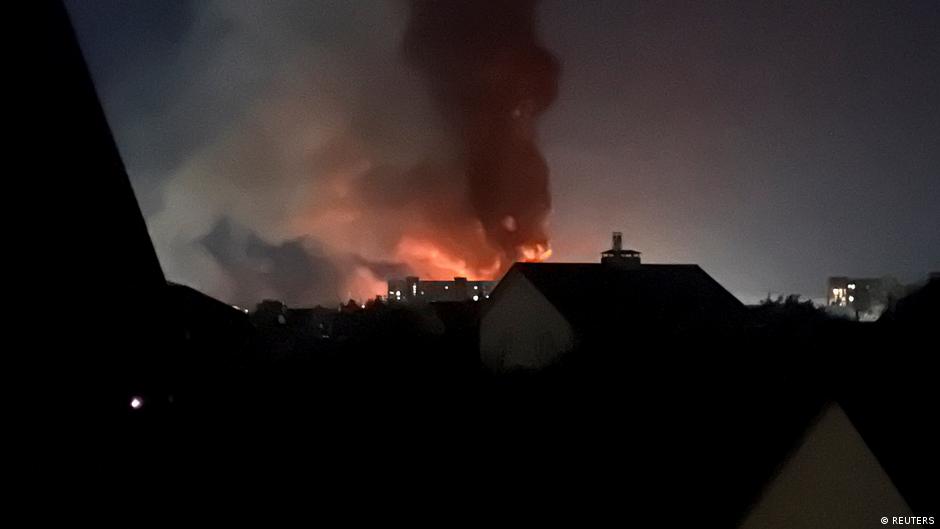
Two people were killed and six others were injured after Kyiv came under attack by the Russian armed forces overnight on Thursday, September 24, according to the Ukrainian capital’s mayor, Vitali Klitschko. The strike damaged several districts of the city, including areas near medical facilities and residential buildings, and added to concerns over the economic cost of repeated attacks on urban infrastructure.
Klitschko said two of the injured were in serious condition. In the Podilskyi district, missile debris hit a parking area near a maternity hospital, igniting vehicles and damaging windows and part of the building’s facade. Preliminary information indicated that no one inside the medical facility was injured. Klitschko added that a nearby clinical and diagnostic center was also damaged.
The attack affected multiple parts of Kyiv. In the Darnytskyi district, missile debris fell on a roadway. In the Solomianskyi and Podilskyi districts, fragments landed on the grounds of non-residential development. In the Dniprovskyi district, fragments were reported in the courtyard of a 16-story residential building and private homes, as well as on an administrative building. Private estate areas were also affected, and one home sustained destruction.
Infrastructure pressure widens beyond the battlefield
For senior economic decision-makers, the significance of the strike extends beyond the immediate casualties and physical damage. The reported target set points to the continuing vulnerability of Ukraine’s urban systems, particularly the infrastructure that underpins basic public services, labor-force stability and municipal economic activity.
Ukrainian Telegram channel Insider UA reported that about 20 missiles of different types were launched at Kyiv over 35 minutes, with energy infrastructure described as the main target of the attack. The report, if borne out, would fit a pattern in which pressure on electricity systems becomes a lever with broad economic consequences: disrupted production, higher emergency repair costs, interruptions to public services and increased uncertainty for households and businesses.
Urban attacks also create secondary economic effects that can persist long after debris is cleared. Damage near a maternity hospital and a diagnostic center may not have caused casualties inside the medical facility, according to preliminary information, but even limited physical damage can strain health-system logistics, insurance costs, municipal budgets and public confidence. Residential damage, meanwhile, raises the burden on local authorities already tasked with emergency accommodation, repairs and social support.
“All relevant services are on site. Operational headquarters are being deployed to provide assistance to people,” Serhiy Lysak wrote, according to his Telegram statement.
Lysak, the head of the Odesa city military administration, also reported a Russian armed forces attack on Odesa. According to him, medical and educational institutions were damaged, along with residential buildings. His statement indicated that emergency services were responding and operational headquarters were being set up to assist residents.
Policy and fiscal implications for Ukraine
The attacks on Kyiv and Odesa highlight a central policy challenge for Ukraine: defending critical civilian infrastructure while maintaining economic continuity. Each strike on roads, administrative buildings, housing, hospitals, diagnostic facilities or educational institutions adds to the cumulative repair bill and diverts public-sector capacity toward emergency response.
For Ukraine’s government and its international partners, the economic implications are long-term. Repeated strikes on power-related targets can increase the need for grid hardening, distributed energy systems, spare equipment, air defense coverage and rapid-repair capacity. Those needs compete with other wartime priorities, including social spending, defense procurement and support for displaced or affected communities.
The municipal dimension is equally important. Kyiv’s affected districts show how debris and blast effects can spread costs across diverse asset classes: roads, private homes, administrative buildings, medical centers and parked vehicles. In Odesa, the reported damage to medical, educational and residential facilities points to similar pressure on local service networks. These are not only humanitarian concerns; they are also constraints on productivity, workforce retention and urban investment.
For international lenders, donors and private-sector actors assessing Ukraine’s outlook, the latest attacks reinforce the need to treat infrastructure risk as a macroeconomic variable. Damage to electricity systems can affect inflation through energy costs and supply disruptions. Damage to housing and public services can influence migration decisions and labor-market participation. Damage to health and education facilities can weaken human-capital resilience over time.
The immediate toll in Kyiv was two dead and six injured, with two people in serious condition. The broader economic message is that civilian infrastructure remains exposed in ways that can shape fiscal planning, reconstruction needs and the country’s medium-term growth capacity. As Ukraine continues to respond to strikes on major cities, the cost of resilience is likely to remain a central issue for policymakers, investors and international partners.