German Drone Incidents Point to Rising Security Costs for Europe
A suspected explosive substance near a crashed drone at a Bundeswehr air base is sharpening concerns over sabotage risks to critical military logistics.
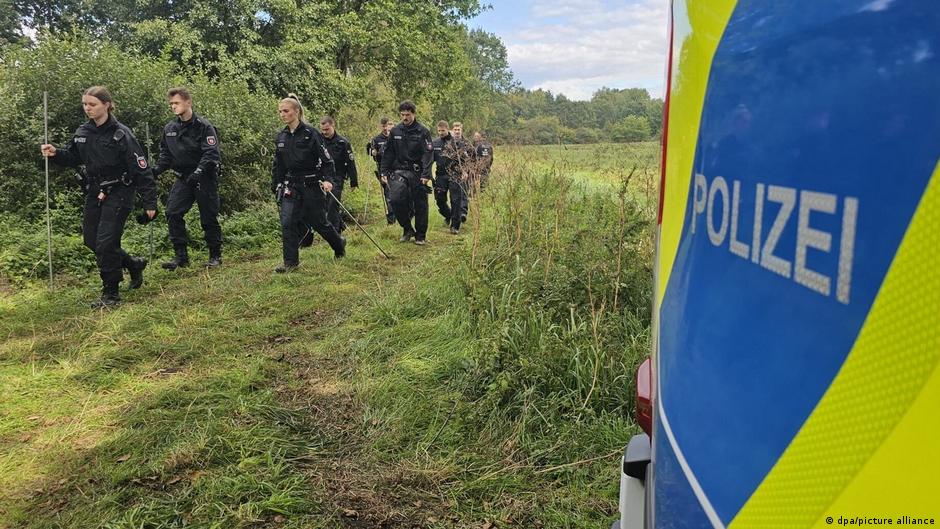
German investigators are examining whether a drone that crashed near the Bundeswehr’s Wunstorf air base in Lower Saxony may have been linked to explosives, a case that could carry broader economic and policy implications for Europe’s security architecture. The discovery comes amid heightened scrutiny of drone activity around military and transport infrastructure, and follows an earlier attempted sabotage incident at Leipzig/Halle Airport involving an explosive-laden unmanned aerial vehicle.
According to reports published Tuesday, September 22, by Süddeutsche Zeitung together with NDR and WDR, investigators found a suspicious substance several meters from the wreckage of the drone discovered last week near the Wunstorf base. Forensic analysis of the material has not yet been completed, and authorities have not made a final determination on whether it was explosive.
The Wunstorf base is not a peripheral military site. It hosts Bundeswehr transport aviation, including A400M aircraft, and is described as a central logistics hub for supplying German forces around the world. Any credible threat to such a facility would therefore raise questions not only about military security, but also about the resilience of European logistics networks at a time when defense, infrastructure protection and industrial policy are becoming increasingly intertwined.
Security Risk Becomes an Economic Variable
The investigation is being handled by Germany’s Federal Public Prosecutor and the Federal Criminal Police Office. Law enforcement authorities have not ruled out a connection between the Wunstorf incident and the attempted sabotage at Leipzig/Halle Airport on August 4, when an explosive-laden drone was found near a Ukrainian An-124 cargo aircraft.
For senior economic decision-makers, the significance lies in the way such incidents can change the cost structure of security across transport, defense production and cross-border logistics. Military air bases, cargo airports and industrial supply chains are no longer separate policy domains. They form a connected operating environment in which disruptions at one node can affect procurement timelines, insurance assumptions, border controls, airport security budgets and the movement of high-value or sensitive cargo.
Germany’s role as a logistics and manufacturing hub makes this especially consequential. If drone-related sabotage risks are assessed as systemic rather than isolated, policymakers may face pressure to accelerate investment in counter-drone systems, surveillance, forensic capacity and hardened infrastructure. Such spending could support parts of the defense and security technology sectors, but it would also add to fiscal demands already shaped by rearmament, energy transition costs and slower growth across parts of the European economy.
Investigators found a suspicious substance several meters from the Wunstorf drone wreckage, while forensic testing has not yet been completed.
NDR reported that the two drones are similar in design. One component of the device found in Wunstorf on September 14 was reportedly produced using a 3D printer and is not available on the open market. That detail may deepen concern among security services because additive manufacturing can complicate traditional supply-chain tracing and lower barriers for producing specialized parts outside commercial channels.
For European governments, the policy challenge is moving from incident response to deterrence and resilience. Drone systems can be relatively inexpensive compared with the infrastructure they threaten. That asymmetry can force states and operators to spend heavily on detection and protection, even when the direct material damage from a single incident is limited. Over time, the economic impact can emerge through persistent risk premiums: more security staffing, more restricted airspace, slower cargo handling, and higher compliance expectations for airports and contractors.
Diplomatic Fallout and Long-Term Policy Effects
The Wunstorf inquiry also sits within a tense diplomatic context. After investigating the Leipzig incident, German authorities attributed responsibility to Russia. In response, Germany closed the Russian House in Berlin and Russia’s consulate general in Bonn. Russian authorities then closed all three Goethe-Institut branches in Russia and Germany’s consulate general in St. Petersburg.
Those measures illustrate how security incidents can spill over into diplomatic and cultural channels, narrowing the space for engagement while reinforcing a longer-term shift toward economic decoupling and institutional separation. Even when such closures do not directly affect trade volumes, they contribute to a colder operating environment for companies, universities, cultural organizations and public agencies that depend on bilateral contact.
The broader macroeconomic issue is that Europe’s security perimeter is expanding into civilian and dual-use infrastructure. Cargo airports, logistics corridors, defense contractors, energy systems and communications networks are increasingly treated as part of national security. That shift can redirect public capital toward protection and redundancy rather than productivity-enhancing investment, although some spending may also create new industrial demand for European defense and security firms.
Germany’s response will be watched closely because it can influence European Union security standards and NATO-linked logistics planning. If the two drone incidents are formally connected, the case could strengthen arguments for tighter protection of military transport hubs and for more coordinated European counter-sabotage policy. If no connection is established, the incidents may still reinforce a precautionary approach, because the perceived vulnerability of strategic infrastructure has already entered policy debate.
For business leaders, the immediate lesson is not to treat drone incidents as isolated security stories. They are signals of a risk environment in which geopolitical competition can affect airport operations, defense supply chains, public budgets and the regulatory burden on critical infrastructure. As Europe adapts, the economic consequences may be gradual rather than dramatic: higher fixed costs, more fragmented international links and a durable premium on resilience.