Trump Says U.S.-Iran Talks at U.N. Were Productive After Renewed Threats
The mediated meeting in New York signals a possible diplomatic opening with implications for Gulf security, sanctions policy and energy markets.
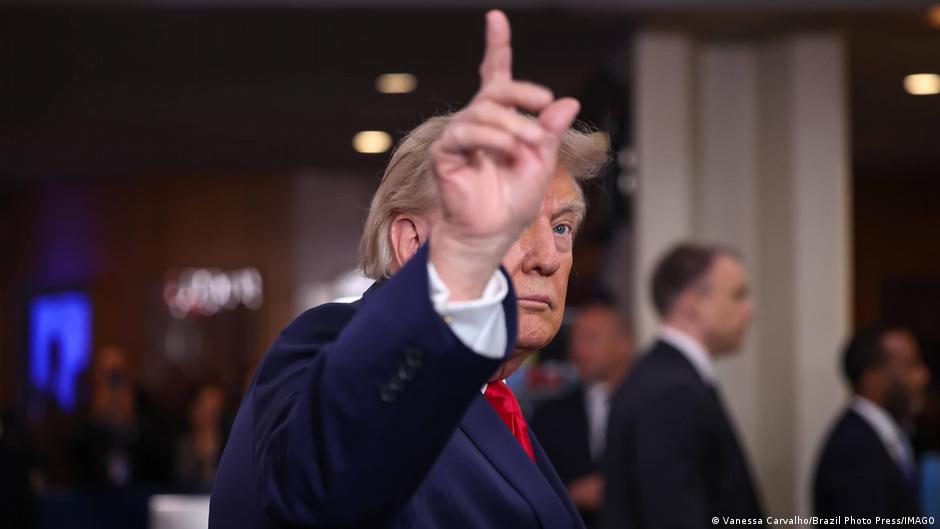
U.S. and Iranian officials held their first reported meeting in months on the sidelines of the 81st session of the United Nations General Assembly in New York on Tuesday, September 22, in a development that could carry significant economic implications for energy markets, sanctions policy and regional risk pricing.
President Donald Trump said the talks, conducted through intermediaries, lasted about three hours and were “very productive.” The statement followed a notably confrontational address earlier the same day, in which Trump threatened Iran with destruction if no agreement were reached.
The U.S. side was represented by Trump special envoys Steve Witkoff and Jared Kushner, while Iran was represented by Foreign Minister Abbas Araghchi. The meeting was mediated by Qatar and Pakistan, according to The New York Times. The format underscored the continued absence of direct high-level diplomacy between Washington and Tehran, while also suggesting that regional actors remain invested in avoiding further escalation.
For senior policymakers and corporate decision-makers, the immediate significance lies less in the atmospherics of the encounter than in the issues reportedly placed on the table. Iranian state media said Tehran informed Washington of its conditions for resuming shipping through the Strait of Hormuz, a critical maritime route for global energy flows. Those conditions included an immediate end to the U.S. maritime blockade, the unfreezing of all Iranian assets frozen because of sanctions, and an end to any military actions.
Hormuz and the economics of escalation
The Strait of Hormuz remains one of the world economy’s most strategically sensitive chokepoints. Any negotiation linked to shipping through the waterway inevitably affects expectations for oil supply security, insurance costs, freight pricing and broader inflation risks. Even without new numerical estimates, the political signal from New York is clear: maritime access, sanctions relief and military de-escalation are now being discussed as connected elements of a potential arrangement.
That matters for governments and firms attempting to assess medium-term exposure to Gulf instability. A constructive process could reduce the perceived risk of supply disruption and ease pressure on energy-importing economies. Conversely, a breakdown in talks, especially after Trump’s public threats, could raise the risk premium attached to oil and shipping, with knock-on effects for monetary policy, fiscal planning and corporate procurement strategies.
Witkoff later described the talks in a post on X, saying that the sides had held lengthy discussions through representatives who moved between the delegations throughout the day. He said a round of discussions had been successfully completed and that mediators would continue their work.
“A round of discussions was successfully completed, which we hope will prove constructive and forward-looking. The mediators will continue their work,” Witkoff said.
Trump also told leaders from Gulf countries on the sidelines of the General Assembly that there was “great momentum” toward reaching an agreement with Iran, AFP reported. That message appeared designed not only for Tehran but also for U.S. partners in the Gulf, whose economies and security strategies are directly exposed to any shift in U.S.-Iran relations.
Sanctions, assets and policy trade-offs
The reported Iranian conditions point to the core economic architecture of the dispute: sanctions, frozen assets and the constraints on Iran’s ability to operate in global trade and finance. Any move to unblock assets frozen because of sanctions would represent a major policy shift and would likely require careful sequencing, verification and political justification in Washington.
For Iran, sanctions relief and access to frozen assets would be central to any economic recovery strategy. Trump himself framed the choice in those terms during his U.N. address, asking whether there would be an agreement that would allow Iran to recover and become a much more powerful state, or whether he would destroy the Islamic Republic quickly so it would never again have a chance to kill people and destroy countries.
That rhetoric illustrates the central tension for U.S. policy: an agreement could reduce near-term regional and market risk, but it could also be criticized domestically and by some allies as strengthening Tehran over the long run. For macroeconomic planners, the question is whether Washington is prepared to trade some sanctions leverage for lower geopolitical risk and improved maritime security.
The timing also matters. The meeting occurred in the highly visible setting of the U.N. General Assembly, where public signaling can be as important as private negotiation. Trump’s threats before the talks, followed by his positive description afterward, create a dual-track message: military pressure remains explicit, but diplomacy remains active.
According to AFP, the Iranian delegation left the hall during Trump’s speech. That gesture highlighted the political fragility surrounding the negotiations and the limited room for either side to appear conciliatory in public. Still, the fact that talks proceeded for about three hours through intermediaries suggests that both governments saw value in testing whether a framework could emerge.
For markets, the most important next indicator will be whether the mediators from Qatar and Pakistan can translate Tuesday’s discussions into a continuing process. A single productive meeting does not resolve the underlying disputes over sanctions, shipping, frozen assets or military activity. But it does introduce a potential diplomatic channel at a moment when the economic costs of confrontation could be substantial.
The broader implication is that U.S.-Iran diplomacy has re-entered the macroeconomic risk map. Energy prices, shipping routes, Gulf security commitments and sanctions enforcement may all become more sensitive to incremental political signals from Washington, Tehran and the mediating states in the weeks ahead.