Kallas Urges EU Envoys to Extend Russia Sanctions Amid Internal Disputes
The debate over Russian billionaires Alisher Usmanov and Mikhail Fridman highlights the policy strains behind Europe’s sanctions regime.
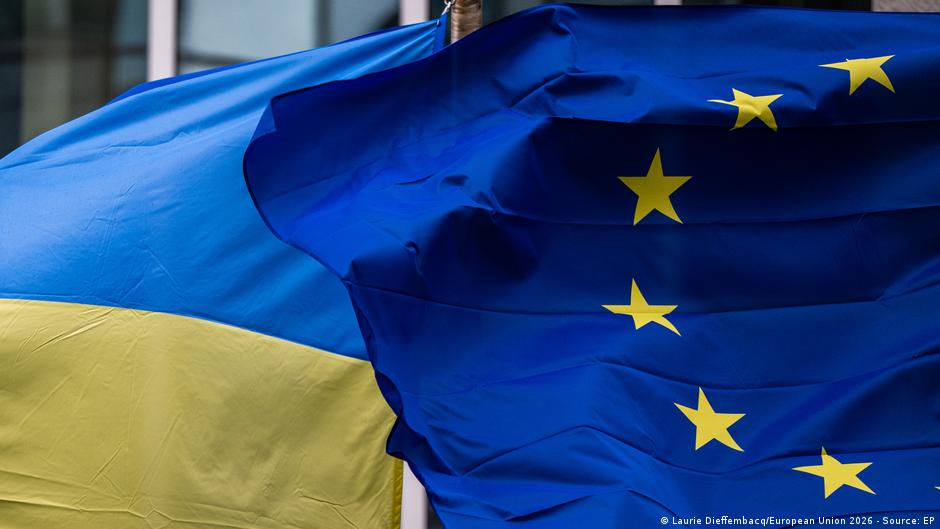
EU foreign policy chief Kaja Kallas has urged the European Union’s permanent representatives to extend sanctions against Russia over the war in Ukraine, as member states continue to manage internal disagreements over the treatment of two prominent Russian billionaires, Alisher Usmanov and Mikhail Fridman.
Speaking to journalists in New York on Monday, September 21, Kallas said maintaining sanctions against the Russian Federation remained essential to the EU’s response to Moscow’s war. The measures, she said, are designed to deprive Russia of financing and to sustain pressure on the Kremlin as the conflict continues to shape Europe’s security and economic agenda.
“Sanctions are a key element of our response to the war unleashed by Russia,” Kallas said.
According to AFP, cited in the Russian-language source article, Kallas said EU representatives are seeking to complete negotiations on the renewal of punitive measures against Russia in the near future and ensure their swift entry into force. She also stressed that the EU’s position remains unchanged and that Brussels is already working on a new sanctions package.
Sanctions Policy Meets Economic Fragmentation
The immediate issue before EU diplomats is procedural, but the broader implications are strategic. The bloc’s sanctions regime has become one of its central economic policy tools in response to Russia’s invasion of Ukraine, affecting financial flows, trade relationships, investment decisions and the international standing of individuals and organizations linked by Brussels to the Russian state or economy.
The next meeting of EU permanent representatives is scheduled for the morning of September 22, according to a DW correspondent in Brussels citing an EU diplomat. At that meeting, diplomats are expected to discuss whether sanctions should be lifted from Usmanov and Fridman while maintaining restrictive measures against thousands of other individuals and entities.
The dispute points to a recurring challenge for the EU: sanctions require political cohesion, but their economic and legal consequences are distributed unevenly across member states. For senior decision-makers, the episode underscores that sanctions are not merely foreign policy instruments. They are part of a wider economic governance framework that can influence capital mobility, legal exposure, corporate risk assessment and relations between national governments and EU institutions.
On September 14, EU permanent representatives failed to agree on another six-month extension of sanctions imposed on Russia over the violation of Ukraine’s territorial integrity. Instead, they decided to extend the current regime temporarily for further consultations, with that interim arrangement set to run until midnight on September 22.
Sources speaking anonymously to DW said the disagreements were linked to Slovakia’s push to remove Usmanov and Fridman from the sanctions list. France, for its part, blocked the extension of the sanctions regime while seeking Usmanov’s removal. Luxembourg also supported lifting punitive measures against Fridman, Reuters reported on September 21, citing diplomatic sources.
Why the Debate Matters Beyond Brussels
For global markets, the durability of EU sanctions matters because it affects expectations around the long-term economic isolation of Russia and the compliance environment for banks, insurers, asset managers and multinational companies. A failure to renew sanctions smoothly would not necessarily signal a wholesale policy reversal, but it would indicate that political bargaining inside the EU is becoming more visible and potentially more consequential.
The underlying question is whether the bloc can continue to align national preferences with collective economic coercion. Since the start of the war, sanctions have been used to constrain Russian access to financial resources, limit the international operating space of sanctioned individuals and entities, and reinforce the EU’s political support for Ukraine. Any weakening or fragmentation of that framework could be interpreted by businesses and governments as a sign that sanctions policy is entering a more contested phase.
At the same time, the debate reflects the legal and diplomatic complexity of maintaining large sanctions lists over time. Thousands of individuals and organizations remain subject to restrictive measures, and decisions involving high-profile business figures can carry economic, political and reputational consequences for EU member states. The discussions around Usmanov and Fridman therefore sit at the intersection of foreign policy discipline, legal defensibility and economic statecraft.
Ukraine has criticized the possibility of removing sanctions from both Russian billionaires. Ukrainian Foreign Minister Andrii Sybiha said Usmanov and Fridman were placed on sanctions lists because of their affiliation with the “Russian aggressive regime, which is waging a war of conquest against Ukraine.” He added that nothing had changed since then.
Kallas’s intervention indicates that Brussels wants to keep the sanctions architecture intact while preparing additional measures. For European policymakers, the renewal decision is also a test of credibility: sanctions only deliver strategic value if counterparties believe they will be sustained, enforced and adapted over time. For companies and investors, the message is that exposure to sanctioned networks and Russia-linked assets remains a long-term risk rather than a short-term disruption.
The coming talks among EU envoys will therefore be watched not only as a diplomatic negotiation, but as a signal of Europe’s capacity to preserve economic pressure on Russia while managing divergent national interests inside the bloc.