Macron and Trump Push Ukraine Infrastructure Moratorium as UN Talks Open
The French and U.S. presidents backed stronger Ukrainian air defenses and a halt to attacks on energy and civilian assets.
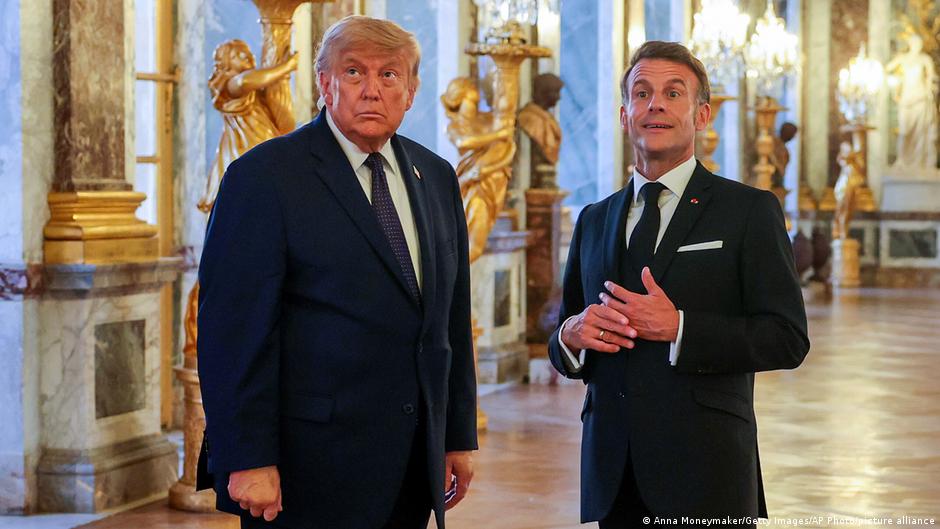
French President Emmanuel Macron said he and U.S. President Donald Trump are coordinating efforts to secure a moratorium on strikes against Ukraine’s energy and civilian infrastructure, a proposal that would carry significant economic implications as the war continues to weigh on Europe’s security, energy resilience and fiscal planning.
Macron said the initiative was discussed during talks with Trump in New York on Monday, September 21, as world leaders gathered ahead of the 81st session of the United Nations General Assembly. In a post on X, the French leader framed the effort as both a humanitarian and diplomatic priority, linking protection of civilian assets to the need for serious peace negotiations between Russia and Ukraine.
“We will also combine our efforts to achieve a moratorium on strikes against Ukraine’s energy infrastructure and civilian infrastructure. The civilian population must be protected, and we must begin serious negotiations on the terms of peace between Russia and Ukraine as soon as possible,” Macron said.
The discussions point to a policy focus that goes beyond immediate battlefield support. Ukraine’s energy grid, utilities, transport links and civilian systems are core to the country’s economic functioning and to Europe’s broader risk exposure. Repeated attacks on these assets have added to reconstruction costs, complicated winter planning and increased the burden on allies that are already financing military, budgetary and humanitarian assistance.
Air Defense as Economic Stabilization
Speaking to journalists after his meeting with Trump, Macron said the two leaders agreed on the need to help Ukraine strengthen its defense capabilities. He said this would include, in particular, supplying Kyiv with additional interceptor missiles to protect against Russian aerial attacks.
For senior economic and policy decision-makers, the emphasis on air defense is not only a military matter. Each successful strike on energy or civilian infrastructure can produce second-order economic effects: power shortages, interrupted industrial output, higher logistics costs, pressure on public finances and renewed migration risks. A more robust defensive shield could reduce volatility in Ukraine’s domestic economy and lower the scale of emergency support required from partners.
The focus on interceptor missiles also underlines the growing link between defense production, fiscal commitments and macroeconomic strategy across allied economies. Sustained demand for air defense systems and munitions has already become part of a wider debate in Europe and the United States over industrial capacity, procurement timelines and the long-term financing of security commitments.
Macron’s talks in New York formed part of a wider diplomatic sequence. According to DW’s correspondent, a bilateral meeting between Macron and Ukrainian President Volodymyr Zelensky also began in New York on the evening of September 21. The timing places Ukraine’s infrastructure protection agenda at the center of high-level diplomacy around the UN gathering.
Sanctions and Peace Terms
Before meeting Macron, Zelensky held talks with U.S. lawmakers and thanked them for passing the late Senator Lindsey Graham’s law on “hellish sanctions” against Russia. The Ukrainian leader said he wanted the sanctions to begin working.
That message highlights another pillar of the economic strategy surrounding the war: pressure on Russia through sanctions while simultaneously seeking measures that limit the destruction of Ukraine’s productive base. For Kyiv and its allies, the challenge is to align sanctions policy, military support and diplomacy in a way that changes incentives without allowing further degradation of Ukraine’s infrastructure.
The proposed moratorium on strikes, if pursued seriously, would test whether limited agreements can be used to reduce economic damage even before a broader peace settlement is reached. Such an approach could have implications for reconstruction planning, investor risk assessments and international financial support. A credible reduction in attacks on power and civilian systems would improve the predictability of Ukraine’s operating environment, though enforcement and verification would remain central questions.
The 81st session of the UN General Assembly is taking place in New York from September 22 to 26 and is expected to bring together nearly 130 world leaders. Zelensky is also expected to meet Trump on September 22, adding another high-level venue for discussion of air defense, sanctions and possible terms for future negotiations.
For global markets and governments, the diplomatic push reflects the increasing economic cost of allowing infrastructure warfare to continue unchecked. Energy security, defense spending, sanctions enforcement and reconstruction finance are now deeply connected. Macron’s comments suggest that France and the United States are seeking to frame protection of Ukraine’s civilian and energy assets as an urgent step toward both humanitarian relief and longer-term economic stabilization.