Kharkiv Educator Dies in Russian Detention in Annexed Crimea
The reported death highlights how wartime detention practices can deepen human-capital losses and economic uncertainty across the region.
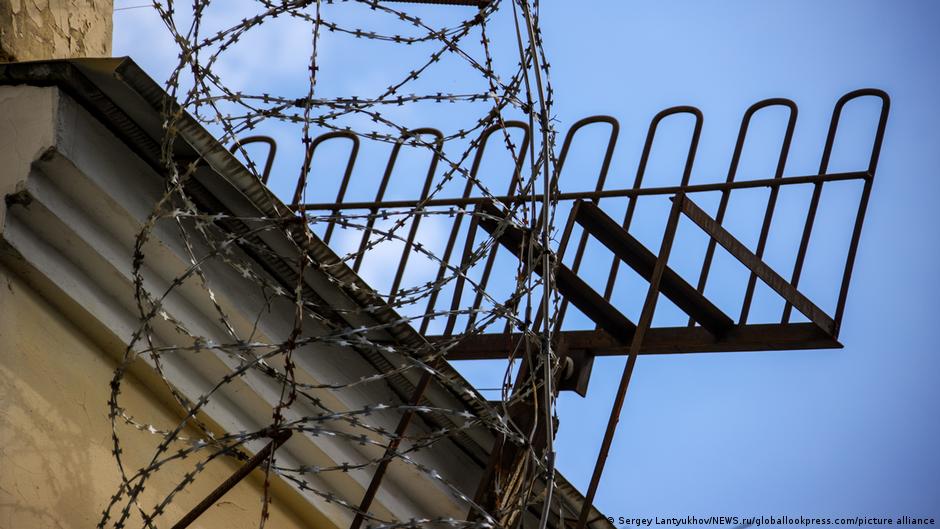
Alexandra Kazarovitskaya, a 44-year-old co-founder of the Kharkiv language school Professional, has died after being detained in Russian-annexed Crimea, according to a statement published by the school on Facebook on Wednesday, November 4.
The school said Kazarovitskaya, also known by the surname Kolesnikova, died in a pretrial detention facility in Crimea. Her colleagues directly blamed Russia for her death.
“Russia killed her,” the school said in its post.
Kazarovitskaya traveled to Sevastopol in the summer of 2026 and had intended to remain there for no longer than a month, according to her colleagues. They said the purpose of the trip was to help her parents sell their apartment and relocate to Turkey.
Instead, she was detained after the authorities found correspondence between her and a volunteer dating from the beginning of Russia’s full-scale invasion of Ukraine, the school said. She then spent three months in solitary confinement while awaiting trial.
According to Kazarovitskaya’s colleagues, Russian authorities attributed her death to suicide. Human rights advocates from the project Support for Political Prisoners. Memorial believe she died in one of two pretrial detention centers in Simferopol. The available accounts do not identify the precise facility or provide further details about the circumstances of her death.
Human capital under wartime pressure
Kazarovitskaya served as director of education at Professional, linking her death not only to the humanitarian consequences of the war but also to the continuing erosion of Ukraine’s human capital. Language schools and other private education providers depend heavily on experienced teachers, administrators and founders whose expertise is difficult to replace quickly.
For senior economic decision-makers, the case illustrates how detention and insecurity can affect economic capacity far beyond directly damaged infrastructure. The loss of an education leader may disrupt institutional knowledge, professional networks and the delivery of skills that support labor mobility and participation in international markets. Such effects are difficult to quantify at the level of an individual case, but they form part of the broader long-term burden carried by communities exposed to war.
The circumstances described by the school also underscore the economic consequences of restricted mobility. Kazarovitskaya’s reported trip was connected to a family property sale and an intended move to Turkey. Her detention interrupted that private relocation process, demonstrating how wartime controls can obstruct household decisions involving housing, migration and the transfer of family assets.
These frictions matter for regional economic prospects because households require predictable rules to make long-term choices about property, education and relocation. When travel or personal communications can lead to detention, uncertainty extends into ordinary transactions. That uncertainty can discourage mobility, delay asset sales and complicate family efforts to move across borders.
Institutional risk and long-term recovery
The reported three months of solitary confinement and the lack of publicly detailed information about Kazarovitskaya’s death raise wider questions about institutional transparency in Russian-controlled Crimea. Conflicting or incomplete accounts of deaths in custody can weaken confidence in legal processes and increase the perceived risks faced by residents and visitors.
Institutional credibility is an economic issue as well as a legal and humanitarian one. Investment, labor retention and business continuity all depend on confidence that rules are understandable and consistently applied. Where detention practices are opaque, individuals and companies face risks that are difficult to price, insure against or manage through normal commercial planning.
The case is especially significant for education, a sector central to postwar reconstruction. Schools and training institutions preserve skills, maintain professional communities and prepare workers for changing economic conditions. The death of an experienced education executive therefore represents a loss for her family and colleagues as well as for the organization she helped build.
Kazarovitskaya is survived by her husband and daughter, according to Mediazona. Her death adds a deeply personal dimension to the region’s economic dislocation: behind aggregate measures of migration, workforce contraction and disrupted enterprise are families losing income, expertise and stability.
For policymakers assessing the region’s longer-term outlook, the episode points to consequences that may persist beyond immediate military developments. Rebuilding physical assets can be planned and financed, but restoring depleted professional networks and public confidence is typically more complex. The reported death of a school co-founder in detention shows how the war’s institutional and human costs can accumulate through individual cases, shaping the conditions for future recovery.