Germany’s EV Surge Deepens Pressure on Domestic Carmakers
Subsidies and high fuel prices are accelerating Germany’s electric transition, but Chinese producers are capturing the strongest gains.
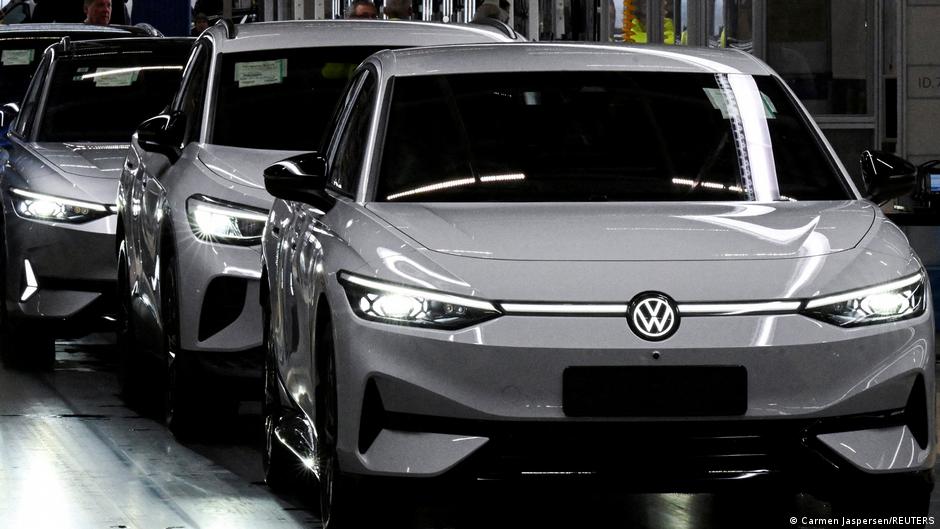
Germany’s electric-vehicle market is expanding at a pace that highlights both the power of government incentives and the growing competitive pressure on Europe’s industrial base. Demand for fully electric cars rose by about 80% year on year in October 2026, supported by an energy crisis, high fuel prices and a subsidy program designed to make electric vehicles more attractive to motorists.
Figures from Germany’s Federal Motor Transport Authority, the Kraftfahrt-Bundesamt, or KBA, show that approximately 254,500 new passenger cars were registered in October. Around 94,000 of them were fully electric, an increase of roughly 80% compared with the same month in 2025.
The shift was accompanied by a sharp decline in registrations of vehicles with internal-combustion engines, a category that also includes hybrid cars in the figures cited. About 62,400 such vehicles were newly registered during October 2026, substantially fewer than a year earlier.
Reuters identified high fuel prices and Germany’s electric-vehicle purchase subsidy as the principal forces behind the change. The subsidy program was introduced in May 2026, giving policymakers a relatively rapid demonstration of how fiscal support can influence household decisions in a major consumer market.
Industrial benefits are flowing beyond Germany
The acceleration in electric-car adoption is not translating into an equivalent competitive gain for Germany’s domestic automotive groups. While the country’s consumers are moving toward electric vehicles, foreign manufacturers are emerging as the primary beneficiaries of that transition, according to dpa.
Chinese producers have recorded the strongest sales growth. Consulting firm EY said their share of the German market increased from 5.2% to 8.4%. German manufacturers, by contrast, have continued to lose share in the electric-car segment month after month, while their profits remain under pressure.
Germany’s policy-supported expansion of electric mobility is strengthening demand, but the largest commercial gains are increasingly being captured by foreign manufacturers.
For senior decision-makers, the figures expose a central macroeconomic tension in the energy transition. Measures intended to reduce reliance on conventional fuels and speed the adoption of cleaner technologies can stimulate demand without guaranteeing that domestic industry captures the resulting value. Consumer subsidies operate on the demand side; they do not, by themselves, determine where vehicles are designed, manufactured or supplied.
The October registration data therefore carry implications beyond the automobile market. Germany’s car industry has long been an important part of the country’s manufacturing economy. A sustained loss of market share in a rapidly growing vehicle category could alter the distribution of investment and industrial returns as the transport system becomes increasingly electric.
Subsidies reshape demand, not competitive capacity
The contrast between rising electric registrations and weakening domestic market share also illustrates the limits of short-term policy support. The subsidy program introduced in May appears alongside high fuel costs as a major factor encouraging motorists to switch technologies. Yet the identity of the producers benefiting from that switch depends on pricing, product availability and competitive positioning rather than on the nationality of the policy providing the incentive.
China’s increase from 5.2% to 8.4% of the market suggests that its manufacturers are converting Germany’s demand expansion into measurable commercial gains. For German groups, the challenge is not simply to participate in a growing market, but to prevent an expanding pool of subsidized purchases from producing a continuing erosion of their position at home.
The figures also underscore how the energy crisis is changing household economics. High fuel prices raise the operating-cost appeal of fully electric cars, while purchase subsidies reduce the initial financial barrier. Together, these pressures can bring forward spending decisions that might otherwise have occurred more gradually.
That combination has delivered a pronounced change in the composition of new registrations. Fully electric vehicles accounted for about 94,000 registrations in October, compared with roughly 62,400 for the cited category of combustion-engine and hybrid vehicles. Although a single month does not establish the full long-term trajectory, the year-on-year increase in electric registrations and the sharp fall in conventional alternatives point to a significant market reallocation.
Germany’s experience presents policymakers with a broader strategic question: whether transport electrification policy should remain focused primarily on consumer uptake or be paired with measures addressing domestic industrial competitiveness. The current data show that rapid adoption and national corporate performance are separate outcomes.
For the global economy, the German market offers an important indication of how the next stage of the electric-vehicle transition may unfold. Public support can accelerate demand in advanced economies, while manufacturers with the strongest competitive position can capture that growth regardless of where the subsidies originate. If the present pattern persists, the economic benefits of Germany’s transition could become increasingly international even as domestic automakers face declining market share and continued pressure on profitability.