Melania Trump to Discuss Oleshky Ceasefire With Russian, Ukrainian Delegates
The White House talks will assess a temporary ceasefire and humanitarian operation with potential implications for wider conflict diplomacy.
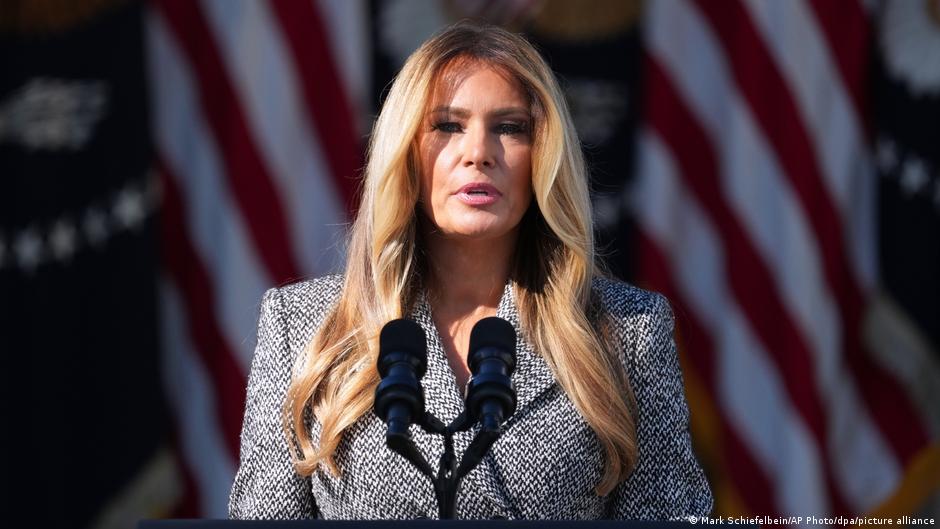
US first lady Melania Trump is set to meet representatives of Ukraine and Russia at the White House to discuss the temporary ceasefire in the Russian-occupied city of Oleshky, known in Russian as Alyoshki, in Ukraine’s Kherson region. She will also deliver an official statement on the results of a humanitarian mission conducted in the city.
The planned engagement represents an unusual diplomatic channel in a conflict whose humanitarian, fiscal and trade consequences continue to affect governments and businesses beyond the immediate war zone. While the talks concern a limited geographical area and the White House announcement did not indicate that broader negotiations were planned, the involvement of officials from both Kyiv and Moscow offers a potential test of whether narrowly defined humanitarian arrangements can remain workable amid continuing hostilities.
The White House published notice of the meeting on Tuesday, November 3. According to the announcement, the first lady is scheduled to speak about the humanitarian mission in Oleshky on Thursday, November 5, at 11 a.m. Eastern Time. It was not specified whether her meeting with the Ukrainian and Russian representatives would take place on the same day.
A limited ceasefire with broader policy relevance
The ceasefire in Oleshky and surrounding areas began early on October 27 and ended at 10:59 p.m. on November 1. It resulted from agreements reached by the parties with Melania Trump’s participation. Both Moscow and Kyiv have described the first lady as a key intermediary in arranging the halt in fighting.
During the humanitarian operation, hundreds of civilians were evacuated from the city and humanitarian supplies were delivered. Those outcomes give the White House meeting a concrete agenda: examining a completed pause in hostilities, reviewing the associated relief effort and discussing the conditions under which comparable arrangements might be organized.
The Oleshky operation combined a temporary cessation of fighting with civilian evacuations and the delivery of humanitarian assistance.
For senior economic decision-makers, the immediate significance lies less in the scale of the local operation than in the policy mechanism it may demonstrate. Temporary ceasefires can create space for civilian protection and aid delivery without requiring the parties to settle the larger political and military dispute. If such arrangements can be repeated, they could help reduce some of the human and administrative pressures generated by prolonged conflict, although the source announcement provides no indication that an extension or a new ceasefire has been agreed.
The conflict has forced governments and companies to operate under persistent geopolitical uncertainty. A local humanitarian agreement does not alter that wider environment by itself, but any durable process for limited coordination may become relevant to assessments of regional stability, reconstruction planning and the future allocation of public resources. The fact that the White House is hosting representatives from both sides also places the United States at the center of this particular diplomatic effort.
Delegations bring political and rights officials to Washington
According to the RBC-Ukraine news agency, the Ukrainian side will be represented by Davyd Arakhamia, head of the Servant of the People parliamentary faction, and Dmytro Lubinets, the Ukrainian parliament’s commissioner for human rights. Russia is expected to send Kirill Dmitriev, a special representative of President Vladimir Putin, and ombudsperson Yana Lantratova.
The composition of the delegations reflects both political and humanitarian dimensions. Parliamentary, presidential-representative and human-rights officials are positioned to address the practical record of the evacuation and aid deliveries as well as the political coordination that enabled the temporary ceasefire. No additional participants or formal negotiating framework were identified in the source report.
The White House discussion will therefore be watched for evidence about whether the Oleshky model remains a one-off humanitarian intervention or could inform further localized agreements. Any wider economic consequences would depend on whether limited coordination develops into a more predictable process. Greater predictability could eventually influence government assumptions about humanitarian spending, displaced populations and regional recovery, but the announced meeting remains focused on the ceasefire and mission in and around Oleshky.
Melania Trump’s Thursday statement may provide the clearest official account yet of the operation’s results. It could also clarify how Washington views the first lady’s intermediary role and whether the United States expects continued engagement between the Russian and Ukrainian representatives. For now, the confirmed facts are confined to the completed ceasefire, the evacuation of hundreds of civilians, the delivery of humanitarian cargo and the forthcoming White House discussions.