Spain’s Transport Minister Resigns After Deadly Toledo Rail Disaster
Óscar Puente’s departure intensifies scrutiny of rail governance, infrastructure resilience and public investment after a series of fatal accidents.
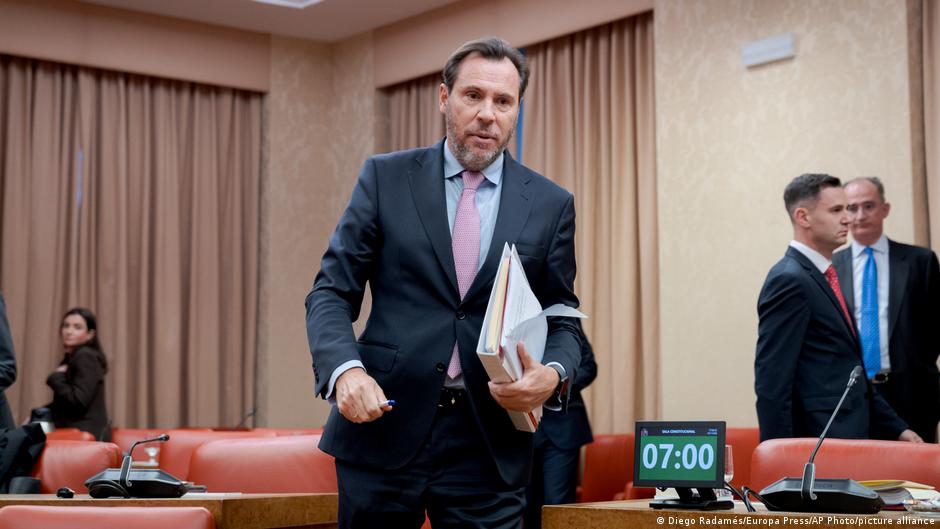
Spain’s Transport Minister Óscar Puente has announced his resignation and withdrawn from the country’s early parliamentary elections, accepting political responsibility for a railway disaster near Toledo that killed 69 people.
Puente disclosed his decision on Tuesday evening, November 3, while appearing before a parliamentary commission in Madrid. His announcement came almost a week after the crash and followed sustained demands for his departure from every opposition party.
“A minister cannot remain in office after two disasters of this magnitude in less than one year. It is a matter of political dignity, responsibility and political sensitivity,” Puente said.
The resignation was unexpected because both Puente and Prime Minister Pedro Sánchez had repeatedly ruled out such a step. The reversal adds a significant political dimension to a transport emergency that is already raising questions about the oversight, maintenance and operational safeguards of Spain’s high-speed rail network.
Government response expands beyond political accountability
Several hours before Puente’s announcement, the Spanish government approved measures intended to improve railway safety. At its weekly cabinet meeting, it also authorized a €30 million assistance package for people injured in the crash and the families of those killed.
The immediate fiscal commitment is limited in relation to Spain’s broader public finances, but the longer-term economic consequences could be more substantial. A series of serious accidents can force governments to accelerate infrastructure inspections, replace safety systems and revise operating procedures. Such measures may require spending to be brought forward, potentially changing budget priorities for transport and other capital programs.
For senior decision-makers, the central issue is whether the accidents expose isolated failures or indicate a wider need to reassess rail-system resilience. Spain’s high-speed network supports domestic mobility and regional economic integration. Disruption, tighter operating restrictions or declining passenger confidence could affect travel patterns and increase pressure on alternative transport networks.
The latest disaster occurred at 8:53 a.m. on October 28 near the settlement of Urda in Toledo province, on the Madrid-Seville high-speed line. AVE passenger train 2080 struck the final carriage of Iryo train 6076, which was stationary on the tracks. Sixty-nine people were killed and more than 50 were injured.
Seven passenger rail disasters reported in 2026
Since the beginning of 2026, Spain has recorded seven railway disasters in which passengers were harmed. Another major collision occurred on January 18 near the settlement of Adamuz, involving two trains on the Madrid-Málaga high-speed line. That crash killed 46 people and left another 150 with injuries of varying severity.
The two major incidents are being examined through different investigative paths. Damage to the railway tracks is considered one possible cause of the Adamuz disaster. The investigation into the Urda crash, meanwhile, is focused on a failure of the automatic train-protection system and possible errors in instructions issued by the dispatching center.
That distinction matters for policy. Track damage would direct attention toward physical infrastructure, inspection schedules and maintenance practices. A failure involving automatic protection and dispatch instructions would instead broaden scrutiny to technology, control systems, operating protocols and the interaction between human decision-making and automated safeguards.
Any eventual policy response may therefore have to address both capital assets and institutional capacity. Investment in tracks and equipment alone may not resolve risks linked to command structures, system redundancy or operational accountability. Conversely, procedural reforms would be insufficient if the underlying infrastructure requires renewal.
Political transition creates an implementation test
Puente’s decision not to participate in the early parliamentary elections removes a prominent official from both the current transport response and the coming electoral contest. The government must now manage continuity at the ministry while implementing newly approved safety measures and responding to the findings of two major investigations.
The timing could complicate long-term planning. Rail safety programs typically extend beyond a single budget cycle and require coordination among government departments, infrastructure managers, operators and regulators. Political turnover may increase the risk of delay unless the new measures are supported by clear funding, transparent milestones and stable administrative leadership.
The episode also illustrates how transport failures can rapidly become macroeconomic governance issues. Reliable infrastructure influences productivity, labor mobility, regional development and confidence in public institutions. When repeated accidents occur on strategically important routes, the policy debate can shift from emergency response to questions about the quality and allocation of public investment.
For Spain, the immediate priorities remain assistance for victims, the determination of the causes of the Urda collision and implementation of stronger safety protections. The longer-term test will be whether the government converts political accountability into durable improvements across the rail system without allowing electoral uncertainty to weaken execution.