Abu Dhabi Talks Put Ukraine Security and Reconstruction in Focus
US-mediated working groups will address security guarantees, de-escalation and the economic foundations of Ukraine’s recovery.
Russia and Ukraine will hold a new round of US-mediated negotiations in Abu Dhabi on November 10 and 11, placing postwar security and reconstruction funding at the center of a diplomatic process with potentially far-reaching consequences for Europe and the global economy.
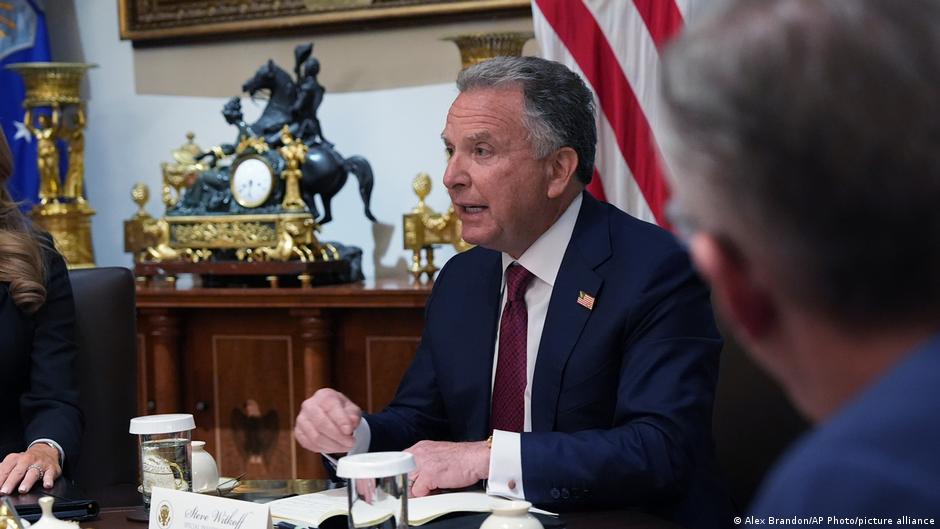
Steve Witkoff, US President Donald Trump’s special envoy, announced the talks on Tuesday, November 3. The negotiations in the capital of the United Arab Emirates will take place at the working-group level as part of Trump’s efforts to end Russia’s war against Ukraine.
“The discussions will focus on postwar security, de-escalation, humanitarian initiatives and the next steps toward peace,” Witkoff wrote on X.
The agenda indicates that the discussions are moving beyond immediate battlefield questions toward the institutional and financial arrangements that would be required to sustain a settlement. For senior policymakers and business leaders, the inclusion of postwar security alongside humanitarian measures is particularly significant: reconstruction capital is unlikely to flow at scale without credible protections against renewed conflict.
Security architecture carries an economic dimension
US negotiators will also meet representatives of France, Germany, the United Kingdom, the European Union and NATO in Brussels this week. According to Witkoff, those consultations will cover security guarantees for Ukraine, Europe’s postwar security architecture and options for providing economic support for Ukraine’s reconstruction.
The three issues are closely connected. Any agreement on Ukraine would influence European defense planning, public spending priorities and investor assessments of regional risk for years. Governments considering guarantees would have to weigh their military commitments against already demanding fiscal agendas, while the design of a broader European security framework could shape defense budgets and industrial policy across the continent.
Reconstruction presents a separate but related policy challenge. Economic support will require coordination among national governments, European institutions and other potential financial partners. The talks have not yet produced a disclosed funding figure or mechanism, but the explicit inclusion of economic assistance shows that recovery planning is being treated as part of the peace process rather than as a later-stage issue.
For Ukraine, long-term security assurances could determine the cost and availability of private financing, the pace of infrastructure rebuilding and the prospects for reversing wartime economic disruption. For the EU and its member states, reconstruction could create sustained budgetary obligations while also opening demand for construction, energy, transport and other essential systems. The ultimate economic effect will depend on the durability and terms of any settlement.
UAE venue highlights broader diplomatic role
The choice of Abu Dhabi underscores the UAE’s position as a venue capable of hosting talks among parties whose relations remain deeply adversarial. Holding the negotiations outside Europe may also provide a setting for working-level discussions on practical areas where limited progress could be possible, including de-escalation and humanitarian initiatives.
Witkoff said the United States hopes to consolidate progress achieved through earlier contacts in Kyiv, Oslo and St. Petersburg and move toward a comprehensive and durable peace agreement.
“We hope to build on the progress achieved in Kyiv, Oslo and St. Petersburg toward a comprehensive and lasting peace agreement that will ensure long-term security for future generations,” he said.
In October, Trump’s special envoy met Ukrainian President Volodymyr Zelenskyy in Oslo. He subsequently traveled to St. Petersburg, where he held negotiations with Russian President Vladimir Putin. Those meetings form the immediate diplomatic backdrop to the Abu Dhabi round and the parallel consultations with European allies in Brussels.
Markets will look for evidence of durable de-escalation
The immediate talks are being conducted by working groups, limiting expectations of a rapid political breakthrough. Nevertheless, progress on de-escalation or a framework for security guarantees could affect perceptions of geopolitical risk. A durable reduction in hostilities would have implications for European confidence, government expenditure and the investment environment, although the source announcement did not set out specific economic measures or timelines.
Previous US-mediated negotiations between Russia and Ukraine took place in February 2026, shortly before the start of the US-Israeli war against Iran. The wider international environment has therefore become more complex since the last round, increasing the importance of diplomatic coordination and raising the potential economic cost of prolonged geopolitical instability.
The Abu Dhabi meeting will test whether recent bilateral contacts can be converted into a structured process involving Russia, Ukraine, the United States and key European stakeholders. Its economic significance lies less in an immediate peace dividend than in whether negotiators can begin defining the security conditions, institutional responsibilities and support mechanisms needed for a credible recovery. Without those foundations, reconstruction commitments may remain tentative; with them, governments and investors could begin assessing Ukraine’s postwar economic trajectory with greater clarity.