Cyberattacks on Ukraine and Russia Expose Risks to Public Alert Systems
False nuclear and radiation warnings highlight the economic and policy costs of weak cybersecurity in essential public infrastructure.
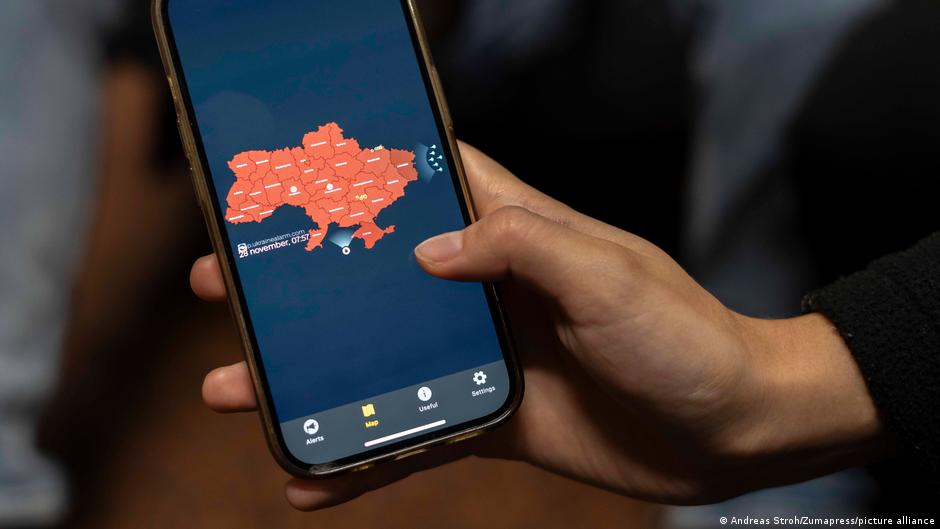
Government-linked emergency alert services in Ukraine and Russia were hit by cyberattacks that sent false warnings about radiation, chemical hazards and nuclear warheads, exposing vulnerabilities in digital infrastructure designed to protect civilians during crises.
Ukraine’s official Air Alert application, which is used to notify the public about threats, came under attack on the evening of Sunday, November 1. Users received fabricated alerts warning of radiation and chemical dangers, as well as the threat of street fighting in Kyiv.
The Ukrainian Air Force was among the first authorities to respond. It said the application had probably been subjected to hostile interference and stressed that there was no radiation threat. Ukraine’s State Emergency Service said the nationwide warning system was continuing to operate normally, with genuine threat notifications still being transmitted to regional administrations and street-based alert systems.
The application’s developers subsequently confirmed that the service had been breached. They disabled push notifications and temporarily suspended the application while addressing the intrusion. Users were also advised not to follow links contained in suspicious notifications.
The developers said unauthorized third parties had interfered with the application’s operation, prompting the suspension of the service and its push notifications.
During the night of November 2, the development team reported that the application was being restored gradually. Users had begun receiving air-raid notifications again, although some functions remained temporarily unavailable. The team said the application does not store users’ personal data and that additional cybersecurity measures were being introduced.
Parallel disruption raises systemic questions
Russia’s Emergency Situations Ministry reported a cyberattack at almost the same time. The ministry described the incident as a massive attack on its mobile application. According to the agency, the attackers distributed false messages claiming that nuclear warheads had been launched toward Russia.
Russian specialists were working to close the vulnerability and restore the service to normal operation, the ministry said. As in Ukraine, the attack targeted a channel whose effectiveness depends not only on technical availability but also on public confidence in the authenticity and urgency of its messages.
The near-simultaneous incidents underscore a broader policy challenge: emergency communication platforms have become part of countries’ critical digital infrastructure. Their disruption can create consequences beyond the immediate costs of repairing software and strengthening network defenses. False alerts may affect public behavior, interrupt business operations and place additional pressure on emergency agencies required to verify or refute fabricated warnings.
For senior economic decision-makers, the central issue is the reliability of digital public services under conditions of geopolitical tension. Applications that distribute civil-defense information sit at the intersection of national security, telecommunications and public administration. A successful intrusion can therefore generate risks that spread across several sectors, even when attackers do not obtain personal information or directly damage physical assets.
Trust becomes an economic asset
Emergency warning systems derive much of their value from credibility. If repeated false messages cause users to hesitate before responding to a genuine alert, the economic and human consequences of a later emergency could increase. Governments and developers consequently face the dual task of restoring technical functionality and preserving trust in official communications.
The Ukrainian response illustrates the value of maintaining multiple alert channels. Officials emphasized that the nationwide system, regional administrations and street warning infrastructure remained operational while the mobile application was suspended. Such redundancy can limit dependence on any single digital platform and reduce the risk that one compromised service disables the broader public-warning network.
The attacks also point to likely shifts in public spending priorities. Authorities responsible for emergency management may need to devote more resources to authentication, monitoring, rapid incident response and backup communications. These measures carry ongoing costs, but the alternative can include avoidable disruption, reduced institutional credibility and greater uncertainty for households and businesses.
At the macroeconomic level, resilience in public digital infrastructure increasingly supports continuity during military, environmental and industrial emergencies. Reliable alerts help employers, transport operators and public institutions make timely decisions, while compromised systems can amplify uncertainty at moments when economies are already under stress.
Neither country reported a genuine radiation or nuclear threat connected with the false messages. The immediate operational focus remained on restoring the affected applications and strengthening their defenses. The longer-term policy question is how governments can secure rapidly expanding digital services without allowing a breach in one application to undermine confidence in the wider emergency-response system.