US Push to Revive Russian Gas Transit Tests Europe’s Energy Strategy
The proposed Ukraine route could lower energy risks but complicate EU sanctions, diversification and the planned Russian gas phaseout.
The United States is pressing for the rapid resumption of Russian natural gas deliveries to Europe through Ukraine as part of negotiations on an energy truce between Moscow and Kyiv, according to the Wall Street Journal. The proposal could provide near-term relief for strained European energy markets, but it would also test the European Union’s sanctions architecture and its long-term strategy of ending dependence on Russian supplies.
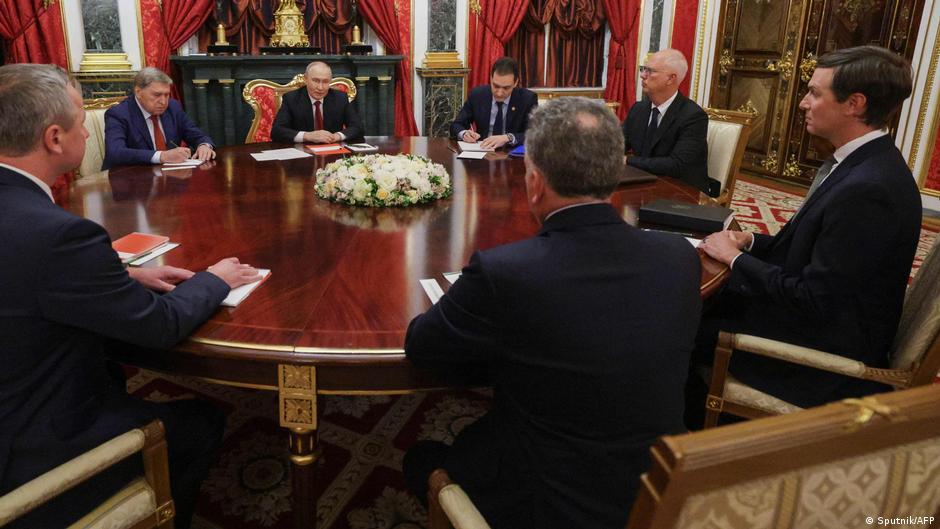
Citing US, European and Ukrainian officials, the newspaper reported on Sunday, November 1, that Washington wants Russian gas to be sold through an American intermediary. US negotiators Jared Kushner and Steve Witkoff reportedly discussed the concept during visits to Moscow and Kyiv in September.
The proposed intermediary structure is expected to provide a way around European sanctions while creating potentially profitable opportunities for US investors. For senior policymakers and corporate leaders, the plan therefore presents more than a question of energy supply: it would redistribute commercial leverage across the transatlantic gas market and give US capital a role in managing trade that Europe has committed to phase out.
Energy truce carries wider economic stakes
Washington is seeking a comprehensive agreement to halt attacks on energy infrastructure ahead of trilateral talks involving the United States, Russia and Ukraine, scheduled to take place in Abu Dhabi in November. The administration of President Donald Trump believes European opposition to the gas initiative may ultimately be less firm than public statements suggest, according to the report.
US officials view Russia’s return to the European gas market as an additional incentive for Russian President Vladimir Putin to support an energy truce. Ukraine, meanwhile, could regain transit revenue from gas transported across its territory, providing an economic benefit to Kyiv while its infrastructure and public finances remain under pressure.
The proposal attempts to align three separate incentives: Russian access to customers, Ukrainian transit income and European demand for secure energy supplies.
The White House has also proposed placing proceeds from Russian gas sales to Europe into a special account in a third jurisdiction, one US official said. Such a mechanism would be intended to restrict the use of the revenue for military purposes. Its effectiveness, however, would depend on the legal design, monitoring arrangements and enforceability of restrictions governing the account.
From a macroeconomic perspective, renewed pipeline flows could reduce supply uncertainty and potentially ease pressure from elevated energy costs. Lower or more stable gas prices would benefit energy-intensive European industries and could soften inflationary pressures. Yet those gains would have to be weighed against the strategic cost of restoring Russian market access and the risk of weakening incentives for investment in alternative suppliers, infrastructure and energy efficiency.
Europe faces a policy credibility test
The initiative is encountering serious resistance in Europe. Existing EU legislation provides for a gradual end to Russian gas imports by the close of 2027, while leaders of the largest European countries have repeatedly said they do not want to become dependent on Russian energy again.
Europe has already substantially reconfigured its supply mix. Russian gas now accounts for about 11% of European consumption, compared with 45% immediately before Russia’s full-scale invasion of Ukraine. At the same time, liquefied natural gas supplied by the United States currently meets around 30% of European gas consumption.
Those figures underline the economic and geopolitical trade-offs. A reopening of the Ukrainian route could improve competition among suppliers and lessen exposure to disruptions in the global LNG market. Conversely, it could reduce demand for US LNG and challenge infrastructure and purchasing decisions made on the assumption that Russian pipeline gas would continue to disappear from the European market.
Some European officials have sharply criticised the idea in private, according to the newspaper. The US administration nevertheless expects high energy prices and concerns about security of supply to make European governments more receptive. That calculation reflects a persistent tension in European economic policy: governments must reconcile decarbonisation and strategic autonomy with the immediate need to protect household purchasing power and industrial competitiveness.
Any agreement would consequently have effects beyond the volume of gas moving through Ukraine. It could establish a precedent for using third-country intermediaries and ring-fenced payment mechanisms to reopen sanctioned trade. It could also expose divisions within Europe between governments prioritising lower energy costs and those placing greater weight on sanctions credibility and independence from Russia.
The central question for European decision-makers is whether a controlled return of Russian gas could remain a temporary instrument tied to an enforceable energy truce, or whether it would begin reversing the structural diversification undertaken since the invasion. The answer would shape investment signals, transatlantic energy relations and Europe’s exposure to geopolitical supply risk well beyond 2027.