German Youth Protests Expose Mounting Economic and Social Strains
Unrest across major German cities underscores growing pressure over living costs, public services, climate policy and social spending.
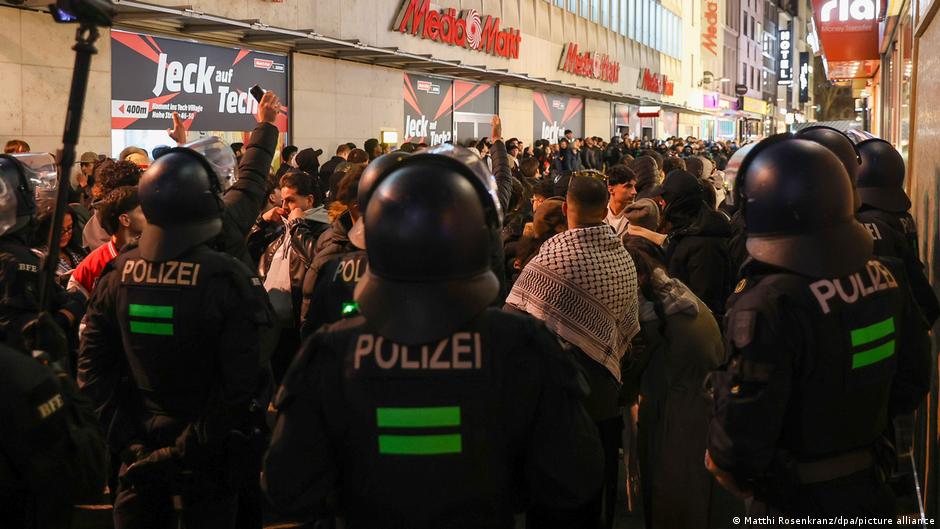
Youth demonstrations across Germany escalated into disorder and clashes with police on Saturday, October 31, highlighting the political and economic pressures building around living costs, public services and the future direction of social policy.
The protests were organized by the Gen-Z regelt movement, whose name translates as “Generation Z Decides.” Actions took place in more than 30 German cities and drew over 100,000 participants, according to organizers. Their demands included better education, measures to contain the rising cost of living, stronger climate protection, and improved access to psychotherapy and addiction treatment. Organizers also opposed the introduction of compulsory military service and cuts to social spending.
For senior decision-makers, the breadth of that agenda is significant. It connects household affordability with public investment, healthcare access, climate policy and defense priorities. The demonstrations therefore reflect more than isolated public-order problems: they point to increasingly difficult fiscal choices as European governments balance security commitments, social provision and the costs of the economic transition.
Disorder disrupts demonstrations in major cities
In Frankfurt am Main, demonstrations involving between 8,000 and 9,000 people began peacefully before deteriorating into looting and attacks on police, including the use of Molotov cocktails. Some protesters smashed shop windows and entered a gun store as well as a Snipes clothing and footwear outlet. Two weapons were confiscated from those who attacked the gun shop.
Hesse Interior Minister Roman Poseck said approximately 100 violence-prone left-wing extremists had infiltrated the demonstration and were responsible for the disorder. Police checked the identities of roughly the same number of people, while more than 30 were detained.
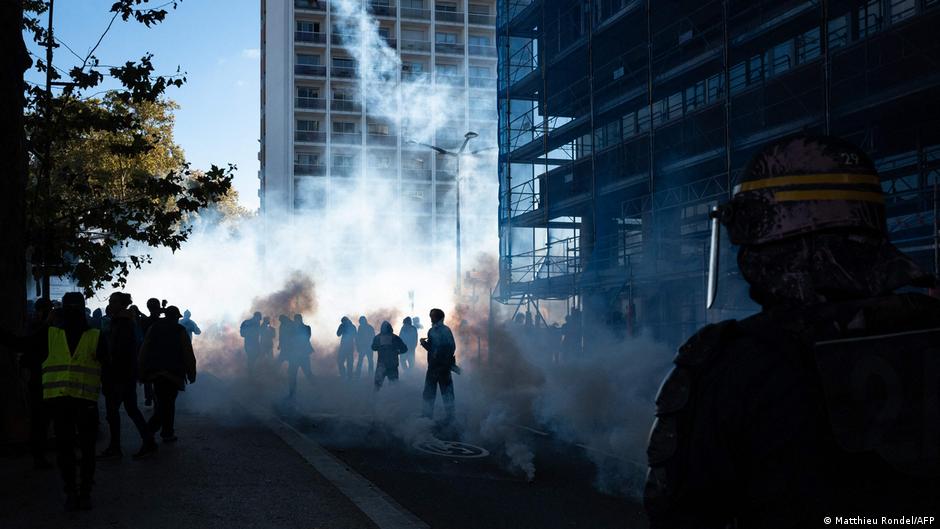
Authorities brought the unrest under control closer to nightfall, deploying water cannons, armored police vehicles, a helicopter and drones. Police also closed part of Frankfurt’s city center, creating direct disruption for businesses, transport and residents.
“Those who behave like the offenders in central Frankfurt place themselves outside our society,” Hesse Premier Boris Rhein said.
Rhein said officials would closely analyze the aggressors’ conduct, the composition of the offending groups and the sequence of events before drawing conclusions. The review could influence future policing and security policy around large demonstrations, potentially raising the operational costs associated with managing civil unrest.
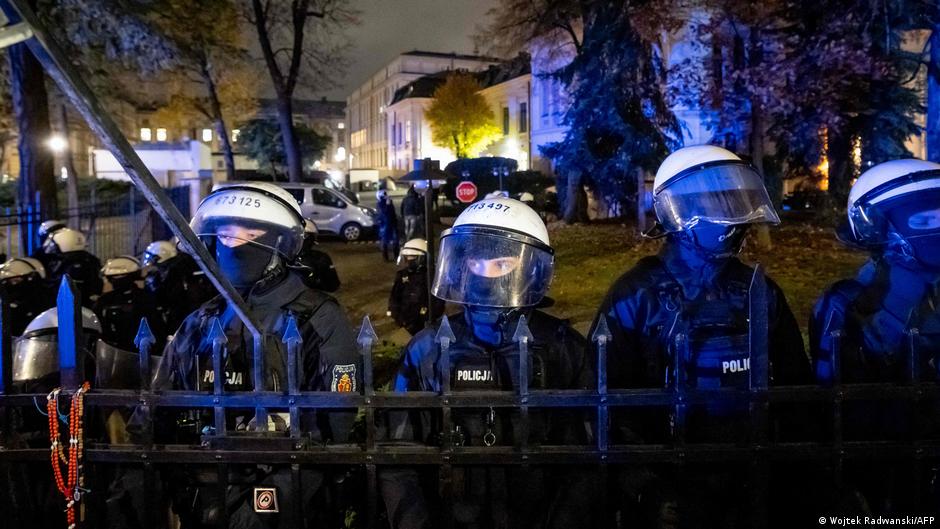
In Berlin, one of two large demonstrations descended into disorder. The event attracted about 3,500 people, mainly members of far-left groups. Some participants threw firecrackers and bottles toward police and launched fireworks. Authorities also reported property damage and violations of weapons legislation. Police detained 56 people, while 27 officers suffered minor injuries.
In Cologne, law enforcement authorities prohibited a planned march and allowed only a stationary gathering. The decision followed violations involving face coverings and the use of pyrotechnics, some of which were thrown at police. Officers used water cannons toward the end of the event.
Protesters in Hamburg built and set fire to barricades and threw bottles and stones at police. Demonstrations ended in similar fashion in Stuttgart and Bremen.
A wider European challenge for economic policy
The German protests formed part of a recent wave of youth mobilization across Europe. Demonstrations in several French cities also escalated into vandalism and confrontations with police, while Belgium experienced related protests.
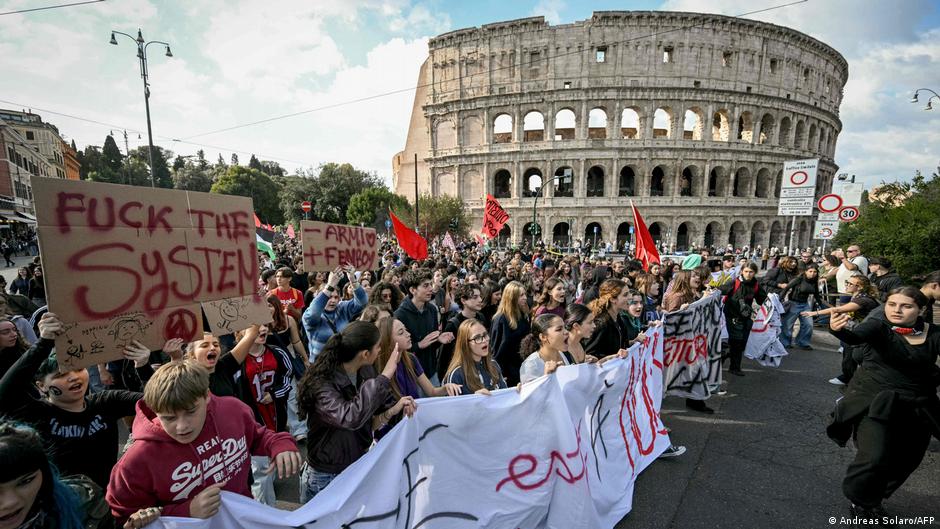
Italy faced particularly large demonstrations on October 30, when more than one million people participated, according to organizers. Following severe rioting in Milan, Italian authorities ordered the deployment of 500 military personnel to help maintain public order.
The cross-border character of the unrest increases its economic relevance. Young protesters are raising similar concerns about affordability, strained services and long-term policy priorities across countries with different political systems and fiscal positions. That suggests governments may be confronting a shared erosion of confidence rather than a series of purely domestic disturbances.
The central policy dilemma is how to address those demands while maintaining fiscal discipline. Higher spending on education, mental healthcare, addiction services and climate protection would require governments to find additional revenue, redirect existing budgets or accept greater borrowing. At the same time, opposition to social-spending cuts and compulsory military service complicates efforts to increase defense capacity without placing further pressure on public finances.
Repeated disorder could also impose more immediate costs through damage to commercial property, interrupted retail activity, additional policing and tighter restrictions on public gatherings. If protests persist or spread, the larger risk is that social dissatisfaction begins to weigh on consumer confidence, investment decisions and political stability.
Germany’s experience on October 31 consequently offers a warning for European policymakers. Public-order measures may contain individual outbreaks, but they do not resolve the economic grievances driving participation. The longer-term response will depend on whether governments can reconcile generational expectations with constrained budgets, defense requirements and the costs of climate and social-policy commitments.