Poland’s Constitutional Court Crisis Deepens Institutional Risk
A disputed leadership suspension has intensified Poland’s rule-of-law conflict, raising concerns over policy credibility and institutional stability.
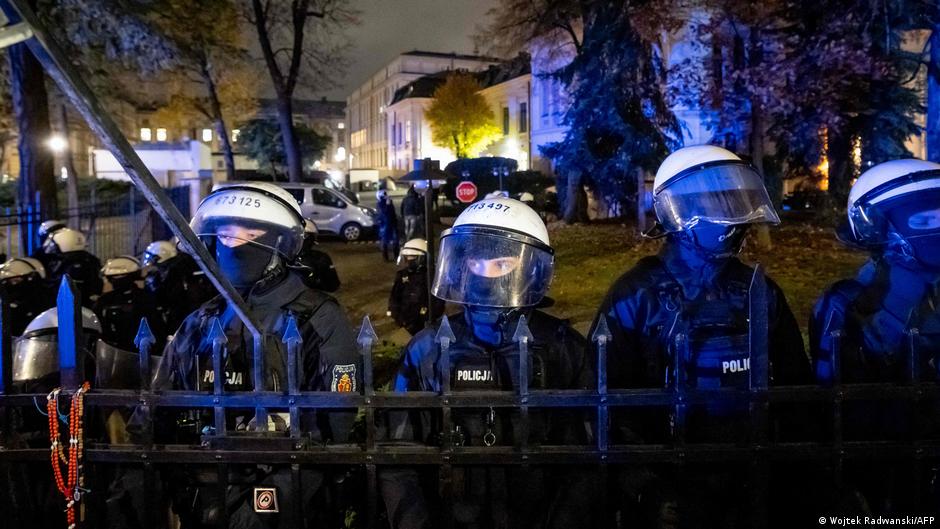
Poland’s prolonged constitutional dispute escalated sharply after Constitutional Tribunal judge Anna Korwin-Piotrowska announced the temporary suspension of the court’s president, Bogdan Święczkowski, and vice-president, Bartłomiej Sochański. The move triggered protests in Warsaw, a police cordon around the tribunal and the emergency return of President Karol Nawrocki, who had been travelling to Senegal.
The confrontation is formally about control of the tribunal, but its economic significance is broader. For senior policymakers and investors, the episode highlights the institutional constraints facing one of the European Union’s largest economies. A sustained conflict over judicial legitimacy could weaken policy predictability, complicate implementation of legislation and deepen uncertainty surrounding Poland’s relationship with European institutions.
Korwin-Piotrowska, one of the tribunal’s 15 judges, suspended the two leaders for one month in a decision published on the tribunal’s website on Friday evening, October 30. The document said that Święczkowski and Sochański had, among other actions, prevented judges elected by the Sejm in 2026 and subsequently sworn in from participating in cases.
She cited a 2016 law governing the tribunal’s organisation and procedures, arguing that it empowered the longest-serving judge to take such action. Korwin-Piotrowska also called a general assembly of tribunal judges for November 3.
Competing Claims of Legal Authority
The tribunal’s account on the social media platform X presented a starkly different version of events. It alleged an “illegal seizure” of the institution’s website, maintained that Święczkowski and Sochański remained in their posts, and said Korwin-Piotrowska was not a Constitutional Tribunal judge. The post described the actions as a criminal coup. The tribunal’s website, in turn, stated that the X account was not associated with the institution.
Sochański told the newspaper Rzeczpospolita that Korwin-Piotrowska had called to tell him she was now running the tribunal. He said he had no further information, had never heard of complaints against him and knew of no legal rule permitting his removal or such intervention in the independence of the tribunal or an individual judge.
“Something completely unprecedented is happening,” Sochański said, also characterising the events as a coup.
Prime Minister Donald Tusk supported the temporary removal of the tribunal’s leadership. Tusk and the Sejm are opposed to Nawrocki, whose political camp is the Law and Justice party, or PiS. The prime minister said restoring the rule of law was the government’s duty after years of lawlessness under PiS, describing the process as difficult, sometimes painful and requiring decisive action.
The political divide creates a material governance risk. When rival centres of authority dispute which judges, leaders and institutional communications are legitimate, court decisions may become harder to implement consistently. That can affect the durability of legislation, the regulatory environment and the state’s ability to present a coherent policy framework to businesses, markets and EU partners.
Presidential Intervention and Street Protests
Nawrocki said he turned his aircraft around on the evening of October 30 because of the developing crisis. After returning to Poland, he met Święczkowski and Supreme Court First President Zbigniew Kapiński. Nawrocki and Kapiński then entered the tribunal building, according to presidential chief of staff Paweł Szefernaker.
The president entered despite Korwin-Piotrowska’s stated willingness to meet him only at the Presidential Palace. Maciej Berek, a judge elected by the Sejm but not permitted by Nawrocki to take the oath, said the president had chosen “the path of physical confrontation” by attempting to enter. Berek also alleged that people identifying themselves as presidential-office employees tried to obtain keys to rooms in the tribunal.
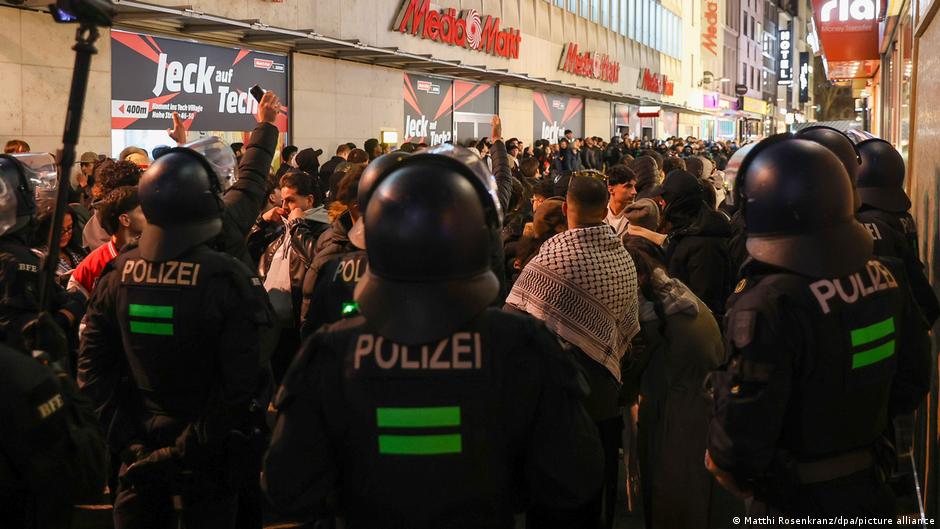
Warsaw police said Prosecutor General and Justice Minister Waldemar Żurek had asked officers to pay particular attention to security during protests around the building. Police also received a letter from a tribunal judge warning of a potential threat to life and health.
Officers cordoned off the building but said they were not stationed inside it. Police reported that protesters threw dangerous objects at officers. Three demonstrators were detained after climbing over a barrier and entering the tribunal grounds.
Long-Running Standoff Tests Policy Credibility
The conflict has lasted for several months and stems from the confrontation between Tusk’s government and Nawrocki’s PiS camp. It began when the president refused to accept the oaths of new judges elected by the current parliament. Święczkowski likewise declined to recognise their authority or allow them to hear cases.
The government considers the tribunal illegitimate because it still includes judges elected under the previous authorities. The governing coalition and judges aligned with its position regard Nawrocki’s actions as unlawful obstruction of a state institution.
The dispute expanded further on October 30 when Żurek said he had submitted five applications to the Constitutional Tribunal seeking the lifting of immunity. He said the requests concerned, among others, Święczkowski and Sochański.
For Poland’s economy, the central issue is not merely which faction ultimately controls the court. The longer rival authorities contest the validity of appointments and rulings, the greater the risk that institutional paralysis will spill into fiscal, regulatory and investment policy. The confrontation also illustrates the long-term economic cost of weakening shared acceptance of legal institutions: rebuilding credibility can remain difficult even after political power changes hands.